How Real Estate Tokenization Works
The process generally involves several stages.
1. Selecting the Property
The first step is identifying an appropriate asset.
Potential candidates include:
- Residential properties
- Commercial buildings
- Hotels
- Industrial facilities
- Retail centers
- Office buildings
- Rental portfolios
- Development projects
The property's financial characteristics, ownership structure, jurisdiction, and intended investor base all influence whether tokenization is appropriate.
2. Establishing the Legal Structure
The property must be connected to a legal framework that defines investor rights.
An SPV, trust, fund, partnership, or another structure may be used depending on the jurisdiction and transaction.
This stage determines what investors actually receive in exchange for their investment.
3. Creating the Digital Representation
Once the legal structure is established, blockchain infrastructure can be used to represent the relevant interests digitally.
The platform can define:
- Token supply
- Token ownership
- Investment limits
- Transfer rules
- Distribution mechanisms
- Investor restrictions
4. Investor Onboarding
Potential investors may need to complete:
- Identity verification
- KYC
- AML screening
- Investor eligibility checks
- Jurisdiction verification
- Required documentation
Only eligible participants may be permitted to purchase or hold particular tokenized interests.
5. Token Distribution
After the offering is established and investors have completed the necessary requirements, tokens can be distributed according to the investment structure.
The blockchain provides the digital record of token ownership and transactions.
6. Asset Management
Tokenization continues after issuance.
The platform may need to manage:
- Rental income
- Investor distributions
- Ownership records
- Reporting
- Property updates
- Transfers
- Corporate actions
This makes tokenization an ongoing infrastructure rather than a one-time token creation process.
Fractional Ownership and Investment Access
One of the most discussed applications of real estate tokenization is fractionalization.
Large properties can be divided into smaller investment interests, potentially allowing multiple investors to participate.
For example:
Property value: $5 million
Digital investment interests: 50,000
Illustrative unit value: $100
The actual structure, pricing, and investor eligibility would depend on the offering.
Fractionalization can potentially reduce the amount of capital required from each participant, although it does not remove investment risks or guarantee that an offering will be available to every investor.
Creating New Capital-Raising Models
Tokenization could also change how property owners raise capital.
Instead of relying entirely on:
- Bank financing
- Private equity
- Institutional investors
- Traditional syndication
- Direct property sales
a property owner could potentially create a digitally structured investment offering for eligible investors. Capital could be raised through different structures, including equity, debt, revenue participation, or fund interests. This provides property businesses with another framework for structuring investment products around real-world assets.
Rental Income Can Become Digitally Managed
Real estate produces recurring cash flows, particularly through rent.
A tokenized investment structure can potentially connect rental income with digital ownership records.
For example:
Rental income → Revenue calculation → Investor allocation → Digital distribution
Smart contracts can automate portions of this process based on predefined rules.
However, blockchain automation does not replace accounting, tax reporting, property management, or financial controls. Those activities still need appropriate oversight.
The Role of Smart Contracts
Smart contracts are an important component of tokenized real estate infrastructure.
They can potentially automate predefined functions such as:
- Token issuance
- Transfers
- Ownership records
- Distribution calculations
- Voting
- Investor restrictions
- Corporate actions
For regulated assets, smart contracts can also be designed to restrict transfers to approved wallets or eligible participants.
This programmability is one of the key differences between conventional digital ownership databases and blockchain-based tokenized assets.
Could Tokenization Improve Real Estate Liquidity?
Real estate is generally less liquid than publicly traded securities. Tokenization could potentially support secondary-market participation by allowing eligible investors to transfer fractional interests through regulated or permissioned marketplaces.
Instead of selling an entire property, an investor could potentially sell part of their digital investment interest. But tokenization does not automatically create liquidity.
A functioning secondary market requires:
- Buyers and sellers
- Market infrastructure
- Regulatory approval where required
- Transferable legal rights
- Reliable valuation
- Investor demand
- Appropriate custody and settlement mechanisms
Therefore, tokenization should be viewed as an infrastructure that can potentially support liquidity—not as a guarantee of liquidity.
Transparency and Digital Ownership Records
Blockchain technology can provide a transparent record of token transactions.
Depending on the architecture, investors and administrators may be able to track:
- Token balances
- Transfers
- Distribution history
- Transaction records
- Eligible wallets
- Ownership changes
This can help reduce fragmented recordkeeping and provide a consistent digital layer for ownership management.
The quality of the information still depends on the systems and organizations responsible for entering and maintaining off-chain property data.
Real Estate Tokenization Platforms
A dedicated real estate tokenization platform can bring the different components together.
A comprehensive platform may include:
Property onboarding
Tools for registering and structuring assets.
Token issuance
Infrastructure for creating and distributing digital interests.
Investor management
Portals for applications, documentation, and portfolio tracking.
Compliance
KYC, AML, investor eligibility, and transfer controls.
Smart contracts
Programmable rules for ownership and transactions.
Payment infrastructure
Support for investment subscriptions and distributions.
Asset management
Tools for reporting, income distribution, and investor communications.
Secondary-market connectivity
Infrastructure for eligible transfers and potential trading. The platform therefore becomes the operating layer connecting the physical property with its digital investment ecosystem.
What Businesses Can Build With Real Estate Tokenization
Tokenization opens several potential business models.
Tokenized property investment platforms
Businesses can create marketplaces where eligible investors discover and participate in tokenized real estate opportunities.
Real estate crowdfunding infrastructure
Developers can use tokenized structures to organize fractional investment opportunities.
Tokenized real estate funds
Fund managers can digitally represent interests in property portfolios.
Rental-income platforms
Businesses can structure investment products around rental-generating properties.
Commercial property platforms
Large commercial assets can potentially be divided into digitally managed investment interests.
Property-backed lending
Tokenization can also support digital representations of property-backed debt instruments.
Key Benefits for Property Businesses
Real estate tokenization can potentially provide several operational and financial advantages.
Fractionalization: Large investment interests can be divided into smaller units.
Digital ownership: Blockchain provides a digital transaction and ownership layer.
Programmability: Smart contracts can automate predefined processes.
Global reach: Online platforms can potentially connect eligible investors across jurisdictions where permitted.
Operational efficiency: Digital workflows can reduce some manual administrative processes.
Potential secondary-market access: Tokenized interests may be transferable through suitable regulated infrastructure.
Investor engagement: Digital dashboards can provide more convenient access to investment information.
Challenges Businesses Need to Address
Tokenization also introduces important challenges.
Regulatory compliance
Depending on the structure, tokenized property interests may be subject to securities, investment, property, AML, tax, and other regulations.
Legal clarity
Investors need to understand exactly what rights their tokens represent.
Technology risks
Smart contracts, wallets, blockchain networks, and custody systems introduce technical and cybersecurity considerations.
Market liquidity
A tokenized asset still requires genuine market demand for secondary trading.
Valuation
Private property does not have a continuously quoted market price, making valuation more complex.
Investor protection
Offering documents, disclosures, eligibility requirements, and risk controls remain essential.
The Future of Tokenized Real Estate
The future of real estate tokenization may not involve replacing traditional property markets. Instead, blockchain could become an additional infrastructure layer connecting physical assets with digital financial markets.
The emerging model can be represented as:
Physical Asset → Legal Ownership → Tokenization → Compliance → Digital Investors → Asset Management → Secondary Markets
As technology, regulation, custody, and financial infrastructure develop, this model could support new approaches to property investment and capital formation. The bigger opportunity is therefore not simply turning a building into tokens. It is creating a digital lifecycle for real estate investment.
Final Thoughts
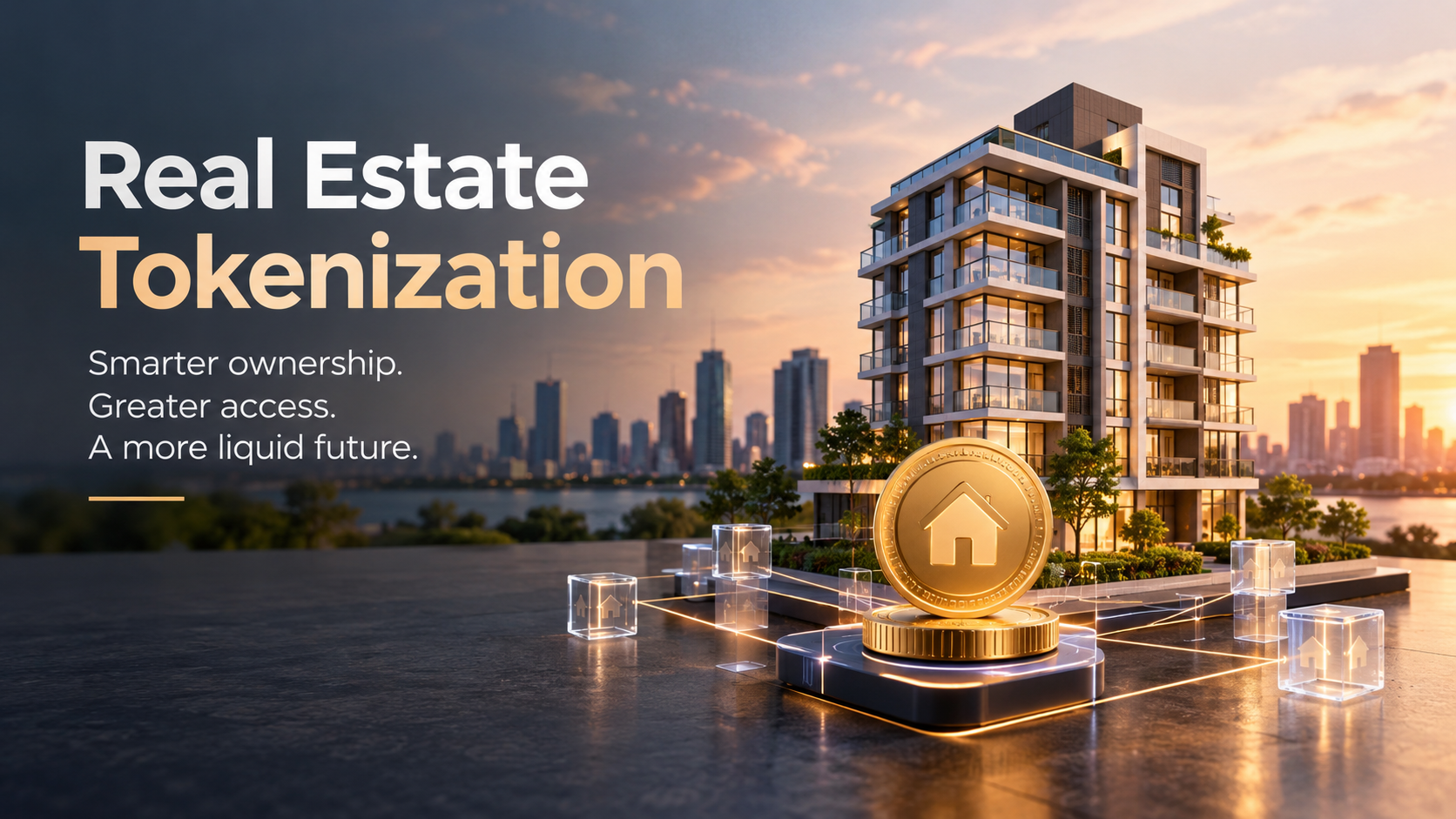
Real estate tokenization is transforming the concept of property ownership by connecting physical assets with blockchain-based financial infrastructure. Through fractionalization, programmable ownership, digital investor management, automated distributions, and potential secondary-market participation, tokenization can create new ways to structure and manage real estate investments.
However, the technology is only one part of the equation. Legal rights, regulatory compliance, investor protection, asset valuation, market demand, and operational infrastructure remain essential.
As these components mature together, real estate tokenization could evolve from an emerging blockchain application into a broader infrastructure for creating and managing digital financial products backed by physical property.


 Arabic
 French
 Spanish
 Portuguese
 Deutsch
 Turkish
 Dutch
Dutch
 Italiano
 Russian
 Romaian
 Portuguese (Brazil)
 Greek
Greek