


Virtual Reality Solutions for Modern Business Applications
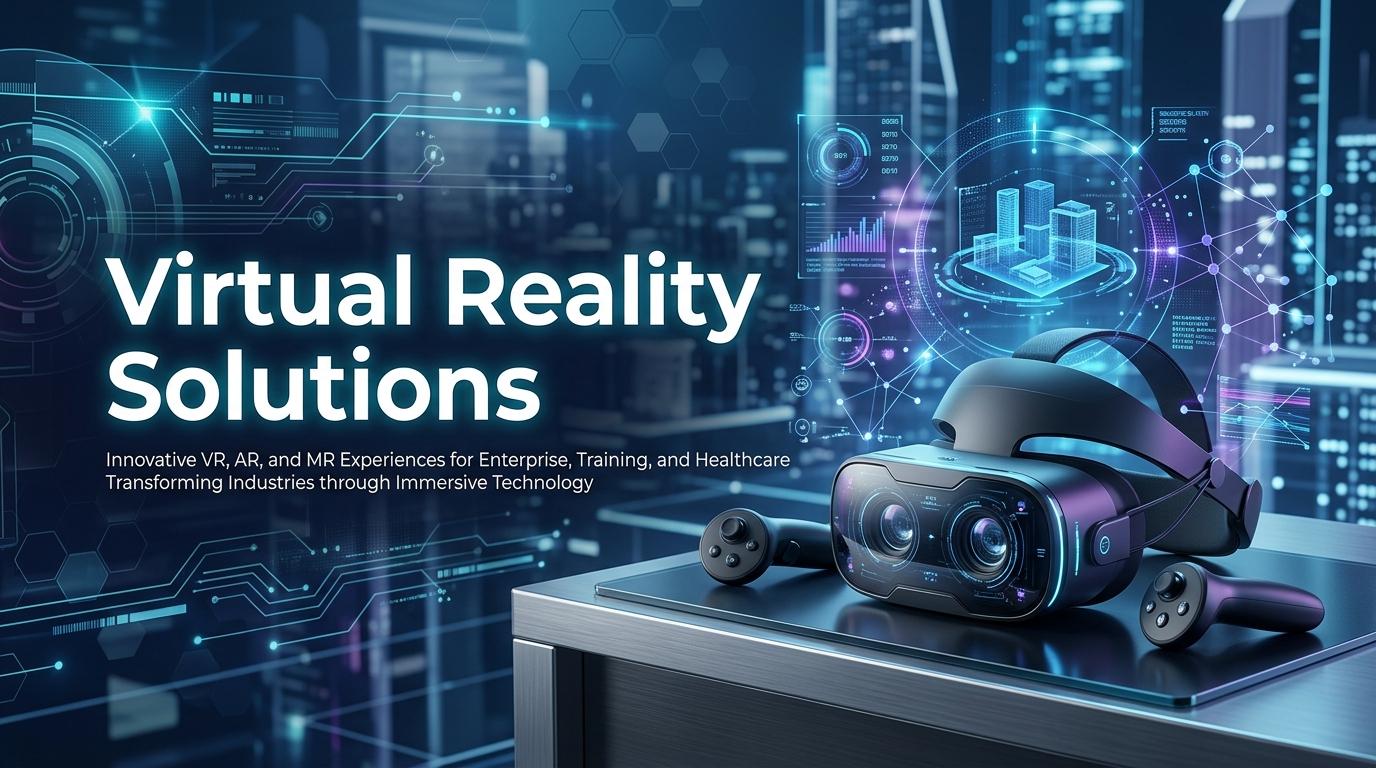
Virtual Reality Solutions are becoming useful tools for businesses that want to create practical digital experiences for employees, customers and business partners. Instead of relying only on traditional screens, presentations or physical demonstrations, companies can use virtual environments to provide interactive experiences. These applications can support employee training, product demonstrations, customer experiences, workplace planning and other business activities.
When I look at the way businesses use technology, one thing is clear. A useful technology should solve a real business problem. Virtual reality can do that when it is planned around a specific purpose. You can use VR to simulate situations that may be expensive, difficult or unsafe to recreate physically. Employees can practise tasks, customers can explore products and teams can experience virtual environments before making important decisions.
What Are Virtual Reality Solutions
Virtual reality solutions use computer generated environments that allow users to interact with simulated spaces or situations. A VR headset can place the user inside a three dimensional environment where they can look around, move and interact with selected objects.
For businesses, VR can be designed around specific operational needs.
Common applications include
- Employee training
- Product demonstrations
- Customer experiences
- Workplace simulations
- Safety training
- Equipment training
- Virtual meetings
- Property presentations
- Design reviews
- Technical education
The exact experience depends on the business objective and the technology being used.
Virtual Reality for Modern Business Applications
Modern business applications require more than basic digital communication. Businesses often need better ways to train employees, explain complex products and demonstrate procedures.
VR business solutions can provide an interactive environment for these activities.
For example, a company that operates complex machinery can create a virtual training environment where employees practise operating procedures before working with real equipment. This gives learners an opportunity to become familiar with the process in a controlled setting.
A business can also use VR to demonstrate a product to customers who cannot physically visit a showroom.
VR Solutions for Business
VR solutions for business can be developed for different industries and operational requirements.
A manufacturing company may use VR for equipment training. A property business may create virtual property tours. A healthcare organisation may use simulated environments for education. A retail company may use VR to create interactive product experiences.
This flexibility makes virtual reality suitable for more than entertainment.
The most useful applications usually begin with a clear question.
What does the business want users to learn, experience, practise or understand?
Once that question is answered, the VR experience can be designed around the required outcome.
Virtual Reality Training
Virtual reality training allows employees to practise tasks in a simulated environment.
Traditional training may involve presentations, manuals or classroom demonstrations. These methods can still be useful, but some tasks are easier to learn when people can practise them.
For example, employees may need to learn
- Equipment operation
- Emergency procedures
- Workplace safety
- Maintenance processes
- Customer service situations
- Technical procedures
- Operational workflows
A VR environment can allow employees to repeat scenarios and become familiar with the correct process.
This can be especially useful when practising the real activity is expensive, disruptive or potentially dangerous.
VR Training Solutions
VR training solutions can create realistic scenarios that reflect specific workplace conditions.
A training programme can include different difficulty levels or situations. Employees may be asked to identify a problem, select an appropriate response or complete a particular task.
The organisation can then review performance when the platform supports tracking and reporting.
This approach can make training more interactive because employees are actively participating rather than only listening to instructions.
Immersive Technology in Employee Learning
Immersive technology can change the way employees interact with training content.
When someone wears a VR headset, they can experience a simulated environment rather than simply viewing information on a flat screen.
For example, a safety training programme could place an employee inside a simulated workplace where they need to identify hazards.
The employee can look around the environment and interact with selected elements.
This type of learning can help connect instructions with practical situations.
Business VR Applications
Business VR applications can support different stages of the customer and employee experience.
Employee Onboarding
New employees can explore virtual workplaces and learn about procedures before starting certain activities.
Equipment Training
Employees can practise operating or maintaining equipment through simulated scenarios.
Safety Training
Companies can create controlled environments where employees practise responding to workplace hazards or emergencies.
Product Demonstrations
Customers can explore products or features through interactive virtual experiences.
Property Experiences
Real estate companies can allow customers to explore spaces without physically visiting every location.
Design Reviews
Teams can examine virtual versions of spaces or products before physical development begins.
Virtual Reality Technology for Product Demonstrations
Explaining a complex product can sometimes be difficult through photographs or brochures.
Virtual reality technology provides another option.
A company can create a virtual demonstration that allows customers to explore a product from different angles.
For example, a manufacturer can show how different components work together inside a machine. Customers can explore the virtual model and receive information about individual parts.
This can be useful when the actual product is large, expensive or difficult to transport.
Immersive Business Experiences
Businesses can also use VR to create immersive business experiences for customers.
Instead of simply reading about a service, customers can experience a virtual representation of it.
For example, a hospitality business could create a virtual tour of its facilities. A property company could provide virtual access to a building. An educational organisation could create interactive learning environments.
The objective should remain practical. A visually impressive experience is not enough if it does not provide value to the user.
Benefits of Virtual Reality Solutions
Businesses can gain several practical benefits from well planned VR applications.
Interactive Learning
Employees can actively participate in training rather than only reading or watching content.
Controlled Practice
People can practise selected tasks in a simulated environment.
Repeatable Training
A virtual scenario can be repeated whenever additional practice is required.
Remote Access
Some VR experiences can be delivered without requiring users to travel to a specific physical training location.
Product Visualisation
Customers can explore products and environments in greater detail.
Safer Scenario Practice
Certain workplace situations can be simulated without exposing employees to the actual risks associated with the real environment.
Consistent Experiences
A standardised virtual scenario can help different employees receive similar training content.
How Businesses Can Plan a VR Project
A successful VR project starts with a clear business requirement.
Define the Objective
First, decide what you want the VR experience to achieve.
Do you want to train employees, demonstrate products, support education or create a customer experience?
Identify the Users
Consider who will use the experience and what level of technical knowledge they have.
Design the Experience
The virtual environment should be easy to navigate and connected to the intended learning or business objective.
Select Suitable Hardware
Headsets and related equipment should match the environment and expected usage.
Test With Real Users
Before a wider rollout, allow a small group of employees or customers to test the experience.
Their feedback can help identify confusing controls, missing information or technical issues.
Measure Results
Determine which measurements will show whether the project is providing value.
For training, this might include completion rates, assessment performance or learner feedback.
Challenges of Virtual Reality in Business
Virtual reality also comes with practical considerations.
Hardware Requirements
Users need compatible VR equipment, and businesses may need to maintain multiple devices.
Development Costs
Creating a customised virtual environment can require specialist skills and development time.
User Comfort
Some users may experience discomfort when using VR equipment for extended periods.
Technical Support
Businesses need suitable technical support to manage hardware and software issues.
Employee Adoption
Employees may need basic guidance before they feel comfortable using VR equipment.
These challenges should be considered during planning rather than after implementation.
Choosing Virtual Reality Solutions
When selecting Virtual Reality Solutions, you should focus on business requirements rather than technology alone.
Consider
- Ease of use
- Hardware compatibility
- Software flexibility
- Content quality
- User experience
- Scalability
- Data management
- Technical support
- Integration options
- Long term maintenance
A solution should be practical for the people who will actually use it.
For example, a training programme may require different features from a customer focused virtual showroom. The right choice depends on the intended application.
Future Potential of VR in Business
Virtual reality has potential across training, education, customer experiences and operational planning.
As businesses become more comfortable with immersive tools, organisations may find additional ways to use simulated environments.
The strongest applications will likely remain those that solve clear problems.
If an employee needs to practise a difficult procedure, VR can provide a controlled environment. If a customer needs to understand a complex product, a virtual demonstration can make the information easier to explore.
The technology becomes valuable when it supports a practical purpose.
Final Thoughts
Virtual Reality Solutions can support modern businesses through interactive training, product demonstrations, simulations and immersive customer experiences. From virtual reality training and VR training solutions to product visualisation and business VR applications, companies can use virtual environments for many practical purposes.
The most important step is to start with the business need. You should identify what users need to learn, practise or experience before selecting hardware or developing content.
VR should also work alongside existing business processes rather than operate as an isolated technology project. When the experience is easy to use, relevant to the audience and connected to a clear objective, it can become a useful addition to business operations.
For organisations considering VR solutions for business, careful planning, user testing and performance measurement can help ensure that the technology provides meaningful value. Whether the goal is employee education, operational training or an immersive customer experience, virtual reality can give businesses a practical way to bring digital environments into everyday activities.


 English
 Arabic
 French
 Portuguese
 Deutsch
 Turkish
 Dutch
 Italiano
 Russian
 Romaian
 Portuguese (Brazil)
 Greek
