


Common Construction Delays and How to Avoid Them: A Practical Guide for Builders and Owners
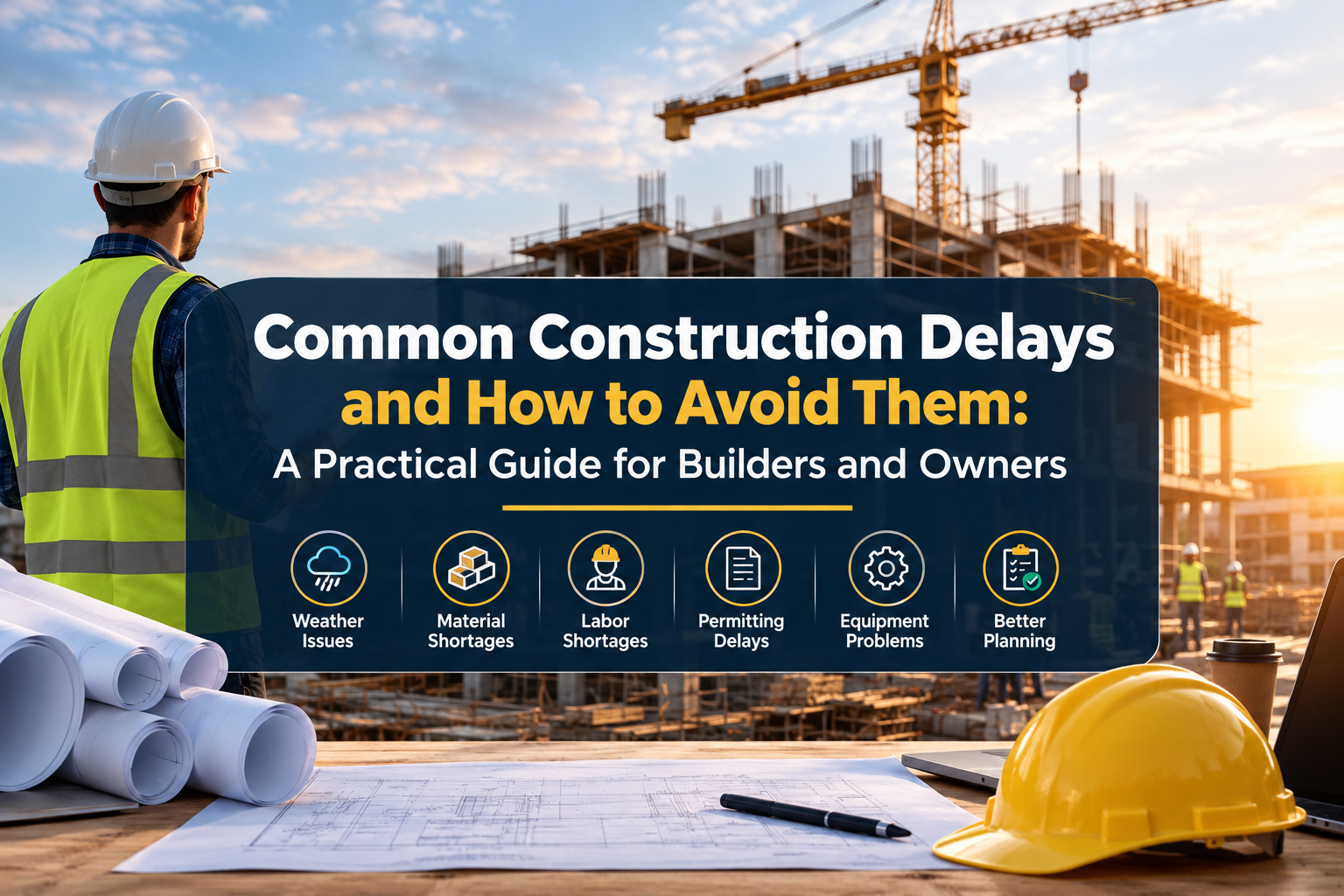
Construction delays are one of the most frustrating and expensive realities in the building industry. A project that looks perfectly scheduled on paper can still fall weeks or even months behind once ground is broken. Whether you're a homeowner managing your first build or a contractor juggling multiple job sites, understanding why delays happen is the first step toward preventing them.
In this guide, we'll break down the most common causes of construction delays, explain how they ripple through a project timeline, and offer practical strategies to keep your build on track.
Why Construction Delays Happen More Often Than You'd Think
Every construction project moves through a series of interconnected stages, and a slowdown in one stage almost always affects the ones that follow. A late permit approval pushes back groundbreaking. A material shortage stalls framing. A miscommunication between the architect and contractor forces rework. None of these issues exist in isolation; they're symptoms of a process that wasn't managed tightly enough from the start.
That's why it helps to step back and look at the bigger picture. If you want a clear breakdown of how a project moves from an idea to a finished structure, this guide on the key phases in the construction process lays out each stage in detail, from pre-construction planning all the way through project closeout. Understanding that sequence makes it much easier to spot exactly where delays tend to creep in.
The Most Common Causes of Construction Delays
Poor Pre-Construction Planning
A surprising number of delays are baked into a project before a single shovel hits the ground. Skipping proper site assessments, rushing feasibility studies, or failing to secure permits early on all set the stage for problems later. Pre-construction planning isn't glamorous work, but it's where most of the risk in a project either gets managed or gets ignored.
Inaccurate Cost Estimating
When budgets are based on rough guesses rather than detailed takeoffs, projects often stall mid-way when funds run short. Owners are forced to pause work while financing is renegotiated, and contractors may have to substitute materials or scale back scope. Accurate, itemized cost estimates prepared early in the design phase help prevent this kind of budget-driven delay entirely.
Material and Equipment Shortages
Supply chain disruptions have become a bigger factor in construction timelines over the past few years. Long lead times on windows, steel, HVAC equipment, and specialty finishes can leave crews standing idle if materials aren't ordered far enough in advance. Smart procurement scheduling, built around a realistic mobilization timeline, is one of the simplest ways to avoid this.
Weather and Site Conditions
Some delays are genuinely out of anyone's control. Heavy rain, extreme heat, or unstable soil conditions can push back excavation and foundation work regardless of how well a project is planned. The best defense here isn't prevention, it's buffer. Building realistic weather contingencies into the schedule keeps a few unpredictable days from turning into a few unpredictable weeks.
Miscommunication Between Stakeholders
Architects, engineers, contractors, subcontractors, and owners all need to be working from the same set of expectations. When drawings change without everyone being notified, or when a contractor makes a field decision without owner sign-off, the resulting rework can cost far more time than the original task would have. Clear, documented communication channels are one of the most underrated tools in a project manager's toolkit.
Change Orders and Scope Creep
It's natural for owners to want adjustments once they can see a project taking shape. But every change order, even a small one has a ripple effect on sequencing, material orders, and labor scheduling. Projects that handle change requests through a formal, documented process tend to absorb them far more smoothly than those that handle them informally.
How to Keep Your Project on Schedule
Start with a Detailed, Phase-by-Phase Plan
The projects that stay on schedule are almost always the ones where every phase from initial concept through final inspection was mapped out with real detail rather than broad strokes. Knowing what needs to happen, in what order, and who is responsible for it removes a huge amount of guesswork once construction begins.
Get Accurate Estimates Before You Commit to a Budget
A budget built on precise quantity takeoffs and current material pricing gives a project far more breathing room than one based on rough industry averages. This is especially true for larger commercial or multi-trade projects, where even small estimating errors can compound into significant shortfalls.
Build in Realistic Contingency Time
No schedule survives first contact with a real job site perfectly intact. Adding contingency days for weather, inspections, and unexpected site conditions isn't pessimism, it's just realistic planning that protects the overall timeline.
Maintain Consistent Communication Across the Team
Weekly check-ins, shared project documentation, and a single point of contact for scope changes all reduce the chances of a small misunderstanding becoming a major delay.
Final Thoughts
Delays are rarely caused by one dramatic failure; they're usually the result of several small gaps in planning, communication, or budgeting that compound over the life of a project. The good news is that most of these gaps are preventable with the right groundwork.
If you're planning a build and want to understand exactly how each stage of a project fits together, it's worth reading through this detailed breakdown of the construction process from concept to completion. Having a clear picture of each phase and where delays typically originate puts you in a much stronger position to keep your next project on time and on budget.

 English
 Arabic
 French
 Spanish
 Portuguese
 Turkish
 Dutch
 Italiano
 Russian
 Romaian
 Portuguese (Brazil)
 Greek
