


Track Lighting 101: How to Design a Space That Actually Feels Intentional
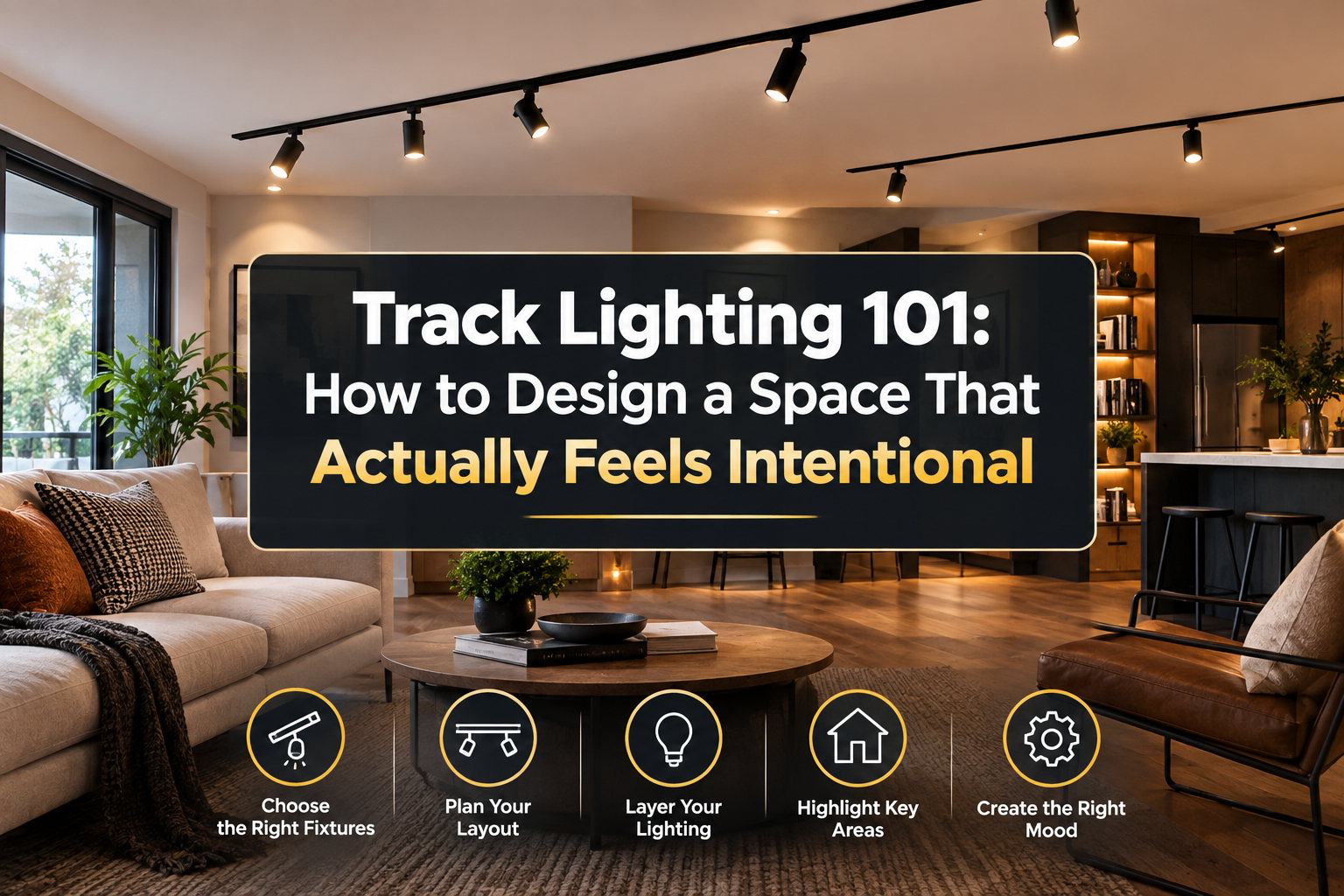
Walk into any beautifully lit room and there's a good chance you can't point to a single light fixture that's doing all the work. Instead, the light itself seems to be shaping the space, pulling your eye toward a piece of art, warming up a reading nook, or making a kitchen island look like it belongs in a magazine spread. More often than not, that effect comes from one flexible, underrated tool: track lighting.
Unlike a single pendant or a row of recessed cans, track lighting isn't locked into one layout the moment it's installed. It adapts as your room changes, which is exactly why designers reach for it again and again and why homeowners who try it once rarely go back to fixed fixtures.
What Makes Track Lighting Different From Everything Else
Most lighting decisions get made once and then live with you forever. A recessed light is where it is. A chandelier hangs where it hangs. Track lighting flips that script.
The Core Idea Behind a Track System
A track system runs a continuous power rail along the ceiling or wall, and individual light heads clip onto that rail wherever you need them. Want more light over the counter this year and less next year when you rearrange the kitchen? Slide the head over. Redesigning a gallery wall every season? Retain the fixtures in seconds, no electrician required.
Why Designers Keep Coming Back to It
It's rare to find a lighting format that works equally well in a cozy living room and a busy retail floor, but track lighting manages it. The same rail-and-head concept that highlights a family photo wall can be angled precisely enough to spotlight a mannequin or a museum piece, which is part of why it shows up so consistently in commercial spaces.
Where Track Lighting Solves Problems Other Fixtures Can't
Every room has a lighting challenge that's hard to solve with a single ceiling fixture. Track lighting tends to be the answer more often than people expect.
Kitchens With Awkward Work Zones
Islands, peninsulas, and irregular countertops rarely line up neatly under a centered ceiling fixture. A track lets you position individual heads directly over prep areas, sinks, or seating, so task lighting actually lands where the tasks happen.
Living Rooms That Need to Do Double Duty
A living room has to handle movie nights, dinner parties, and quiet reading often all in the same week. Adjustable track heads let you dial in a wash of ambient light for gatherings, then narrow the beam down for a single accent when you want the room to feel calmer.
Retail and Gallery Layouts That Change Often
Merchandising resets, seasonal displays, and rotating art exhibits all demand lighting that can move as fast as the layout does. This is where track systems earn their keep commercially; a floor manager can redirect a head in seconds instead of scheduling an electrician for every reset.
Choosing the Right Track Lighting Setup
Not every track system is built the same way, and picking the right one comes down to a few practical questions.
Beam Angle: Narrow vs. Wide
A narrow beam creates a dramatic spotlight effect ideal for artwork, architectural detail, or a single statement object. A wider beam spreads light more like general room illumination, better suited for task areas like kitchens or workspaces.
Color Rendering Matters More Than People Think
High-CRI (color rendering index) fixtures show colors the way they actually look in daylight, rather than washing them out or shifting their tone. This matters enormously in retail settings, where a shirt or a painting needs to look the same under the lights as it will look when the customer gets it home.
Dimmable Control for Flexibility
A dimmable track system lets a single setup handle multiple moods bright and functional during the day, softer and warmer in the evening without swapping a single fixture.
Getting Started With Your Own Track Lighting Project
If you're weighing whether track lighting fits your space, start by mapping out what actually needs to be lit: task areas, focal points, and general ambient coverage. From there, a well-organized track lighting collection makes it easy to compare beam angles, wattages, and finishes side by side, so you can match the fixture to the job instead of settling for whatever happens to be in stock at a big-box store.
Final Thoughts
The best-lit rooms rarely rely on a single fixture to do everything they layer light so it can adapt to how the space is actually used. Track lighting earns its place in that layered approach because it's one of the few systems that lets you rethink a room's lighting without rethinking the electrical work behind it. Whether you're brightening a kitchen island, highlighting a gallery wall, or setting up a retail floor that changes with every season, the flexibility of a track system tends to pay for itself many times over.

 English
 Arabic
 French
 Spanish
 Portuguese
 Deutsch
 Turkish
 Italiano
 Russian
 Romaian
 Portuguese (Brazil)
 Greek
