


Why Some Rooms Just "Feel Right" (And Others Never Do)
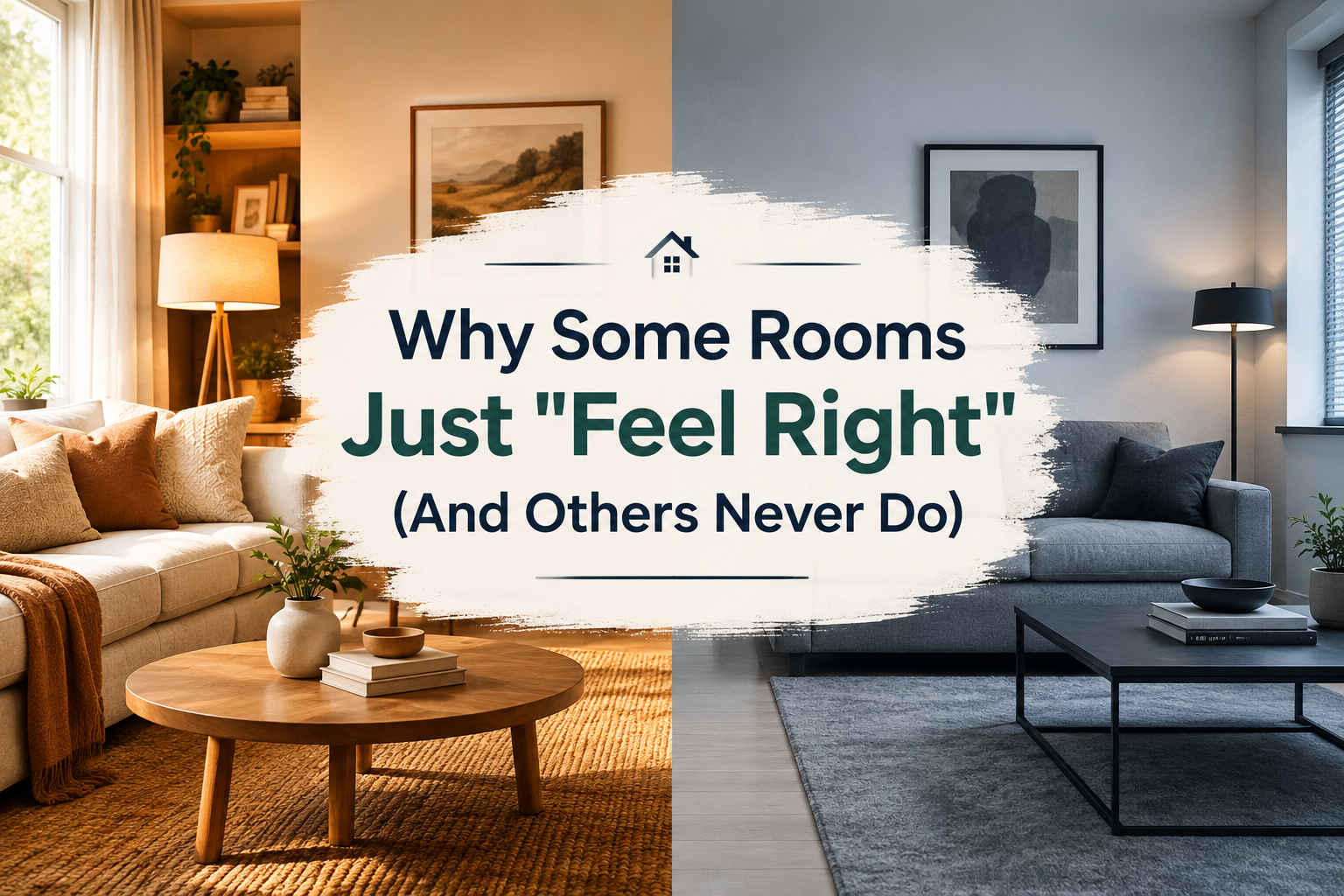
You've probably walked into two rooms with nearly identical furniture, similar budgets, and comparable square footage and felt completely different reactions to each one. One feels calm and pulled together. The other feels vaguely off, even though nothing about it is technically wrong. Nine times out of ten, that gap comes down to design fundamentals rather than taste.
Interior design isn't as subjective as it looks from the outside. Underneath the mood boards and Pinterest inspiration, there's a fairly consistent set of principles that separate rooms that work from rooms that don't. Once you can spot them, you start noticing them everywhere.
Design Is a Skill, Not Just an Instinct
It's tempting to think some people are simply "born with an eye" for design and everyone else has to fake it. In reality, most designers are applying a learned framework, even when it looks effortless.
The Framework Behind Good Design
Every well-designed room, whether it's a cozy reading nook or a sprawling open-concept living area, is built from the same handful of foundational building blocks working together. Miss one, and the room tends to feel unfinished no matter how much money went into the furniture.
Why Untrained Eyes Struggle to Diagnose the Problem
Most people can sense when a room feels off, but far fewer can articulate why. That's usually because the issue lives in one specific element: maybe the lighting is flat, or the textures are all the same weight rather than in the furniture choices themselves, which is where people tend to look first.
The Building Blocks Every Designer Relies On
Professional designers don't approach a room as one big decision. They break it into distinct layers, each with its own job to do.
Getting the Foundation Right
Before color or furniture enters the conversation, a room's layout, proportions, and the way light moves through it set the stage for everything else. Skipping this step is one of the most common reasons a beautifully decorated room still feels unbalanced.
Layering In Personality
Once the structural basics are sorted, texture, pattern, and color are what give a space its character and warmth. These are the elements people usually notice first, even though they're actually the last layer applied on top of a solid foundation.
For anyone who wants the full breakdown of these principles including how professionals think about space planning, sightlines, and the psychology of color the 7 elements of interior design is a genuinely useful place to start. It breaks down exactly which components separate a room that feels intentional from one that feels accidental.
Common Mistakes That Undo an Otherwise Good Room
Even with a big budget and beautiful furniture, a handful of recurring mistakes show up again and again in rooms that don't quite land.
Treating Lighting as an Afterthought
A room lit entirely by one overhead fixture almost always feels flatter and less inviting than one layered with ambient, task, and accent lighting. Lighting changes the entire emotional tone of a space, yet it's often the last thing people budget for.
Letting Furniture Dictate Everything
Buying furniture before thinking through the layout and flow of a room tends to produce awkward pinch points and dead zones. Planning proportions and traffic patterns first prevents having to work around furniture that doesn't quite fit.
Ignoring Texture Entirely
A room where every surface has the same smoothness or sheen glass tables, glossy floors, satin upholstery can feel oddly sterile, even with great color choices. Mixing rough and smooth, matte and reflective, adds the tactile depth that makes a space feel lived-in rather than staged.
Why Visualizing a Design Before Committing Matters
One of the biggest advantages professional designers have over DIY decorators isn't taste, it's the ability to see a design before it's built. Walking through a photorealistic rendering of a proposed layout makes it far easier to catch a lighting issue, a proportion problem, or a color clash before a single piece of furniture is ordered. That kind of preview turns expensive trial-and-error into a much smaller, much cheaper decision made on a screen instead of in a finished room.
Final Thoughts
The rooms that consistently "feel right" aren't accidents, and they're rarely the product of an unteachable natural gift either. They're built from a deliberate combination of structural fundamentals and carefully layered finishing touches, applied in the right order. Understanding those building blocks and where most rooms go wrong is the fastest way to close the gap between a space that just holds furniture and one that actually feels like home.

 English
 Arabic
 French
 Spanish
 Portuguese
 Deutsch
 Turkish
 Dutch
 Italiano
 Russian
 Portuguese (Brazil)
 Greek
