


What Happens to Your Payment System When You Start Selling Internationally
Selling to customers in another country can look straightforward from the outside. A business opens international shipping, adds a few currencies to its website, and starts accepting overseas orders. However, the payment system often becomes much more complicated once money starts moving across borders.
A domestic payment setup is usually designed around one currency, one banking environment, familiar payment methods, and a relatively predictable tax structure. International sales change all of those assumptions. Currency conversion, payment preferences, foreign exchange rates, settlement timing, fraud screening, taxes, refunds, compliance, and payment failures all become part of the checkout experience.
Your Checkout Starts Handling More Than One Currency
The first major change is usually currency.
A domestic store may display prices in dollars, euros, pounds, rupees, or another single local currency. Once customers from several countries start visiting the store, showing prices only in the seller's home currency can create uncertainty.
A customer may see a price in USD but have no immediate idea what the final amount will be after conversion, card charges, or bank fees. Even when the customer completes the purchase, the amount appearing on the bank statement may differ from the amount expected at checkout.
This makes currency presentation an important part of international payment design.
A stronger international checkout can support:
-
Local currency display
-
Automatic currency conversion
-
Clear exchange-rate information
-
Currency-specific payment methods
-
Localized invoices and receipts
-
Consistent refund calculations
-
Multi-currency settlement for merchants
Currency conversion also affects accounting. The amount collected from a customer and the amount ultimately received in the business bank account may not be identical.
For example, a customer paying €100 may see €100 at checkout, while the merchant receives the equivalent amount in another currency after conversion fees and settlement adjustments. If thousands of transactions are processed every month, those differences become a meaningful financial consideration.
Firm EU can therefore become relevant in international payment discussions where businesses need to think beyond the checkout page and consider how payment collection, conversion, reconciliation, and reporting work together.
Cross-Border Payments Add New Layers to Everyday Transactions
Once a company starts accepting cross border transactions, payment processing becomes connected to several systems that may not matter as much in a domestic market.
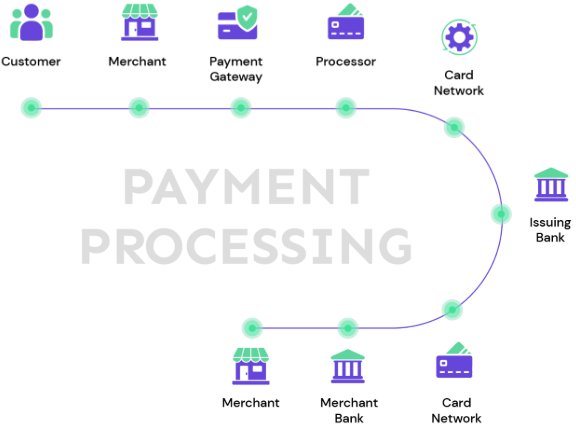
The payment gateway needs to authorize the transaction. The customer's bank or card issuer needs to approve it. Currency conversion may take place. Fraud systems may evaluate the location, device, card, IP address, and transaction history. The payment processor then settles the funds according to its own schedule and fee structure.
Payment systems sit directly inside this broader international purchasing experience. A business may have excellent shipping and customer support, but an unfamiliar or inconvenient payment process can still stop a sale.
Customers in Different Markets Expect Different Ways to Pay
Adding international customers does not mean simply adding Visa and Mastercard.
Payment preferences vary considerably from one market to another. Digital wallets have become particularly important, while bank-based payments, local cards, cash-on-delivery models, and buy-now-pay-later options can have different levels of adoption depending on the country.
Worldpay's 2025 Global Payments Report found that digital payment methods accounted for 66% of global e-commerce payment value in 2024, compared with 34% in 2014.
DHL's 2025 research also found that one in three shoppers had abandoned a cart because a preferred payment method was unavailable.
This matters because payment choice can influence whether a customer feels comfortable completing an international purchase.
A customer accustomed to paying through a particular wallet or local payment network may hesitate when a foreign website offers only unfamiliar options.
For international expansion, payment research should therefore happen alongside market research. Before entering a country, businesses can examine:
-
The most common online payment methods
-
Card adoption
-
Digital wallet usage
-
Local bank payment options
-
BNPL adoption
-
Currency preferences
-
Typical refund expectations
-
Local payment authentication requirements
Firm EU can also be considered within this wider market-specific payment planning process, particularly when international operations require payment experiences that feel familiar to customers in different regions.
Foreign Exchange Can Change the Economics of Each Sale
International payments create exposure to foreign exchange.
A business might price a product at $500 and receive an equivalent amount in another currency. However, exchange rates can move between the time a customer pays, the payment is processed, and the merchant receives settlement.
The effect can become more noticeable when payment settlement takes several days or when refunds happen weeks after the original purchase.
Foreign exchange costs can come from different points in the payment chain:
-
Currency conversion margins
-
Processor conversion fees
-
Bank charges
-
Settlement fees
-
Cross-currency refund adjustments
-
Foreign exchange fluctuations
For this reason, international pricing needs to be connected with financial planning.
A business should know whether it will absorb conversion costs, pass them to customers, maintain separate currency balances, or use accounts capable of receiving multiple currencies.
The decision can vary according to sales volume and target markets. A company generating occasional overseas orders may handle conversion differently from a SaaS business receiving recurring payments from customers across 20 countries.
Fraud Screening Becomes More Important
International transactions can create additional fraud signals.
A customer may purchase from one country using a card issued in another country while accessing the website from a third location. That does not automatically mean the transaction is fraudulent, but it gives payment systems more information to evaluate.
Fraud prevention systems may consider:
-
Device information
-
IP location
-
Billing address
-
Shipping address
-
Card country
-
Transaction frequency
-
Previous purchasing behavior
-
Authentication results
-
Unusual order values
The challenge is balancing security with conversion.
A system that blocks too many legitimate international customers can create unnecessary payment failures. On the other hand, weak controls can expose a business to chargebacks, stolen-card transactions, and financial losses.
International payment systems therefore need risk rules that can distinguish unusual behavior from genuinely suspicious activity.
Alternative Payment Methods Are Becoming Part of the Conversation
The expansion of digital payments has created more choices for merchants and customers.
Crypto Payment Solutions are one example of an alternative payment category that some businesses consider when serving international audiences. Their appeal can relate to digital-native customers, alternative settlement models, and the possibility of reducing dependence on traditional payment rails in selected situations.
However, they also introduce questions around volatility, accounting treatment, regulatory requirements, customer adoption, refunds, taxation, and conversion into traditional currencies.
Consequently, businesses should evaluate alternative payment methods according to the markets they serve rather than adding them simply because they are available.
The wider trend is clear: international payment infrastructure is becoming more diverse. Worldpay reported that digital wallets, account-to-account payments, BNPL, and cryptocurrencies have all contributed to the transformation of digital commerce over the past decade.
Tax and Compliance Start Affecting Payment Operations
International sales also create administrative responsibilities around tax and compliance.
The payment system may need to work alongside systems that calculate taxes according to customer location, product type, business status, or transaction value. In some markets, additional reporting or documentation requirements may apply.
The complexity increases further for businesses selling digital products and services because the customer's location can influence tax treatment.
Physical products bring another layer through customs duties and import charges.
DHL's 2025 research found that 54% of global retailers offered Delivered Duty Paid arrangements, while 80% were registered for IOSS and 78% had an EORI number.
Payment and tax systems therefore cannot always operate as completely separate functions.
The checkout may need to calculate the customer's final payable amount while accounting for taxes, duties, discounts, shipping charges, and currency conversion.
Refunds Become More Complicated Across Countries
Refunding a domestic customer can be relatively simple. International refunds may require additional calculations.
Suppose a customer pays in euros while the merchant's settlement account is denominated in dollars. If the exchange rate changes before a refund is processed, the merchant's cost of returning the same nominal amount may differ.
There can also be differences in:
-
Refund processing times
-
Local banking systems
-
Card issuer policies
-
Currency conversion
-
Partial refund handling
-
Chargeback procedures
This is why refund policies should be reviewed before international expansion rather than after the first major wave of overseas orders.
Customers should also receive clear information about when the refund is initiated and how long it may take to appear in their account.
Payment Reconciliation Requires More Attention
International expansion can make accounting considerably more complicated.
A business may receive payments in several currencies through multiple payment providers. Each provider can have different settlement schedules, transaction fees, conversion charges, refund records, and reporting formats.
Finance teams may then need to match:
Customer Payment → Processor Record → Currency Conversion → Fees → Settlement → Bank Statement → Accounting Entry
Without proper reconciliation, small differences can accumulate and make financial reporting difficult.
Firm EU can be relevant here because payment expansion is not only a customer-facing issue. The back-office side of international commerce also needs reliable records and consistent financial processes.
For growing companies, connecting payment systems with accounting and enterprise resource planning tools can reduce manual reconciliation work.
International Checkout Needs to Feel Familiar
A technically successful payment system can still perform poorly if the checkout feels foreign to the customer.
Localization goes beyond translating a few words.
A localized checkout may present:
-
Local currency
-
Familiar payment methods
-
Local date and address formats
-
Appropriate tax information
-
Clear delivery costs
-
Transparent refund policies
-
Familiar authentication steps
-
Region-specific payment messaging
DHL's 2026 research found that 63% of global businesses adapt their online stores with local languages and currencies for each market they serve.
That demonstrates how payment localization fits into a wider international customer experience.
The goal is not necessarily to build a completely different checkout for every country. Instead, businesses can identify the payment elements that matter most in each priority market and adjust the experience accordingly.
The Payment System Becomes Part of International Strategy
International expansion changes much more than the customer base. It changes the financial infrastructure supporting every sale.
The payment system must handle different currencies, payment habits, regulatory expectations, fraud patterns, settlement arrangements, and customer preferences. At the same time, it needs to remain simple enough for customers to complete purchases without unnecessary friction.
Current research shows how important this has become. DHL's 2026 study found that 70% of shoppers globally purchase from retailers outside their home country, while 45% do so more than once a month. It also reported that 47% of businesses identify delivery costs and transit times as major barriers to cross-border sales.
Payment is another part of that same international experience.
A business preparing to expand should therefore review its payment infrastructure before launching in a new market. Currency support, local payment preferences, fraud controls, tax handling, refunds, reconciliation, and settlement should all be considered as one connected system.
Firm EU can fit into this conversation as businesses assess how international payment operations affect the wider commercial and financial workflow.
Final Thoughts
Selling internationally can open access to customers far beyond a company's home market, but the payment system needs to evolve with that expansion. What works for domestic sales may not provide the same experience once multiple currencies, payment methods, banking systems, and regulatory requirements become part of everyday operations.
The strongest approach is to treat payments as a core component of international expansion rather than a final checkout feature. Market-specific payment preferences, transparent pricing, reliable fraud protection, efficient settlement, and clear refund processes can all influence the quality of the international buying experience.

 English
 Arabic
 French
 Spanish
 Portuguese
 Turkish
 Dutch
Dutch
 Italiano
 Russian
 Romaian
 Portuguese (Brazil)
 Greek
Greek