Laser tattoo removal is a gradual process, and understanding what to expect before, during, and after treatment can help you approach it with realistic expectations. Tattoo pigment is located beneath the skin, so removal does not usually happen after a single appointment. laser tattoo removal is typically planned according to the tattoo's color, depth, density, location, and the individual's skin characteristics.
What to Expect Before Treatment
The process generally begins with a professional consultation. During this assessment, the practitioner examines the tattoo and surrounding skin and considers factors that may influence treatment response.
Important considerations can include:
- Tattoo color and ink composition
- Pigment density and depth
- Tattoo size and location
- Age of the tattoo
- Skin tone and pigmentation
- Previous tattoo-removal treatments
- History of unusual scarring or pigmentation changes
- Recent sun exposure or tanning
This assessment helps determine whether laser treatment is appropriate and which treatment approach may be suitable.
Setting Realistic Removal Goals
Before starting treatment, it is important to understand that tattoo removal is different from simply covering or lightening a tattoo. The objective may be significant fading, partial removal, or preparation for a future cover-up.
Complete removal cannot always be guaranteed. Some tattoos may retain small amounts of pigment even after multiple treatments. The final outcome depends on individual and tattoo-specific factors.
What Happens During the Treatment
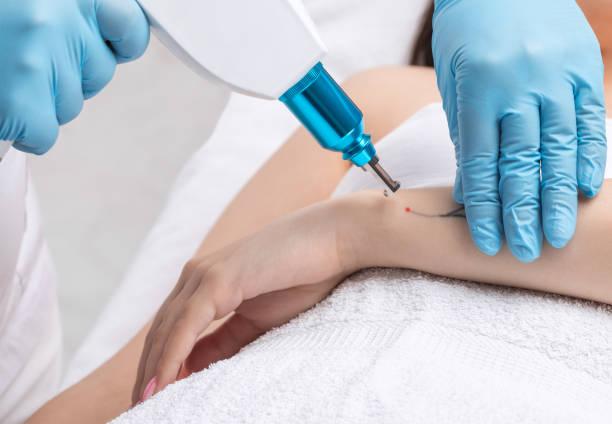
During the appointment, the laser delivers short pulses of energy to the tattoo. The selected wavelength is absorbed by the targeted pigment, causing the ink particles to fragment into smaller particles.
You may experience sensations such as snapping, stinging, warmth, or brief discomfort during the procedure. The experience varies according to the tattoo's location, size, pigment density, and individual sensitivity.
Appropriate treatment settings are selected to target the tattoo while taking the surrounding skin into consideration.
What the Skin May Look Like Immediately After
It is normal for the treated area to look different immediately after a session. Temporary redness, swelling, warmth, tenderness, or sensitivity may occur.
Depending on the treatment, some people may also experience small blisters, crusting, or other temporary skin changes. These reactions can vary according to the tattoo and treatment parameters.
The immediate appearance should not be considered the final result because tattoo fading continues during the healing period.
The Tattoo May Not Look Dramatically Different Immediately
One common expectation is that the tattoo should disappear directly after treatment. In reality, the laser breaks down pigment during the session, while the body gradually processes the fragmented particles afterward.
As a result, visible fading may develop progressively rather than immediately. The tattoo can continue changing between appointments as the body clears treated pigment.
What to Expect During the Healing Period
After treatment, follow the aftercare instructions provided by your practitioner. Keep the treated area clean and avoid picking, scratching, or removing crusts that develop naturally.
Excessive sun exposure should also be avoided because recently treated skin can be more sensitive. Your provider may recommend specific skin-care products or protective measures depending on the treatment area and your skin type.
If you experience an unexpected or prolonged reaction, contact your treatment provider for guidance.
Why Multiple Sessions May Be Required
Laser Tattoo Removal in Riyadh usually requires a series of treatments rather than one appointment. The laser can fragment pigment during each session, but the body needs time to process the resulting particles.
Treatment intervals also allow the skin to recover. The number of sessions varies significantly depending on tattoo color, density, depth, age, location, skin type, and individual response.
A tattoo that appears lighter after one session may still contain substantial pigment that requires additional treatment.
How Tattoo Fading Can Progress
Tattoo fading is generally gradual. Initially, the tattoo may appear similar to its original appearance apart from temporary post-treatment changes. Over time, the pigment may become less intense as the body processes the fragmented ink.
Subsequent treatments can address remaining pigment. Some areas may fade faster than others, particularly when pigment density is uneven.
For multicolored tattoos, different shades may also fade at different rates because pigments respond differently to laser wavelengths.
Factors That Can Affect Before-and-After Results
Several factors influence the final appearance.
Ink Color
Different colors absorb laser wavelengths differently, so some pigments may respond more readily than others.
Ink Depth and Density
Deep or heavily saturated pigment may require a longer treatment process.
Skin Type
Melanin levels can influence treatment settings and the risk of temporary pigmentation changes. Individualized treatment is particularly important for darker skin tones.
Tattoo Location
The body's ability to process fragmented pigment may vary between treatment areas.
Previous Treatment
Tattoos that have already undergone removal may respond differently because the remaining pigment and skin condition may have changed.
What Good Aftercare Involves
Proper aftercare supports the skin while it heals. Follow the instructions given by your practitioner, keep the area clean, avoid unnecessary friction, and do not pick at the treated skin.
Protecting the area from excessive sunlight is also important. Avoid introducing harsh exfoliating products or undergoing additional treatments on the area unless your provider has approved them.
What About Before-and-After Photos?
Before-and-after photographs can help illustrate how tattoo removal progresses, but results from another person should not be treated as a guarantee of your own outcome.
Differences in tattoo pigment, skin tone, ink depth, density, location, and previous treatments can produce substantially different results. A professional assessment is more useful for understanding your individual treatment expectations.
Understanding the Final Result
The final appearance may develop gradually over an extended period rather than immediately following a session. Even after substantial fading, some residual pigment may remain.
The aim of treatment should therefore be based on realistic expectations rather than assuming that every tattoo can be erased completely. Your practitioner can discuss the likely treatment process after evaluating the tattoo.
Book Your Appointment at Royal Clinic Saudia
If you are considering tattoo removal and want to understand what your own before-and-after progression may look like, Royal Clinic Saudia can assess your tattoo and skin during a consultation. This can help you understand the treatment process, expected healing, and realistic outcomes.
FAQs:
Will my tattoo disappear immediately after laser treatment?
No. The laser breaks down pigment during treatment, while the body gradually processes the fragmented particles afterward.
How many sessions will I need?
The number varies according to tattoo color, depth, density, size, location, skin type, and individual response. A consultation is needed for a more individualized estimate.
Can the tattoo look darker or different after treatment?
Temporary changes in the treated area can occur during healing. Some pigments may also respond differently to laser energy, which is why professional assessment is important.
Are before-and-after results the same for everyone?
No. Results vary considerably based on tattoo characteristics, skin type, treatment settings, and individual healing and pigment clearance.




 English
 Arabic
 French
 Spanish
 Portuguese
 Deutsch
 Turkish
 Italiano
 Russian
 Romaian
 Portuguese (Brazil)
 Greek
Greek