


How to Overcome Quiet Quitting: Effective Strategies for Managers and Employees
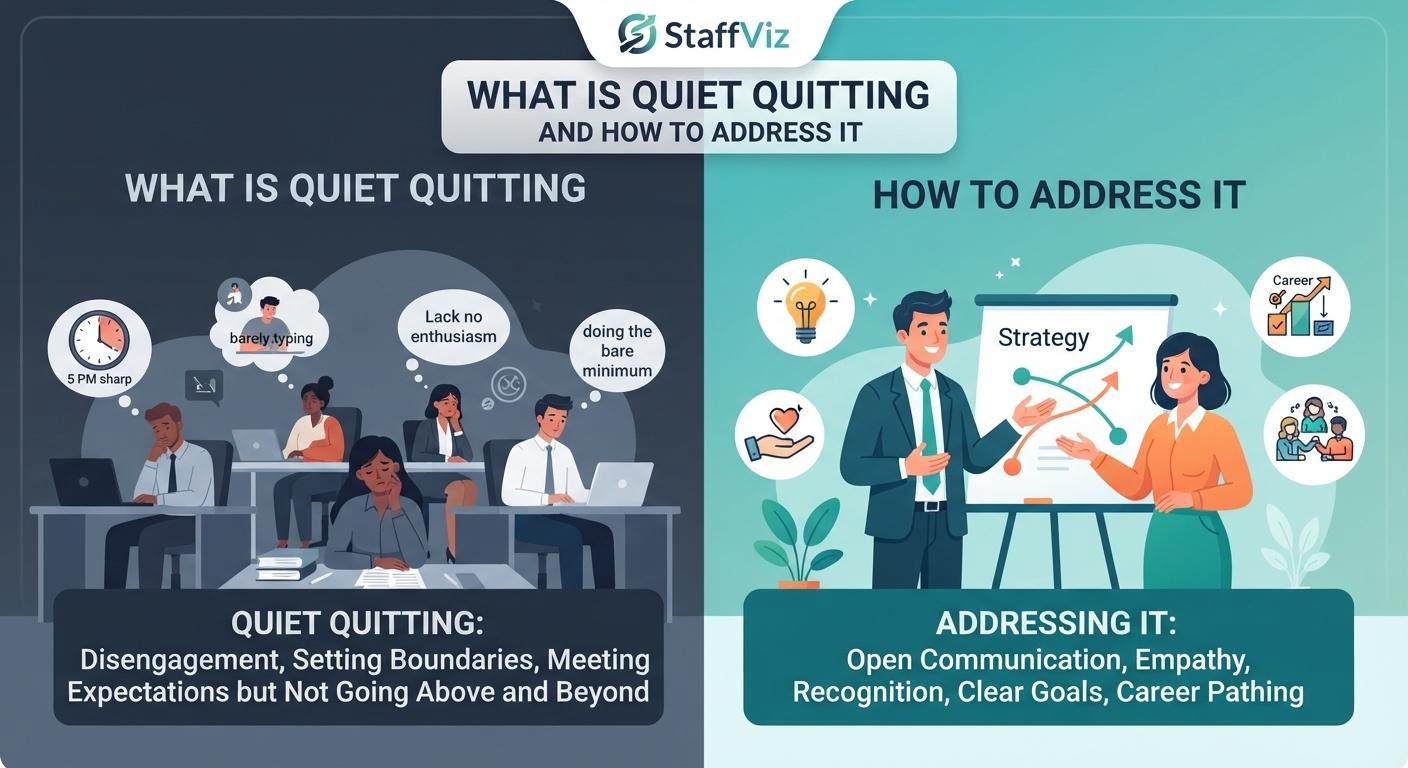
Quiet quitting has become an important workplace concern, but it is often misunderstood. It does not necessarily mean that an employee has stopped working or is deliberately performing poorly. In many cases, it describes a situation where employees do only what their role requires and become less willing to contribute beyond their basic responsibilities.
Understanding how to overcome quiet quitting requires looking beyond productivity numbers. Managers need to understand why employees become disengaged, while employees need opportunities to communicate their concerns and expectations. A healthy workplace depends on meaningful communication, realistic workloads, recognition, career development, and a culture where people feel their contributions matter.
What Causes Quiet Quitting in the Workplace?
Quiet quitting can develop gradually rather than happening overnight. An employee may initially be motivated and involved, but repeated experiences of excessive workloads, limited recognition, poor communication, or a lack of career opportunities can reduce engagement over time.
For example, imagine an employee who regularly takes on additional responsibilities but receives little feedback or recognition. After several months, that employee may decide to stop volunteering for extra projects and focus strictly on assigned duties. From the manager's perspective, productivity may appear to have changed suddenly, but the underlying problem developed over a much longer period.
Work life balance can also influence employee engagement. When employees feel that working beyond normal expectations has become permanent, they may establish stronger boundaries to protect their personal time.
How to Recognize the Early Signs
Changes in Participation and Communication
One of the first signs may be reduced participation. An employee who previously contributed ideas during meetings may become noticeably quieter. They might still complete assigned work but show less interest in discussions, collaboration, or workplace initiatives.
Managers should avoid immediately assuming that reduced participation means poor performance. Instead, a private and respectful conversation can help determine whether workload, communication problems, career concerns, or personal circumstances are affecting engagement.
Declining Interest in Development
Another warning sign is reduced interest in learning and professional development. Employees who once asked about training opportunities or future responsibilities may stop expressing interest in career progression.
This does not automatically indicate quiet quitting, but it can be a useful reason to check whether employees understand their future opportunities within the organization.
How to Overcome Quiet Quitting Through Better Communication
Communication is one of the most practical ways to overcome quiet quitting. Managers should create regular opportunities for employees to discuss workload, expectations, challenges, and professional goals.
A manager might ask, "Is your current workload manageable?" rather than simply asking whether everything is fine. Specific questions encourage more meaningful conversations and make it easier to identify problems before they become serious.
Regular one on one meetings can also help. These conversations should not always focus on deadlines and performance metrics. Discussing career goals, workplace challenges, recognition, and employee satisfaction can help managers understand what their teams actually need.
Build a Workplace Where Employees Feel Valued
Recognition Should Be Specific
Employee recognition does not always require financial rewards. Specific and timely appreciation can have a meaningful impact on motivation.
Instead of saying, "Good job," a manager could recognize how an employee handled a difficult customer, completed a complex project, or helped another team member. Specific feedback shows that the contribution was noticed.
Give Employees Opportunities to Grow
Employees are more likely to remain engaged when they can see opportunities for professional development. Training, mentoring, new responsibilities, and clearly communicated career paths can help employees understand how their current work connects to their future.
Managers should discuss development goals with employees instead of assuming everyone wants the same career path. Some employees may want leadership opportunities, while others may prefer to develop specialized technical skills.
Create Sustainable Workloads and Expectations
One important part of learning how to prevent quiet quitting is making sure expectations remain realistic. Consistently asking employees to work beyond their normal responsibilities without adequate support can eventually contribute to disengagement.
Managers should regularly review workloads and identify tasks that can be simplified, delegated, automated, or removed. Productivity should not be measured simply by how many hours someone appears to be working.
For remote and hybrid teams, this becomes especially important because managers may have less visibility into daily workloads. Clear objectives, realistic deadlines, and transparent communication can help teams remain accountable without creating unnecessary pressure.
Use Technology to Support Employee Engagement
Technology can help managers understand workforce patterns, but it should support communication rather than replace it. Workforce management and productivity platforms can provide information about working hours, attendance, tasks, projects, and productivity trends.
For organizations looking for a centralized solution, StaffViz provides tools designed to help businesses manage employee time, productivity, attendance, projects, and workforce performance.
The goal should not be to constantly monitor employees. Instead, managers can use relevant information to identify workload imbalances, understand operational challenges, and have more informed conversations with their teams.
What Employees Can Do to Address Quiet Quitting
Managers are not solely responsible for solving disengagement. Employees can also take an active role in improving their workplace experience.
If an employee feels overwhelmed, underappreciated, or disconnected from their role, communicating those concerns professionally can be more productive than silently withdrawing. Discussing workload expectations, requesting feedback, exploring development opportunities, and setting healthy boundaries can help create a more sustainable working relationship.
For example, an employee who feels overloaded could speak with their manager about priorities and ask which tasks should receive immediate attention. This creates an opportunity to solve the problem before frustration turns into long term disengagement.
Conclusion
Understanding how to overcome quiet quitting starts with recognizing that disengagement is often connected to deeper workplace issues. Managers can make a meaningful difference by improving communication, recognizing employee contributions, creating realistic workloads, supporting professional growth, and building an environment where employees feel respected.
Employees also have an important role to play by communicating concerns, asking for feedback, establishing healthy boundaries, and participating actively in their professional development. Organizations can further support these efforts by using practical employee productivity strategies that provide better visibility into workloads and workforce performance.
Quiet quitting is not simply a productivity problem. It can be an opportunity to examine how people work, communicate, develop, and contribute. By addressing the underlying causes rather than focusing only on symptoms, businesses can create stronger employee engagement and a healthier workplace culture.
FAQs
1. How can managers overcome quiet quitting among employees?
Managers can address quiet quitting by improving communication, reviewing workloads, providing meaningful recognition, supporting career development, and creating regular opportunities for employees to discuss workplace concerns.
2. What are the best ways to overcome quiet quitting?
Effective approaches include improving employee engagement, establishing realistic expectations, recognizing good work, providing development opportunities, supporting work life balance, and maintaining consistent manager employee communication.
3. How can companies prevent quiet quitting before it starts?
Companies can help prevent quiet quitting by creating a supportive workplace culture, providing clear career paths, recognizing employee contributions, monitoring workloads, encouraging feedback, and addressing workplace concerns early.
4. Does quiet quitting mean an employee is lazy?
Not necessarily. Quiet quitting can describe employees who limit their work to their formal responsibilities. It may be associated with disengagement, burnout, unrealistic expectations, limited recognition, or a desire for better work life balance.
5. How does employee engagement help prevent quiet quitting?
Strong employee engagement can help employees feel connected to their work and organization. Meaningful recognition, opportunities for growth, clear communication, and supportive management can contribute to stronger engagement.
6. Can productivity software help reduce quiet quitting?
Productivity software can provide useful information about working patterns, attendance, tasks, and workloads. However, technology should complement communication and management practices rather than replace conversations with employees.
7. What should managers do when an employee becomes disengaged?
Managers should have a private, respectful conversation with the employee to understand possible causes. Reviewing workload, expectations, recognition, career goals, and workplace challenges can help identify appropriate solutions.
 French
 English
 Arabic
 Spanish
 Portuguese
 Deutsch
 Turkish
 Dutch
Dutch
 Italiano
 Russian
 Romaian
 Portuguese (Brazil)
 Greek
Greek