


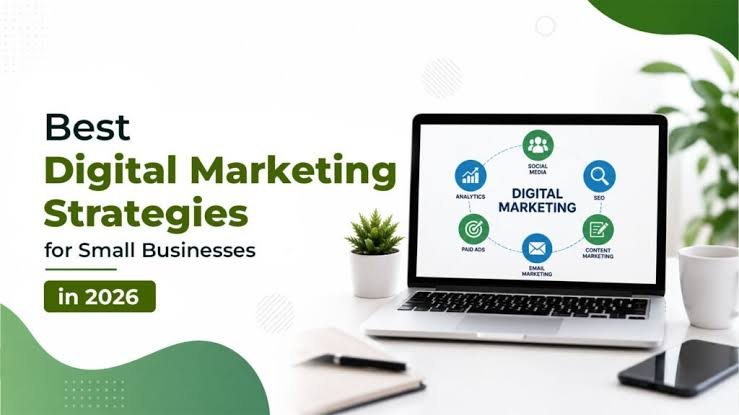
Digital Marketing Strategies for Small Businesses in 2026
A small business owner I know spent most of last year doing what everyone told her to do. She posted on Instagram every day, boosted a few ads and sent the occasional email. Her sales barely moved. When she finally looked at the numbers, she found she’d been spending time on five channels and getting results from none of them.
That’s the real problem with digital marketing for small teams. The issue usually isn’t effort, it’s focus. Some owners bring in the best digital marketing agency in Karachi to build a plan, while others run things themselves, and both can succeed if they pick the right few strategies and stick with them. This guide covers the ones that are working in 2026, how to start each one on a small budget, and what to skip.
Start With a Simple Foundation
Before you spend a rupee on ads or content, get three things straight.
Know who you’re talking to. “Everyone who needs our product” is not an audience. Write down who your best customer is, what they struggle with, where they spend time online and what makes them trust a business.
Pick one clear goal. More calls? More online orders? More walk-ins? Your goal decides which channels deserve your time.
Set a realistic budget and timeline. Most strategies take two to three months to show results. If you expect miracles in a week, you’ll quit just before things start working.
Strategy 1: Local SEO and Your Google Business Profile
If you serve customers in a specific area, this is the best place to begin. When someone searches for “dentist near me” or “bakery in Gulshan,” they’re ready to act, and the results they see first are maps and business profiles.
Here’s what to do:
- Claim and verify your Google Business Profile
- Choose accurate categories and list every service you offer
- Add real photos of your shop, team and work, and update them regularly
- Keep your hours, phone number and address correct everywhere online
- Ask happy customers for reviews, and reply to every one of them, including the critical ones
A complete profile with fresh reviews often brings more calls than a brand-new website. It’s also nearly free.
Strategy 2: A Website That Actually Converts
Your website doesn’t need to be fancy. It needs to load quickly on a phone, explain what you do in a few seconds and make the next step obvious.
Check these basics:
- Does it load in under three seconds on mobile data?
- Can a visitor tell what you sell and where you operate without scrolling?
- Is there one clear action, such as “Call now,” “Book a visit” or “Order on WhatsApp”?
- Are your prices, or at least a starting range, visible?
- Do you show proof, such as reviews, photos of past work or familiar client names?
Many small sites lose customers not because of weak traffic but because visitors can’t figure out what to do next. Fix that before you pay for more visitors.
Strategy 3: Content That Answers Real Questions
Search has changed, and so has the kind of content that works. AI summaries now handle simple, generic questions, so thin articles that just define a term get ignored. What gets noticed is content based on real experience.
Start by writing down the ten questions customers ask you most often. Then make each one a short page or post that gives a straight answer first, followed by detail. A tailor might write about how long alterations take and what affects the price. A clinic might explain what to expect at a first visit.
A few habits help:
- Put the short answer right under the heading
- Share examples from your own work, with photos where possible
- Put a real name and a short bio on every article
- Update older posts when prices or details change
This kind of content helps you show up in Google, in AI-generated answers and on social media, all from the same effort.
Strategy 4: Short-Form Video
Short videos on Instagram Reels, TikTok, YouTube Shorts and Facebook remain one of the cheapest ways for small businesses to reach new people. You don’t need a studio. A phone, decent light and a clear idea are enough.
Ideas that tend to work:
- Behind-the-scenes clips of how you make or deliver your product
- Quick tips that solve one small problem
- Before-and-after results
- Answers to customer questions, filmed in thirty seconds
- Introductions to your team, so people connect with faces
Post consistently, but don’t burn out. Three good videos a week beat daily rushed ones. Check which clips get saved and shared, then make more like them.
Strategy 5: WhatsApp and Messaging
In Pakistan and much of South Asia, customers often prefer to message a business before buying. Treating WhatsApp as a sales channel can make a big difference.
- Set up WhatsApp Business with a profile, catalog and quick replies
- Add a click-to-chat button to your website and social profiles
- Reply fast, because slow answers lose sales
- Use broadcast lists carefully for offers, and only with people who agreed to hear from you
A friendly, quick conversation often closes the sale that an ad alone could not.
Strategy 6: Email and Customer Retention
Winning a new customer costs far more than keeping an existing one, yet many small businesses ignore the people who already bought. Even a basic email or SMS routine pays off.
Start simple:
- Collect emails or phone numbers with permission at checkout, on your website and in store
- Send a short welcome message
- Share one useful message a month, such as a tip, a new arrival or a seasonal offer
- Follow up after a purchase and ask for a review
- Reach out to customers who haven’t returned in a while
Repeat customers and referrals are the most affordable growth you can get.
Strategy 7: Paid Ads, Used Carefully
Ads can speed things up, but they punish guesswork. Start small and learn before scaling.
- Search ads catch people who are actively looking for what you sell, so they suit high-intent services
- Social ads work better for building awareness and promoting offers visually
- Retargeting reaches people who already visited your site and tends to cost less per result
Begin with a modest daily budget, one goal and two or three ad variations. Track what each lead costs, not just clicks. If an ad brings visits but no calls or sales, change the offer or the landing page before raising the budget.
Strategy 8: Reviews, Reputation and Trust
Customers check reviews before they buy, and AI tools often rely on them when recommending local businesses. Make reviews part of your routine.
- Ask right after a good experience, when people are happiest
- Send a direct link so leaving a review takes ten seconds
- Reply politely to all feedback, and fix problems publicly where you can
- Show your best reviews on your website and social pages
Never buy fake reviews. Platforms are getting better at spotting them, and one exposed scheme can damage your reputation for years.
Strategy 9: Build a Brand People Remember
For a small business, brand simply means being recognizable and trusted. Use the same name, logo, colors and tone everywhere. Keep your business details identical across your website, social profiles and directories. Show up in local events, community groups and partnerships with nearby businesses.
When your name appears in several places people trust, you’re easier to remember, and easier for both customers and AI tools to recommend.
Strategy 10: Measure What Matters
Many small businesses track vanity numbers like followers and likes. Those feel nice but don’t pay the bills. Track a few meaningful ones instead:
- Leads, such as calls, messages, form fills and bookings
- Cost per lead or cost per sale
- Where customers say they heard about you
- Repeat purchase rate
- Google Business Profile actions, like direction requests and calls
Ask every new customer how they found you. It costs nothing and often reveals channels your analytics miss.
Mistakes to Avoid
- Trying every platform at once. Pick two or three and do them well
- Skipping the basics. Ads can’t fix a confusing website or a neglected profile
- Posting without a goal. Every piece of content should lead somewhere
- Ignoring messages and reviews. Slow replies cost sales
- Copying big brands. Their budgets and audiences differ from yours
- Giving up too early. Most strategies need a few months to show their value
A Simple 90-Day Plan
Month 1: Foundation. Fix your Google Business Profile, tidy your website, set up WhatsApp Business and define your goal and audience.
Month 2: Visibility. Publish answers to your top customer questions, start posting short videos and begin collecting reviews consistently.
Month 3: Growth. Launch a small ad test, start a basic email or SMS routine and review your numbers to decide what to keep.
Final Thoughts
Digital marketing for a small business doesn’t need a big budget or a huge team. It needs a clear audience, a few well-chosen channels and the patience to keep going when results come slowly. Start with local visibility and a website that converts, add content and video that show your real expertise, and keep your customers close once you win them.
You don’t have to do everything this month. Pick two strategies from this list, do them properly for ninety days, and see what the numbers say. Then build from what works.
 Russian
 English
 Arabic
 French
 Spanish
 Portuguese
 Deutsch
 Turkish
 Dutch
Dutch
 Italiano
 Romaian
 Portuguese (Brazil)
 Greek
Greek
