


How Accountancy Firms Can Organise Workloads and Meet Client Deadlines
Accountants manage multiple responsibilities throughout the working week, from preparing accounts and processing VAT returns to responding to client queries and reviewing financial records. When several deadlines fall within the same period, keeping every task organised can become challenging.
A structured workflow helps accounting firms distribute work, monitor progress and reduce the risk of overlooked responsibilities. Task management software for accountants can support this process by providing a central place to organise assignments, set deadlines and coordinate team activities.
Why Task Management Is Important for Accounting Firms
Accounting work often follows recurring schedules. VAT returns, payroll processing, bookkeeping, year-end accounts and tax returns may need attention at different points throughout the month or year.
Without a consistent task management process, teams may rely on spreadsheets, email reminders and individual to-do lists. Information can become scattered, making it harder to identify outstanding work or determine who is responsible for the next action.
A structured task management system helps firms establish clear responsibilities and gives managers a better overview of workloads.
Common Workflow Challenges Faced by Accountants
Understanding the problems behind inefficient workflows is the first step towards improving them.
Managing Multiple Client Deadlines
An accounting firm may serve dozens or hundreds of clients, each with different reporting periods, deadlines and information requirements. Staff need to know which tasks require immediate attention and which can be scheduled for later.
When deadlines are tracked manually, important dates may be overlooked or entered inconsistently. A shared task management system can help teams organise work by due date, priority and client.
Chasing Clients for Missing Documents
Accounting work frequently depends on information supplied by clients. Bank statements, invoices, expense records and payroll information may arrive at different times.
Repeatedly requesting missing documents can consume valuable staff time. Firms can improve the process by creating document-request tasks, assigning responsibility for follow-ups and recording whether the required information has been received.
Clear communication also helps clients understand what is needed and when it should be provided.
Balancing Workloads Across the Team
Workloads can become uneven when several complex assignments are allocated to the same employee. Other team members may have capacity but lack visibility of the outstanding work.
Task allocation should consider deadlines, task complexity, staff availability and relevant experience. Managers can then redistribute assignments where necessary and identify bottlenecks before they affect delivery.
What to Look for in Task Management Software for Accountants
Choosing appropriate software involves more than creating digital to-do lists. Accounting firms should consider how well a system supports their existing workflows and the specific needs of their team.
1. Centralised Task Tracking
A central task list helps staff see what needs to be completed, who is responsible and when the work is due.
Useful information may include the client name, task description, deadline, priority, assigned employee and current status. Keeping these details together reduces the need to search through separate messages and documents.
2. Recurring Tasks and Workflow Templates
Many accounting activities follow predictable schedules. Firms may repeat bookkeeping reviews, payroll processing, VAT preparation and client follow-ups at regular intervals.
Workflow templates can help teams follow consistent procedures for recurring work. Instead of rebuilding a checklist every time, staff can use an established process and adapt it to the client's requirements.
Templates should remain flexible enough to accommodate differences between clients and reporting periods.
3. Deadline Reminders and Priorities
Reminders can help employees prepare for upcoming deadlines and follow up on outstanding tasks. Priority labels can also distinguish urgent assignments from routine administrative work.
However, reminders are most effective when they support a clear process. Firms should define who receives notifications, when tasks should be escalated and how overdue work is handled.
4. Team Collaboration and Accountability
Task management software should make responsibility clear. Each assignment needs an owner, while complex work may require additional reviewers or contributors.
Comments, activity histories and status updates can help team members understand what has already happened and what remains outstanding.
These features are particularly useful when an assignment moves between bookkeeping staff, accountants, managers and reviewers.
5. Client Communication and Document Requests
Client communication can affect how quickly accounting work progresses. When information is spread across email threads, phone calls and separate messaging tools, staff may struggle to establish the latest position.
A connected client communication process can help firms record requests, track responses and identify missing information.
Where a practice uses a client portal, clients may also be able to exchange documents through a more organised channel. Firms should assess access controls and data protection requirements before choosing how sensitive financial information is shared.
6. Reporting and Workload Visibility
Managers need a reliable way to assess the team's progress. Reporting features can help identify overdue tasks, outstanding client information, uneven workloads and recurring workflow delays.
These insights can support decisions about staffing, task allocation and process improvements.
Useful measures may include the number of overdue tasks, average completion time, outstanding assignments by employee and the proportion of work completed within the planned timeframe.
How to Introduce Task Management Software Without Disrupting Work
Implementing a new system is easier when a firm starts with a clear plan rather than transferring every existing process immediately.
Step 1: Review current workflows. Identify where tasks are recorded, how deadlines are monitored and which activities regularly experience delays.
Step 2: Standardise common processes. Create consistent checklists for repeatable work, such as VAT preparation, bookkeeping reviews and year-end accounts.
Step 3: Assign clear ownership. Every task should have a responsible person, an appropriate deadline and a defined completion requirement.
Step 4: Train the team. Staff should understand how to create tasks, update progress, handle notifications and record relevant information.
Step 5: Review performance. After implementation, examine whether the system has improved visibility, reduced unnecessary follow-ups and made workloads easier to manage.
Starting with one workflow or team can help a firm identify problems before expanding the system across the practice.
How Remindoo Supports Accounting Workflow Management
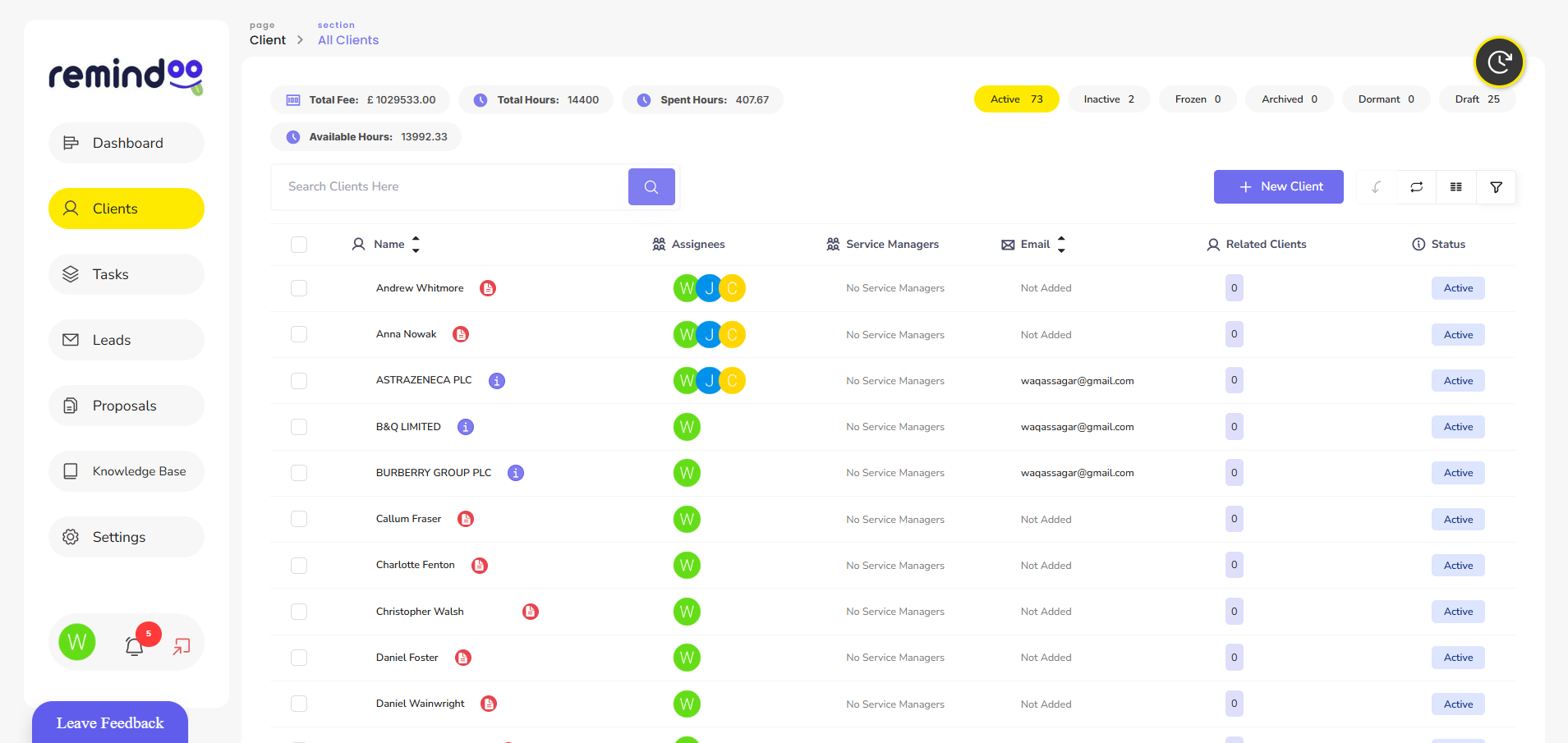
Remindoo is a practice management platform designed for UK accountants and bookkeepers. Its features include task and workflow management, client management, client portal functionality, reminders and other tools intended to help practices organise their work.
For firms evaluating task management software for accountants, a platform such as Remindoo provides an example of how task organisation can form part of a broader practice management process.
For instance, an accounting firm could organise a VAT preparation workflow by assigning tasks to the appropriate team members, tracking missing client information, monitoring progress and scheduling follow-ups. Similar processes could be adapted for bookkeeping, payroll and other recurring services.
The value of any platform depends on how well its features fit the firm's actual processes. Practices should evaluate usability, integration options, security controls, reporting capabilities and pricing before making a decision.
Why Accurate Record-Keeping Still Matters
Task management software can improve the organisation of work, but it does not replace the need to maintain accurate accounting records or comply with applicable tax requirements.
HMRC provides guidance on business record-keeping, including the records self-employed people need to maintain for their Self Assessment tax returns. Accounting firms can use this guidance when establishing procedures for requesting, organising and retaining client information.
Read the official guidance: GOV.UK — Business records if you're self-employed.
Firms should also ensure that access to client information is appropriate and that their processes support confidentiality and relevant data protection obligations.
Conclusion
Effective task management helps accounting firms coordinate workloads, monitor deadlines and maintain visibility across client assignments. Centralised task tracking, recurring workflows, reminders, clear ownership and useful reporting can make routine work easier to manage.
Selecting suitable task management software for accountants starts with understanding the firm's operational challenges and deciding which processes need improvement. Platforms such as Remindoo offer an example of how task management can sit alongside wider practice management features.
With consistent procedures and appropriate software, accounting firms can improve coordination, reduce avoidable administrative work and provide a more organised service to their clients.
 Greek
 English
 Arabic
 French
 Spanish
 Portuguese
 Deutsch
 Turkish
 Dutch
 Italiano
 Russian
 Romaian
 Portuguese (Brazil)
