


Venous Leak: Causes, Symptoms, Diagnosis, and Treatment in Men
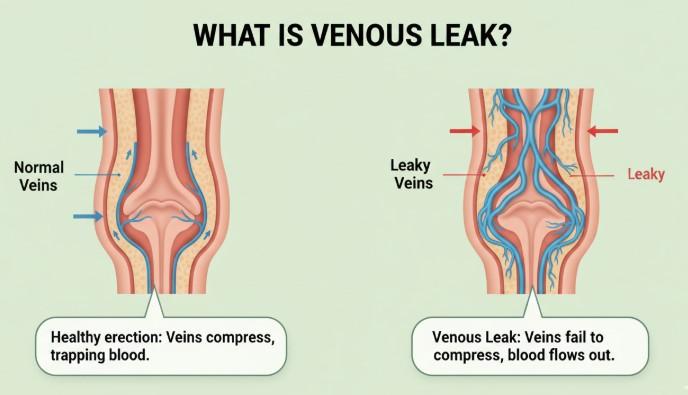
Venous leak is an important medical condition associated with erectile dysfunction (ED). It affects the ability of the penis to maintain an erection by interfering with the body's natural blood-retention mechanism. Men experiencing this condition may achieve an erection initially but struggle to maintain sufficient firmness during sexual activity.
A healthy erection requires proper blood circulation, functioning nerves, and healthy erectile tissues. During sexual stimulation, blood flows into the penis and fills two chambers known as the corpora cavernosa. As these chambers expand, they compress the surrounding veins, preventing blood from flowing out too quickly. This allows the penis to remain firm.
However, when this mechanism does not work properly, blood may leave the penis prematurely, resulting in weak or short-lasting erections. This condition is medically known as veno-occlusive dysfunction.
Venous leak can affect men of different ages and may be associated with diabetes, cardiovascular conditions, smoking, pelvic injuries, and abnormalities in penile tissues. It can also have a significant impact on sexual confidence, relationships, and emotional well-being.
Fortunately, various medical treatments can help men manage erectile dysfunction associated with venous leak. The appropriate approach depends on the underlying cause, severity, and individual medical condition.
This comprehensive article explores venous leak in detail, including its causes, symptoms, diagnostic methods, treatment options, lifestyle recommendations, and frequently asked questions.
What Is Venous Leak in Erectile Dysfunction?
Venous leak is a condition in which the penis cannot retain sufficient blood to maintain a firm erection. It occurs when the normal process of restricting venous blood outflow becomes impaired.
The penis contains two main erectile chambers called the corpora cavernosa. These structures contain specialized blood vessels and smooth muscle tissues that allow the penis to become erect.
During sexual stimulation, the smooth muscles relax and blood enters the erectile chambers. As the chambers expand, they compress the veins responsible for carrying blood away from the penis.
This process is called the veno-occlusive mechanism.
In men with venous leak, the erectile tissues may not expand sufficiently or the smooth muscles may not function correctly. Consequently, blood continues to flow out of the penis, making it difficult to maintain an erection.
Venous leak does not necessarily mean that a vein has a physical hole or is literally leaking blood. The problem frequently involves impaired functioning of the erectile tissue and its ability to restrict venous drainage.
It is also important to distinguish venous leak from other causes of erectile dysfunction. Some men experience erection problems because of insufficient arterial blood flow, hormonal imbalances, neurological disorders, or psychological factors.
How Does the Blood-Retention Mechanism Work During an Erection?
A normal erection involves a coordinated process between the brain, nervous system, blood vessels, and erectile tissues.
The process begins when sexual stimulation activates nerve signals that promote the release of nitric oxide.
Nitric oxide helps relax the smooth muscles within the penile arteries and erectile tissues. This allows more blood to enter the corpora cavernosa.
As the erectile chambers fill with blood, they expand and compress the veins located within the surrounding tissue.
This compression reduces venous blood outflow and allows the penis to maintain rigidity.
When the veno-occlusive mechanism becomes impaired, blood cannot remain inside the erectile chambers effectively. As a result, the penis may become partially erect or lose firmness during sexual activity.
This is the underlying mechanism associated with venous leak.
What Are the Main Causes of Venous Leak?
Venous leak can develop due to several medical, vascular, and structural factors. In many cases, more than one factor contributes to erectile dysfunction.
1. Diabetes and Vascular Damage
Diabetes is a significant risk factor for erectile dysfunction because prolonged high blood sugar levels can damage blood vessels and nerves.
It may also affect the endothelial cells and smooth muscles involved in normal penile circulation.
These changes can interfere with the expansion of erectile tissues and their ability to restrict venous blood outflow.
Men with poorly controlled diabetes may therefore experience different forms of vascular erectile dysfunction, including impaired veno-occlusive function.
2. High Blood Pressure
Hypertension can damage blood vessels and affect their ability to function normally.
Over time, uncontrolled blood pressure may contribute to vascular dysfunction and reduce the efficiency of penile circulation.
Some medications used to manage hypertension may also affect erectile function. Patients should discuss possible side effects with their doctors rather than discontinuing prescribed treatment.
3. Smoking and Tobacco Consumption
Smoking negatively affects cardiovascular health and damages the inner lining of blood vessels.
Nicotine and other tobacco chemicals can reduce nitric oxide availability and contribute to poor vascular function.
Long-term smoking is associated with an increased risk of erectile dysfunction and other circulation-related conditions.
4. Pelvic and Penile Injuries
Trauma involving the penis, pelvis, or perineal region may damage structures responsible for normal erectile function.
Depending on the severity of the injury, changes in blood vessels, connective tissue, or erectile structures may interfere with the ability to maintain an erection.
Men who develop persistent erection problems after an accident, pelvic operation, or genital injury should undergo medical evaluation.
5. Peyronie's Disease
Peyronie's disease is characterized by the formation of fibrous scar tissue inside the penis.
It can cause penile curvature, discomfort, and difficulty achieving satisfactory erections.
In some patients, changes in the tunica albuginea and surrounding erectile tissues may interfere with normal expansion and blood retention.
6. Obesity and Metabolic Syndrome
Obesity is associated with several health conditions that may increase the risk of erectile dysfunction.
These include:
-
Insulin resistance.
-
Type 2 diabetes.
-
High blood pressure.
-
Abnormal cholesterol levels.
-
Cardiovascular disease.
-
Chronic inflammation.
Improving metabolic health may support better cardiovascular function and overall sexual health.
7. Changes in Penile Smooth Muscle
Healthy smooth muscles are essential for normal erectile function.
These muscles relax during sexual stimulation, allowing the erectile chambers to fill with blood.
If smooth muscle function becomes impaired, the erectile tissue may not expand sufficiently to compress the surrounding veins.
This can interfere with the natural blood-retention mechanism.
8. Hormonal Problems
Hormonal abnormalities, particularly low testosterone, can contribute to erectile dysfunction and reduced sexual desire.
Although low testosterone is not the same as venous leak, hormonal problems may coexist with vascular erectile dysfunction.
Doctors may recommend hormonal investigations when symptoms suggest an endocrine disorder.
9. Congenital Structural Abnormalities
Some men may have developmental abnormalities involving penile erectile tissues or the structures responsible for restricting venous drainage.
These abnormalities can contribute to erection difficulties at a relatively young age.
10. Psychological Stress and Performance Anxiety
Stress, anxiety, depression, and relationship difficulties can affect the normal sexual response.
Psychological erectile dysfunction may produce symptoms similar to venous leak.
Some men experience a combination of physical and psychological factors, which is why a complete medical assessment is important.
Signs and Symptoms of Venous Leak
The most characteristic symptom of venous leak is difficulty maintaining an erection despite adequate sexual stimulation.
The symptoms can vary depending on the severity of the condition and the presence of other medical problems.
1. Difficulty Maintaining Penile Rigidity
Men may initially achieve an erection but notice that the penis gradually becomes less firm.
This happens because blood cannot remain inside the erectile chambers effectively.
2. Weak Erections
The penis may become partially erect without reaching sufficient hardness for satisfactory sexual intercourse.
3. Losing an Erection During Intercourse
Some men experience a loss of erection during penetration or shortly after sexual activity begins.
This can affect sexual satisfaction and confidence.
4. Reduced Erection Quality
Men may notice that their erections are weaker than before or do not last as long as they previously did.
5. Difficulty Maintaining Erections Without Continuous Stimulation
Some men notice that their erections become weaker when stimulation temporarily stops. However, this symptom is not specific to venous leak and can occur in healthy men as well.
6. Reduced Sexual Confidence
Repeated erectile difficulties can lead to frustration, embarrassment, and performance anxiety.
Some men may begin avoiding sexual activity because they fear losing their erection.
Important: These symptoms do not automatically indicate venous leak. Other forms of erectile dysfunction can cause similar problems, making proper diagnosis essential.
Venous Leak vs. Other Causes of Erectile Dysfunction
Erectile dysfunction can develop through several different mechanisms. Identifying the correct cause helps doctors recommend appropriate treatment.
|
Type |
Main characteristic |
|---|---|
|
Venous leak |
Difficulty retaining blood inside the penis |
|
Arterial insufficiency |
Inadequate blood entering the penis |
|
Hormonal dysfunction |
Hormonal abnormalities affecting sexual function |
|
Neurological dysfunction |
Disruption of nerve signals involved in erections |
|
Psychogenic ED |
Psychological factors affecting sexual performance |
Some men experience multiple contributing conditions. For example, diabetes may affect both arterial blood supply and the normal blood-retention mechanism.
How Is Venous Leak Diagnosed?
Venous leak cannot be accurately diagnosed through symptoms alone. A qualified urologist or sexual medicine specialist may recommend different examinations to evaluate penile circulation and identify the underlying cause.
1. Medical History and Sexual Health Assessment
The first step usually involves discussing the patient's symptoms, general health, and sexual history.
The doctor may ask:
-
When did the erection difficulties begin?
-
Can you achieve an erection but struggle to maintain it?
-
Do you experience morning erections?
-
Are erections affected during masturbation?
-
Do you have diabetes or hypertension?
-
Have you experienced pelvic or penile injuries?
-
Are you taking medications that affect sexual function?
-
Do you experience anxiety, stress, or relationship difficulties?
These questions help determine which investigations may be necessary.
2. Physical Examination
The doctor may examine penile anatomy, testicular health, blood pressure, and general physical condition.
The examination may also help identify signs of Peyronie's disease, hormonal abnormalities, or other conditions associated with erectile dysfunction.
3. Blood Tests
Blood investigations help identify underlying health problems that may contribute to erectile difficulties.
Common tests include:
-
Fasting blood glucose.
-
HbA1c.
-
Lipid profile.
-
Morning total testosterone.
-
Thyroid function tests when indicated.
-
Prolactin when clinically appropriate.
These investigations can help identify contributing conditions but cannot independently confirm venous leak.
4. Penile Color Doppler Ultrasound
Penile Doppler ultrasound is one of the most useful specialized investigations for evaluating penile blood circulation.
During this examination, a healthcare professional may administer medication into the erectile tissue to stimulate an erection.
An ultrasound probe is then used to evaluate blood flow through the penile arteries and assess the function of the veno-occlusive mechanism.
The examination commonly evaluates three parameters:
Peak Systolic Velocity (PSV): Measures arterial blood flow entering the penis.
End-Diastolic Velocity (EDV): Helps assess continued blood flow during the cardiac relaxation phase and provides information about possible excessive venous drainage.
Resistive Index (RI): A calculated measurement that provides additional information about vascular function.
Persistently elevated EDV after adequate pharmacological stimulation may suggest veno-occlusive dysfunction.
However, the results must be interpreted carefully. Inadequate medication response, anxiety, insufficient smooth muscle relaxation, and examination timing can affect measurements.
An experienced specialist should interpret the complete examination rather than relying on one Doppler value.
5. Dynamic Infusion Cavernosometry
Dynamic infusion cavernosometry is a specialized test used to evaluate the ability of the erectile chambers to maintain pressure.
Fluid is introduced into the corpora cavernosa, and the pressure required to maintain an erection is assessed.
It is generally reserved for selected patients when additional diagnostic information is needed.
6. Cavernosography
Cavernosography uses contrast material and imaging techniques to visualize venous drainage from the erectile chambers.
It may be considered when detailed information about venous anatomy is required for specialist treatment planning.
What Are the Treatment Options for Venous Leak?
The treatment of venous leak depends on the patient's medical condition, severity of erectile dysfunction, diagnostic results, and previous treatment response.
The main objective is to improve erectile function and help patients maintain satisfactory penile rigidity.
1. Oral Medications
PDE5 inhibitors are commonly prescribed to manage erectile dysfunction.
Common examples include:
-
Sildenafil.
-
Tadalafil.
-
Vardenafil.
-
Avanafil.
These medications enhance the natural nitric oxide pathway and increase blood flow into the penis during sexual stimulation.
They may help some men with venous leak achieve stronger erections, although they do not physically repair damaged veins.
Medication selection should be based on medical history and professional assessment.
Men taking nitrate medications must not use PDE5 inhibitors because this combination can cause a dangerous drop in blood pressure.
2. Vacuum Erection Devices
Vacuum erection devices are non-surgical tools designed to help men achieve an erection.
They usually consist of a transparent cylinder, a manual or electric pump, and a constriction ring.
The penis is placed inside the cylinder, and the pump creates negative pressure that draws blood into the erectile chambers.
Once an erection develops, the constriction ring is positioned around the base of the penis to reduce blood outflow.
This approach may help men who struggle to maintain erections because the ring assists with blood retention.
The ring should generally not remain in place for longer than 30 minutes, and patients should follow the manufacturer's and clinician's instructions.
3. Intracavernosal Injection Therapy
Intracavernosal injection therapy involves administering medication directly into the erectile tissue.
Alprostadil and certain combination preparations may be used to relax smooth muscles and increase penile blood flow.
This treatment may be considered when oral medications do not provide satisfactory results or cannot be used.
Possible side effects include:
-
Penile pain.
-
Bruising.
-
Prolonged erection.
-
Priapism.
Patients must receive proper training from a qualified healthcare professional before using injection therapy.
4. Penile Constriction Rings
Penile constriction rings are designed to reduce blood outflow from the penis and help maintain an erection.
They may be used alone or with a vacuum erection device.
However, incorrect or prolonged use can cause pain, bruising, numbness, and tissue injury.
5. Penile Implant Surgery
Penile implant surgery is an option for men with persistent erectile dysfunction who do not achieve satisfactory results with less invasive treatments.
A penile prosthesis provides mechanical support for achieving an erection.
There are two main types:
Inflatable penile implants: These devices contain inflatable cylinders, a fluid reservoir, and a pump. The patient activates the pump to produce an erection and deflates the device after sexual activity.
Malleable penile implants: These consist of bendable rods that can be manually positioned for sexual activity.
Penile implants can provide reliable erections for appropriately selected patients.
However, the procedure involves surgery and potential risks, including infection, pain, mechanical failure, and additional operations.
It is important to understand that a penile implant treats erectile dysfunction rather than repairing the underlying venous mechanism.
6. Venous Embolization
Venous embolization is a specialized image-guided procedure intended to reduce excessive venous drainage from the penis.
An interventional radiologist uses a catheter to reach selected veins and introduces embolic materials to block targeted vessels.
The objective is to improve the ability of erectile tissues to retain blood.
Although some studies have reported encouraging outcomes, venous embolization is not an established first-line treatment. Its long-term effectiveness and appropriate patient selection remain under investigation.
Patients should discuss potential benefits, limitations, complications, and alternatives with experienced specialists.
7. Psychological Counselling
Psychological counselling and sex therapy may benefit men whose erectile difficulties are associated with anxiety, depression, performance concerns, or relationship problems.
In patients with both physical and psychological factors, combining counselling with appropriate medical treatment may improve overall outcomes.
8. Treatment of Underlying Medical Conditions
Managing underlying health conditions is an important part of erectile dysfunction care.
Doctors may recommend:
-
Improving blood glucose control.
-
Managing high blood pressure.
-
Treating abnormal cholesterol levels.
-
Addressing obesity.
-
Evaluating hormonal abnormalities.
-
Reviewing medications that may affect erectile function.
-
Reducing cardiovascular risk factors.
These interventions can support overall vascular health and may improve erectile function.
Can Venous Leak Be Cured Permanently?
Whether venous leak can be permanently corrected depends on its underlying cause and severity.
Some men experience significant improvements when contributing conditions are treated and appropriate erectile dysfunction therapies are introduced.
However, when significant structural abnormalities or damage to erectile tissues are present, restoring the original veno-occlusive mechanism may be difficult.
It is also important to distinguish between successful erectile dysfunction treatment and complete correction of venous leak.
For example, medication may help a man achieve and maintain an erection without repairing the underlying vascular problem.
A urologist can explain realistic expectations after reviewing the diagnostic results.
Natural Ways to Improve Erectile Health
There is no scientifically established natural remedy that reliably repairs venous leak. However, healthy lifestyle habits may improve cardiovascular function and support erectile health.
Exercise Regularly
Physical activity supports heart health and circulation.
Walking, swimming, cycling, and moderate strength training can improve overall fitness.
Maintain a Healthy Weight
Excess body weight increases the risk of metabolic and cardiovascular problems associated with erectile dysfunction.
Maintaining a healthy weight may help reduce these risks.
Eat a Balanced Diet
A healthy diet should include vegetables, fruits, whole grains, nuts, fish, and other nutritious foods.
Limiting processed foods and excessive sugar can support better metabolic health.
Stop Smoking
Quitting smoking can help protect blood vessels and reduce cardiovascular risks.
Control Diabetes and Blood Pressure
Regular health assessments and appropriate treatment can help prevent further vascular damage.
Get Enough Sleep
Adequate sleep supports hormonal balance, cardiovascular health, and emotional well-being.
Manage Stress
Stress management, relaxation techniques, and counselling may help improve psychological well-being and sexual confidence.
Avoid Unverified Supplements
Products advertised as natural cures for venous leak generally lack reliable scientific evidence.
Some sexual enhancement supplements may contain hidden pharmaceutical ingredients that can cause harmful interactions.
Can Venous Leak Affect Young Men?
Yes. Venous leak can occur in younger men as well as older adults.
Possible contributing factors include congenital abnormalities, pelvic injuries, vascular problems, and metabolic conditions.
However, erectile difficulties in younger men can also result from performance anxiety, stress, depression, and other psychological factors.
A proper medical evaluation is important before concluding that symptoms are caused by venous leak.
Does Venous Leak Affect Male Fertility?
Venous leak does not normally damage sperm production or directly reduce sperm quality.
However, associated erectile dysfunction may make sexual intercourse difficult and indirectly affect the chances of natural conception.
Men experiencing both fertility concerns and erectile difficulties should consult a urologist or fertility specialist.
How Can Men Reduce the Risk of Erectile Dysfunction?
Although structural venous leak cannot always be prevented, certain habits can support healthy erectile function.
Recommended measures include:
-
Maintaining healthy blood sugar levels.
-
Controlling blood pressure.
-
Avoiding smoking and tobacco.
-
Exercising regularly.
-
Maintaining a healthy body weight.
-
Eating a balanced diet.
-
Limiting excessive alcohol consumption.
-
Getting adequate sleep.
-
Managing stress and anxiety.
-
Seeking medical advice for persistent erectile difficulties.
These measures support general vascular health but do not guarantee prevention of venous leak.
When Should You Consult a Urologist?
Persistent erectile difficulties should be evaluated by a qualified healthcare professional.
Consider seeking medical attention if:
-
You repeatedly lose erections during sexual activity.
-
Your erections are consistently weak.
-
You cannot maintain sufficient penile rigidity.
-
Erectile dysfunction develops after pelvic or penile trauma.
-
You have diabetes or cardiovascular risk factors.
-
Erectile dysfunction medications are not working.
-
Sexual difficulties are affecting your confidence or relationship.
Early assessment can help identify the underlying cause and prevent unnecessary delays in treatment.
Frequently Asked Questions (FAQs)
1. What is venous leak in men?
Venous leak is a condition in which the penis cannot retain enough blood during an erection because its normal veno-occlusive mechanism is impaired. It can result in weak erections and difficulty maintaining penile firmness.
2. What are the most common symptoms of venous leak?
The most common symptoms include difficulty maintaining an erection, reduced penile rigidity, weak erections, and losing an erection during sexual intercourse.
3. Can venous leak be treated without surgery?
Yes. Treatment may include PDE5 inhibitor medications, vacuum erection devices, intracavernosal injections, and constriction rings. The appropriate treatment depends on individual medical circumstances.
4. Is venous leak permanent?
Not every case is permanent. Some men improve with appropriate treatment, while others require long-term management. The outcome depends on the underlying cause and severity.
5. Can a young man develop venous leak?
Yes. Younger men may develop venous leak due to congenital abnormalities, pelvic injuries, or vascular problems. Other causes of erectile dysfunction should also be considered.
6. Which test confirms venous leak?
Penile color Doppler ultrasound with appropriate pharmacological stimulation is commonly used to evaluate penile blood circulation and suspected veno-occlusive dysfunction.
7. Does sildenafil help men with venous leak?
Sildenafil may improve erectile function in some patients by increasing blood flow into the penis during sexual stimulation. However, it does not directly repair damaged veins.
8. Can diabetes contribute to venous leak?
Diabetes can damage blood vessels, nerves, and erectile tissues, contributing to erectile dysfunction and impaired blood-retention function.
9. Does venous leak affect morning erections?
Some men with erectile dysfunction report reduced morning erections. However, the absence of morning erections alone cannot establish a diagnosis of venous leak.
10. Can exercise reverse venous leak?
Exercise supports cardiovascular health and may improve general erectile function. However, it is not a proven standalone treatment for structural venous leak.
11. Does venous leak cause infertility?
Venous leak does not generally affect sperm production. However, associated erectile dysfunction may make sexual intercourse difficult and indirectly affect conception.
12. Which specialist treats venous leak?
A urologist or sexual medicine specialist is generally the appropriate professional for diagnosis and treatment. An interventional radiologist may be involved when specialized vascular procedures are considered.
Conclusion
Venous leak is a vascular condition associated with erectile dysfunction in which the penis cannot retain sufficient blood to maintain a firm erection. It may develop due to impaired smooth muscle function, changes in erectile tissues, diabetes, cardiovascular disease, pelvic injuries, and other medical factors.
Common symptoms include weak erections, reduced penile rigidity, and difficulty maintaining an erection during sexual intercourse.
Accurate diagnosis is essential because several other conditions can produce similar symptoms. Medical history, physical examination, blood tests, and penile color Doppler ultrasound can help identify the underlying problem.
Treatment options include oral medications, vacuum erection devices, injection therapy, and penile implants. Specialized vascular procedures may be considered for selected patients, although their long-term effectiveness remains uncertain.
Men experiencing persistent erectile difficulties should consult a qualified urologist instead of relying on self-diagnosis or unverified treatments. With appropriate evaluation and an individualized treatment plan, many men can improve their erectile function, sexual confidence, and overall quality of life.
Medical References
For additional information and evidence-based guidance, consult:
-
European Association of Urology – Guidelines on Erectile Dysfunction: https://uroweb.org/guidelines/sexual-and-reproductive-health/chapter/management-of-erectile-dysfunction
-
American Urological Association – Erectile Dysfunction Guideline: https://www.auanet.org/guidelines-and-quality/guidelines/erectile-dysfunction-(ed)-guideline
-
National Library of Medicine – Research on Erectile Dysfunction: https://pubmed.ncbi.nlm.nih.gov/
-
Percutaneous Treatment of Venous Erectile Dysfunction: https://pmc.ncbi.nlm.nih.gov/articles/PMC7884342/
Medical Disclaimer: This article is intended for educational purposes only and should not replace professional medical advice, diagnosis, or treatment. Consult a qualified healthcare professional for individual medical concerns.

 English
 Arabic
 French
 Spanish
 Portuguese
 Deutsch
 Turkish
 Dutch
 Italiano
 Russian
 Portuguese (Brazil)
 Greek
