


Loft Boarding Birmingham: Common Myths and Costly Mistakes to Avoid
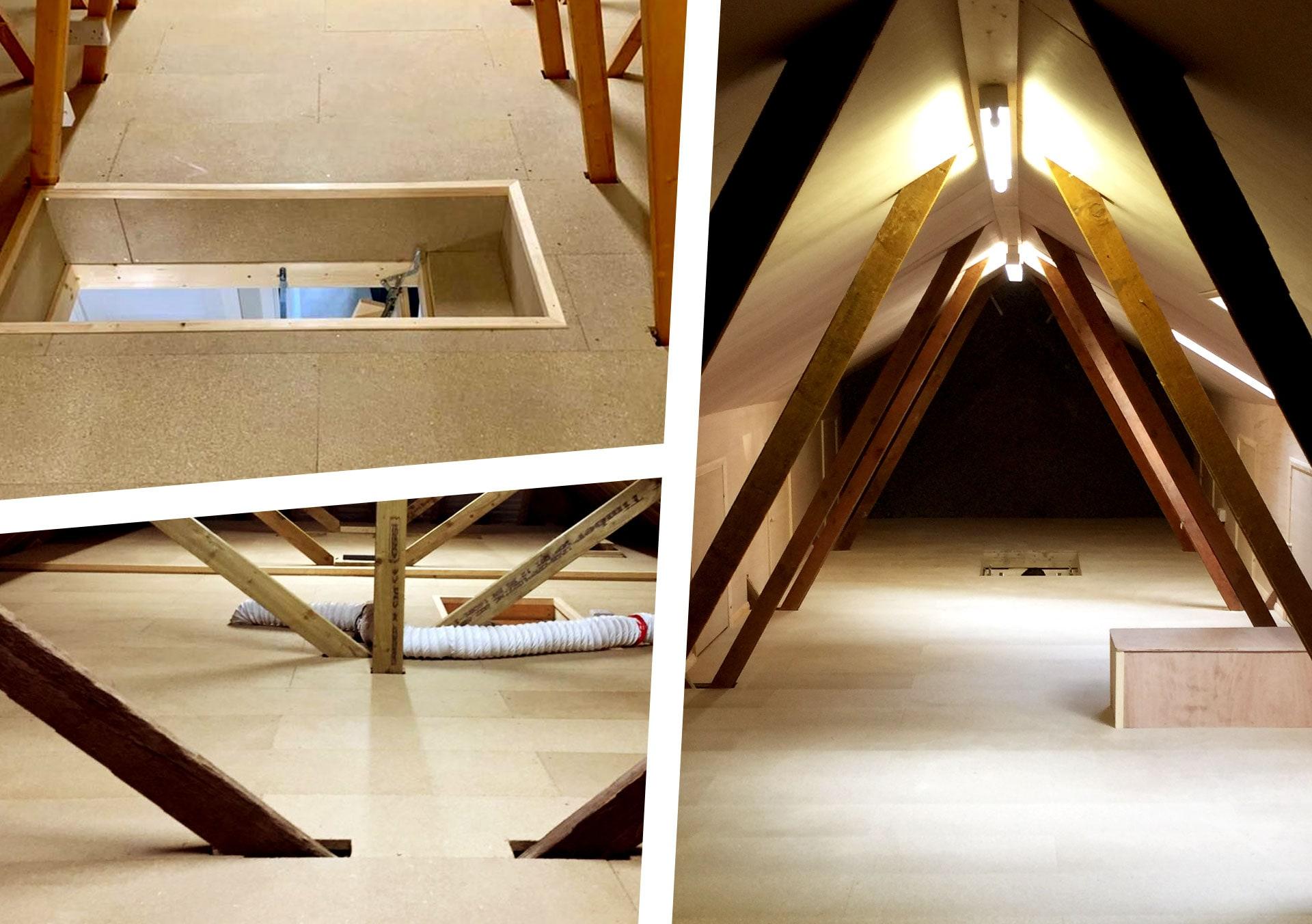

Boarding a loft sounds simple: lay some sheets of chipboard and start storing boxes. In reality, many of the problems homeowners face come from a few widespread myths. Understanding them before you book loft boarding Birmingham work can save you money, protect your insulation and keep your loft safe for years.
This guide separates fact from fiction, explains the mistakes that cause the most trouble, and shows what a properly installed loft floor should look like.
Myth 1: Boards Can Go Straight Onto the Joists
This is the most common misconception, and it causes the most damage. Ceiling joists in many homes are only 100mm to 150mm deep, whereas the recommended depth for mineral wool insulation is 270mm.
What Actually Happens
When boards are screwed directly onto the joists, the insulation beneath is squashed. Because insulation works by trapping air, compressing it sharply reduces how well it keeps heat in.
The Better Approach
A raised system uses supports fixed to the joists to lift the floor clear of the insulation. As a result, the insulation keeps its full depth and you still get a firm surface for storage.
Myth 2: Any Loft Can Take Any Amount of Weight
A boarded floor feels solid, so it is easy to assume it can hold almost anything. However, the ceiling joists below were designed mainly to support the ceiling, not heavy storage.
One raised-leg manufacturer quotes up to 25kg per square metre, but the real limit depends on your ceiling structure. For this reason, a boarded loft suits light storage such as suitcases, decorations and bedding. Heavy items like books, tools and old furniture are better kept elsewhere or spread very carefully.
Myth 3: Boarding Turns a Loft Into a Room
Some homeowners hope that boarding will create a bedroom or office cheaply. Unfortunately, a storage floor is not designed for people to live or work on.
A habitable room needs strengthened floor joists, a fixed staircase, fire safety measures and Building Regulations approval. If you want a usable room, a full loft conversion is the correct route.
Myth 4: You Should Board Every Corner
More floor sounds like more storage, but the lowest parts of the roof are hard to reach and rarely used. In addition, covering the eaves can block the airflow that keeps roof timbers dry.
In most homes, a central storage area with a clear path from the hatch gives the best value. Experienced loft boarding Birmingham installers will suggest a layout that balances storage space with ventilation and easy access.
Myth 5: DIY Is Always Cheaper
DIY kits can look cheaper at first. Yet mistakes are easy to make, and fixing them often costs more than doing the job properly from the start.
Hidden Costs of Getting It Wrong
Common DIY problems include crushed insulation, boards cut to fit around cables that later need access, and damaged ceilings from slips between joists. Each of these can lead to higher heating bills or repair costs.
What You Gain From Professional Fitting
A professional team checks joist condition, selects the right support height and works safely around services. Most standard installations are also finished in a single day, so disruption is minimal.
Myth 6: Insulation Does Not Matter Once the Loft Is Boarded
Some people assume that a boarded floor adds enough warmth on its own. In fact, chipboard offers very little insulation compared with mineral wool, so the material beneath the floor still does almost all the work.
If your insulation is thin, the best time to top it up is before the boards go down, while the joists are still easy to reach. A good loft boarding Birmingham survey should therefore include a check of the existing depth and condition.

Myth 7: Any Box Is Fine for Loft Storage
Lofts can swing from very hot in summer to cold in winter, and cardboard can soften or attract pests over time. Sealed plastic containers protect belongings far better against dust and damp.
It is also wise to keep important documents, photographs and electronics in the main house. Durable items such as suitcases, decorations and camping gear are much better suited to the roof space.
Mistakes That Cause the Most Problems
Beyond the myths, a handful of practical errors appear again and again. The table below summarises them and how to avoid each one.
| Mistake | What goes wrong | How to avoid it |
|---|---|---|
| Compressing insulation | Heat loss increases | Use raised supports above the insulation |
| Blocking the eaves | Ventilation drops and condensation can form | Keep the edges of the roof clear |
| Covering cables and junction boxes | Future repairs become difficult | Leave access panels or route around them |
| Ignoring downlights | Insulation sits too close to hot fittings | Fit covers or loft lids before boarding |
| Overloading the floor | Joists and ceilings can be strained | Store light items and spread weight evenly |
What a Good Installation Looks Like
Knowing what to expect makes it easier to judge quotes and finished work. A quality installation should include these features:
- Raised supports fixed securely to every relevant joist
- 18mm chipboard boards that sit flat with no loose edges
- Insulation left at full depth beneath the floor
- Clear eaves and good airflow around the roof edges
- Safe access to tanks, pipes and electrical connections
- All waste removed, leaving the loft clean
How to Choose the Right Installer
A reliable installer will explain their method clearly and answer questions without hesitation. When comparing loft boarding Birmingham quotes, ask each company these questions:
- Will you use raised supports, and how tall will they be?
- How will you protect the existing insulation?
- How will you work around cables, pipes and downlights?
- Is lighting or a ladder included in the price?
- Are you fully insured?
As a guide, a raised package for a 10 sqm loft starts from around £500. A survey and fixed quote will confirm the price for your home.
Frequently Asked Questions
Is it ever fine to board directly on the joists?
Only where the insulation is no deeper than the joists, which is rare today. In most homes, a raised floor is the better long-term choice.
Will boarding make my house colder?
Not when it is done properly. Raised supports keep insulation at full depth, so your home stays as warm as before.
Can I add more boards later?
Yes. Many homeowners start with a central area and extend it later, using the same raised system.
Do I need to remove old insulation?
Usually not. If it is dry and in good condition, it can stay in place, and a top-up may be added before the floor goes down.
Can boards go around a water tank?
Yes. Installers usually board up to the tank and leave room for maintenance, keeping pipes and valves easy to reach.
How long does installation take?
Most standard installations are completed within a single day, depending on loft size and access.

Final Thoughts
Most loft boarding problems come from myths that seem sensible at first. By protecting your insulation, keeping ventilation clear and storing only light items, you can enjoy a safe and useful loft for many years.
If you want the job done properly from the start, FIXIT Renovation provides loft boarding Birmingham homeowners can book with a free survey and a fixed, no-obligation quote.

 English
 French
 Spanish
 Portuguese
 Deutsch
 Turkish
 Dutch
 Italiano
 Russian
 Romaian
 Portuguese (Brazil)
 Greek
