


Makeup and Toiletries Storage: What Buyers Should Check
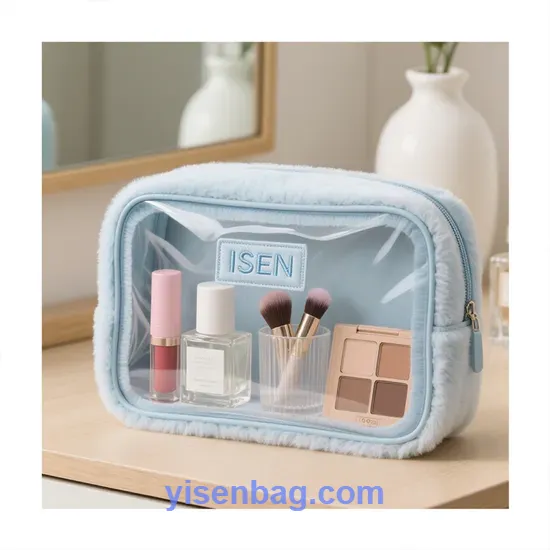
A bag that looks spacious on a product photograph can feel surprisingly restrictive once bottles and everyday cosmetics are inside. That is why Makeup and Toiletries Storage should be assessed through its usable space rather than its appearance alone. A buyer needs to consider the items that will actually go inside, how they are shaped, and whether the opening allows them to be reached without taking everything out. A wide base, a tall profile, or a broad opening can each affect how a bag works, but none of those features should be assumed without checking the specific product or sample.
Capacity is a useful starting point, although a stated volume does not explain how the interior is arranged. A bag may have room for several containers but still be awkward for a particular collection of cosmetics if its usable width or depth is limited. Before comparing specifications, make a rough inventory of the intended contents: upright bottles, flat palettes, brushes, small jars, and the items that tend to travel loose. Their shapes matter as much as their quantity. A bottle with a pump needs a different amount of clearance from a flat compact, and a long brush may require a different internal space from a short tube. The product dimensions should be checked against those objects rather than treated as an abstract measurement.
The opening deserves its own inspection. On a sample placed flat on a table, I would unzip or open it fully and check whether the sides stay accessible while the contents are being handled. A narrow opening can make a deep compartment difficult to use, even when the stated capacity seems generous. The opening dimensions, closure type, and the way the top panel moves are practical details to request from a supplier. If those specifications are unavailable, a physical sample can help clarify the arrangement, but a photograph of a closed bag cannot answer every question about access.
Internal organization is another point where buyers should be precise. Ask whether the product has separate compartments, pockets, elastic holders, or a single open space, and confirm which of those features are included in the actual model. Do not assume that a photograph showing several items means the bag includes fitted holders for each one. Some images are arranged to demonstrate possible use rather than supplied contents. A clear product specification should distinguish built-in features from accessories or styling props, especially when a custom order is being discussed. The same distinction applies to removable dividers and inserts, which should be listed explicitly if they form part of the requested configuration.
Material information belongs on the specification sheet, not in a guess based on a photograph. Surface texture and appearance can be observed on a sample, but they do not establish fiber content, coating, lining composition, or resistance to moisture. Those details can affect cleaning instructions and the way a bag responds to regular handling. Buyers should request the exact material description for the outer fabric and interior, along with any care guidance available for the selected construction. Zhejiang Yisen Bags Co., Ltd. is based in Yiwu, and ISEN provides OEM/ODM services across luggage, outdoor gear, and pet bags. Its company information describes a process that runs from sampling to mass production, while the material specification for an individual cosmetic bag still needs to be confirmed separately.
Dimensions should be recorded in a consistent way. Ask whether measurements refer to the exterior or the usable interior, and whether the bag is measured while empty or in a particular shape. A soft-sided product may change its outline when filled, so the listed width and depth may not describe the space available around every object. It is also worth checking the packed dimensions if the bag is intended to sit inside a carry-on case or a drawer. A sample can be placed beside the travel container it is meant to fit, making the relationship between the two easier to judge than a measurement viewed on its own.
For a custom order, the approved sample should be linked to a written record of the agreed details. That record can identify the dimensions, fabric description, lining, closure, pocket arrangement, color, and any requested changes. If a detail is still undecided, mark it as pending instead of allowing an assumption to become part of the production specification. Zhejiang Yisen Bags Co., Ltd. describes its work as supporting custom solutions for global brands, from sample development through production. During that process, a buyer may need to distinguish between a request that has been discussed and a feature that has actually been approved. A revised sample should be checked against the updated record before the order moves forward.
When assessing Makeup and Toiletries Storage, the next detail worth noticing is the relationship between the opening and the usable interior: a bag can have a roomy outline while its access point limits how easily its contents can be arranged. The company's product range and business information are presented at https://www.yisenbag.com/, while each custom specification still needs to state the actual dimensions, materials, and internal features agreed for that order. On a sample sitting open on the table, the measurement that often prompts another look is the clear width between the sides of the opening.

 English
 French
 Spanish
 Portuguese
 Deutsch
 Turkish
 Dutch
 Italiano
 Russian
 Romaian
 Portuguese (Brazil)
 Greek
