


What Should Buyers Review Before Ordering from zjgycnc?
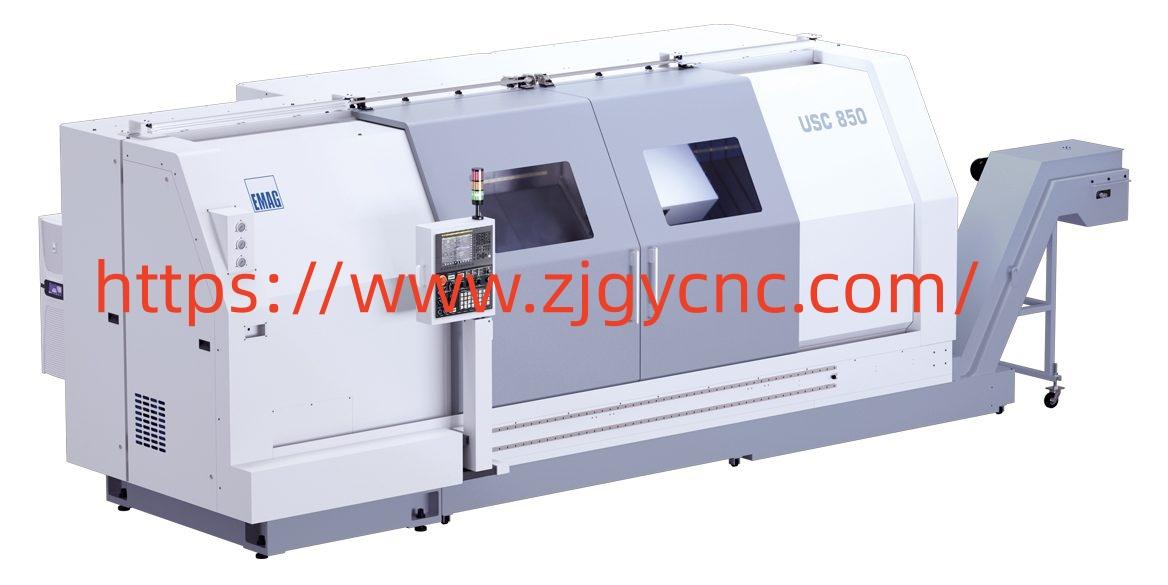
Universal CNC Lathe selection should begin with a clear understanding of the components a workshop plans to produce. Buyers may need to process shafts, sleeves, discs, threaded parts, or components with different dimensions and materials. Rather than comparing equipment through a single specification, purchasing teams should examine how each configuration fits their actual production tasks. A structured evaluation can help reduce unnecessary options and make the investment easier to assess.
Identify the Main Workpiece Requirements
Before contacting a supplier, prepare a list of representative components. Include their maximum and minimum diameters, overall lengths, material grades, and important drawing requirements. This information gives the engineering team a practical basis for recommending a suitable machine configuration.
A workshop handling several product categories may require a different setup from a facility producing one component in large batches. For example, long shaft work may require sufficient distance between centers and suitable tailstock support. Shorter components may place greater emphasis on chuck capacity, loading arrangements, and tool access.
Buyers should also consider whether the equipment will handle current orders only or support new product types in the future. A realistic production forecast helps identify useful capacity without adding functions that may remain unused.
Examine Spindle Performance and Working Capacity
Spindle specifications deserve careful attention because they influence the materials, dimensions, and cutting conditions that can be handled. Check the available speed range, motor power, torque characteristics, spindle bore, and applicable workholding limits.
Maximum speed alone does not explain how a machine will perform across different jobs. Some operations require higher rotational speeds, while larger workpieces or demanding materials may call for suitable torque at lower speeds. Buyers should provide sample drawings and material details so the supplier can discuss expected cutting conditions.
Working capacity should also be checked as a complete setup. Compare the turning diameter and length with the workpiece, chuck, jaws, tools, and any required support accessories. A component that appears to fit the nominal dimensions may still create clearance or loading difficulties once the full arrangement is installed.
Match Tooling and Workholding to Production Tasks
Tooling choices influence the operations that can be completed and the time needed for each setup. Review turret capacity, holder interfaces, boring-bar space, tool dimensions, and the availability of suitable accessories. If a job involves drilling or milling features beyond ordinary turning, confirm whether driven tooling or additional axis functions are required.
Workholding deserves the same level of attention. Different components may call for hydraulic chucks, manual chucks, collet systems, soft jaws, or dedicated fixtures. The choice should reflect component geometry, gripping surfaces, material characteristics, and expected production quantity.
Ask the supplier to review representative parts rather than relying only on a general catalogue description. A clear tooling and fixture list can also make quotations easier to compare, since buyers can see which accessories are included and which require separate arrangements.
Consider the Control System and Operator Experience
The control system affects programming, setup procedures, daily operation, and maintenance. Buyers should confirm the control brand and configuration, programming compatibility, available functions, and the training support provided with the order.
Existing operator experience is worth considering. A familiar interface may reduce the time required for staff to adapt, while a new control platform may require additional instruction. Ask whether the supplier can provide operation manuals, programming guidance, and technical assistance during installation.
It is also useful to discuss how programs will be checked before production. Simulation and toolpath verification functions may help operators review machining sequences and identify potential issues before cutting actual material.
Verify Accuracy Through Practical Testing
Published accuracy figures should be reviewed alongside the conditions under which they are measured. Ask for relevant inspection records, positioning and repeatability information, spindle runout data, and details about the testing procedure.
A sample machining test can provide additional insight. When possible, submit a representative drawing and agree on the material, tooling, dimensions, and inspection points before the test begins. The finished sample can then be checked against the drawing requirements.
Buyers should also clarify how acceptance testing will be documented before shipment. Written criteria help both parties understand what needs to be verified and provide a reference during installation and commissioning.
Review Maintenance and Technical Support
A purchasing decision should include more than the initial equipment price. Review the availability of replacement parts, maintenance instructions, warranty conditions, remote assistance, and the process for requesting technical support.
Ask which routine checks are expected, what consumable items may need regular replacement, and whether spare parts can be supplied for the selected configuration. These details help production managers prepare maintenance schedules and estimate operating costs.
Communication also matters. A supplier should be able to clarify technical questions, confirm configuration details, and explain the steps involved in delivery, installation, and operator training. Buyers can request written specifications and a detailed quotation to keep these arrangements clear.When comparing suppliers, prepare the same drawings, production targets, and accessory requirements for each quotation. This makes differences in equipment scope easier to identify and helps purchasing teams evaluate the complete proposal rather than focusing on isolated specifications. For workshops reviewing different turning requirements, zjgycnc provides equipment information and configuration options at https://www.zjgycnc.com/

 English
 Arabic
 French
 Spanish
 Portuguese
 Deutsch
 Turkish
 Dutch
 Russian
 Romaian
 Portuguese (Brazil)
 Greek
