


What Needs to Be Considered When Choosing Shopping Baskets for Retail Stores?
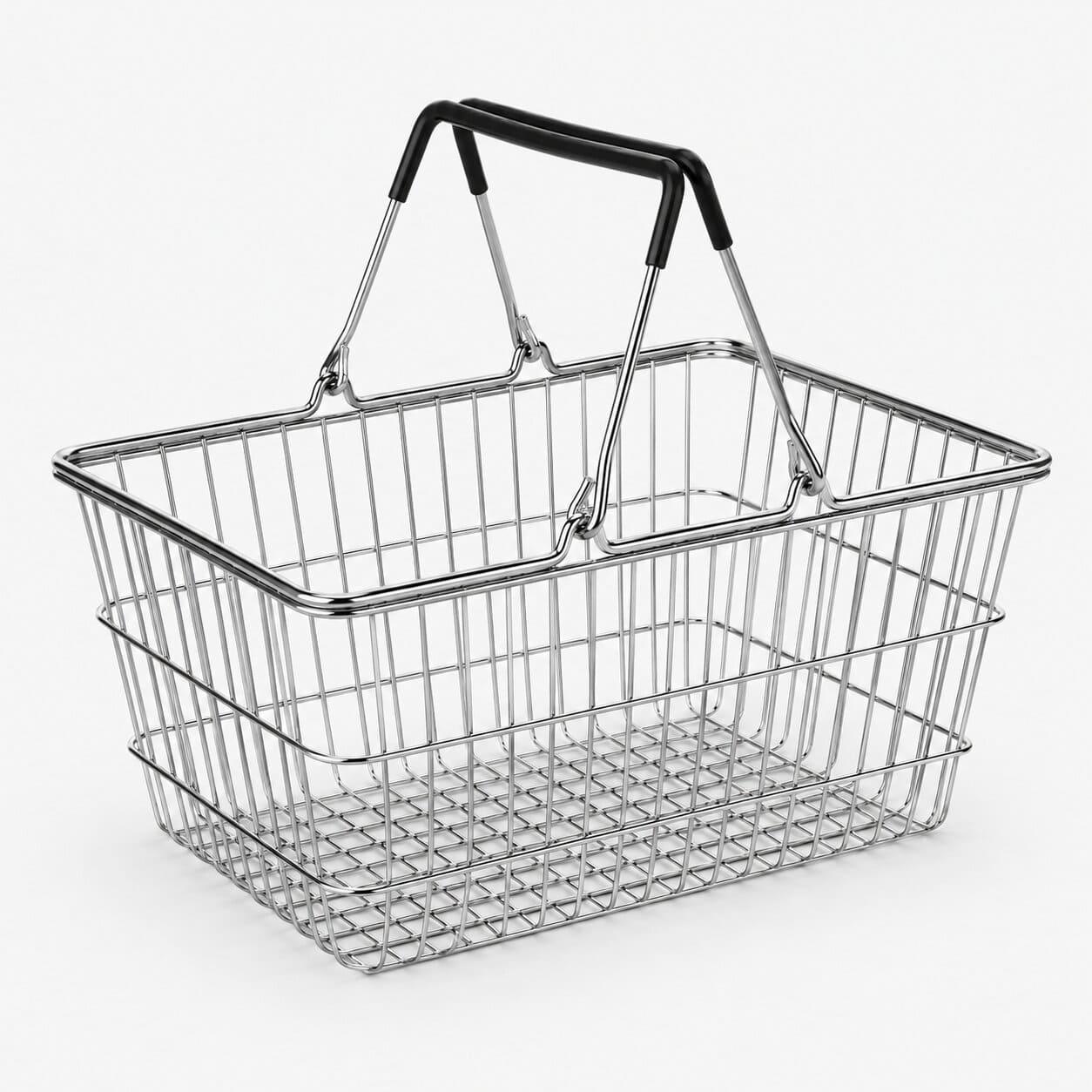
Shopping baskets are a simple but important part of the retail experience. In supermarkets, convenience stores, pharmacies, clothing shops, and other retail environments, they give customers an easy way to carry products while moving around the store.
The right shopping basket should be comfortable, strong, easy to store, and suitable for the type of products customers typically purchase. A well-chosen basket can also support an organised store layout and make quick shopping trips more convenient.
What Are Shopping Baskets?
Shopping baskets are portable containers designed to help customers carry products around a retail store. Unlike shopping trolleys, baskets are lightweight and compact, making them particularly useful when customers only need a few items.
Most retail baskets feature handles that allow customers to carry them comfortably. They can be produced in different shapes, sizes, colours, and materials to suit various retail environments.
Some baskets are designed for everyday grocery shopping, while others are made for specialist stores where customers may need a smaller or more tailored carrying solution.
Why Do Retail Stores Need Shopping Baskets?
Shopping baskets make it easier for customers to collect and carry products. Without a basket, shoppers purchasing several small items may need to hold everything in their hands or make repeated trips to the checkout.
A basket provides a practical solution while taking up very little space. Customers can pick one up when entering the store, fill it as they shop, and return it to the designated collection point after paying.
For retailers, baskets can also help create a more convenient shopping environment. When customers have an easy way to carry products, they can move around the store more comfortably.
What Types of Shopping Baskets Are Available?
Different retail businesses have different requirements, so several basket styles are available.
Handheld Shopping Baskets
Handheld baskets are one of the most common choices for supermarkets and convenience stores. They're lightweight and easy to carry, making them ideal for customers purchasing a small or moderate number of products.
Their compact design also makes them simple to stack when they're not being used.
Stackable Shopping Baskets
Stackable baskets are designed to fit inside one another. This helps retailers save valuable storage space and keeps baskets organised near entrances and checkout areas.
They're especially useful for busy stores where baskets need to be collected and returned frequently.
Large Shopping Baskets
Large baskets provide additional capacity for customers who want to purchase more products without using a trolley. They can be useful in supermarkets, discount stores, and larger convenience shops.
The extra capacity means customers can carry more items while still using a portable basket.
Wheeled Shopping Baskets
Wheeled baskets combine the convenience of a basket with the easier movement associated with a trolley. Customers can pull or push them rather than carrying the entire weight.
This can be useful for shoppers who want more capacity but don't want to use a full-size shopping trolley.
What Materials Are Used for Shopping Baskets?
Plastic is commonly used because it's lightweight, durable, and easy to clean. High-quality plastic baskets can withstand regular handling and frequent use in busy retail environments.
Metal baskets are another option. They can provide a strong construction and may be suitable for stores looking for a different appearance or additional durability.
The choice of material should depend on expected usage, product weight, cleaning requirements, and the overall retail environment.
How Do Shopping Baskets Improve Customer Convenience?
Convenience is at the heart of a good shopping basket. Customers should be able to pick up a basket quickly, carry it comfortably, and place products inside without difficulty.
A suitable handle design can make a noticeable difference, particularly when a basket becomes heavier during a shopping trip. The size also matters. A basket that's too small may become inconvenient, while an oversized basket may be unnecessarily difficult to carry.
For short shopping trips, a lightweight basket can be just the ticket.
How Should Retailers Choose the Right Shopping Baskets?
Retailers should consider several factors before selecting baskets for their store.
Capacity: Think about how many products customers typically purchase. Smaller stores may benefit from compact baskets, while supermarkets may require larger options.
Weight: Lightweight baskets are easier for customers to carry and for employees to collect and store.
Handle design: Handles should be comfortable and strong enough for regular use.
Durability: Baskets need to withstand repeated handling, stacking, cleaning, and movement around the store.
Storage: Stackable designs can reduce the amount of space required when baskets aren't being used.
Cleaning: Choose materials and designs that can be cleaned efficiently, particularly in busy retail environments.
Appearance: Basket colours and finishes can be selected to complement the store's overall interior.
Can Shopping Baskets Help Improve Store Organisation?
Yes. Shopping baskets can contribute to a more organised retail environment when they're positioned strategically.
Retailers can place baskets near entrances so customers can pick them up before beginning their shopping trip. Dedicated basket collection areas can then be positioned near checkout counters or store exits.
Stackable designs are particularly useful because they keep unused baskets together rather than allowing them to spread across the shop floor.
A clear basket storage area also makes it easier for employees to collect and return baskets throughout the day.
Why Is Basket Durability Important?
Shopping baskets can experience a lot of daily use. They're picked up, carried, placed on floors and counters, stacked together, and moved repeatedly.
A durable basket is less likely to become damaged through normal retail use. Strong handles are particularly important because they're responsible for carrying the weight of the basket and its contents.
For busy retailers, investing in robust shopping baskets can provide a practical long-term solution and reduce the need for frequent replacement.
How Can Retailers Maintain Shopping Baskets?
Regular cleaning and inspection can help keep baskets in good condition. Retail staff should check handles, edges, bases, and other areas for signs of damage.
Baskets should also be cleaned according to the manufacturer's recommendations. Removing dirt and residue helps maintain a cleaner shopping environment and keeps the baskets looking presentable.
Damaged baskets should be removed from customer use rather than left in circulation.
Why Choose Quality Retail Equipment?
Shopping baskets may look like a small detail, but they play an important role in everyday store operations. The right design can make shopping easier for customers while helping staff manage storage and collection more efficiently.
For retailers looking for practical equipment and store solutions, Shop Solutions Midlands offers options designed to support different retail environments.
Whether you're opening a new store, updating an existing shop, or replacing worn retail equipment, choosing suitable shopping baskets can be a straightforward way to improve customer convenience. Read more: Shop Shelving in uk
Frequently Asked Questions
What size shopping basket is best for a retail store?
The ideal size depends on the average number and weight of products customers purchase. Smaller baskets suit quick shopping trips, while larger baskets provide greater capacity.
Are stackable shopping baskets useful?
Yes. Stackable baskets can save storage space and make it easier for staff to keep unused baskets organised.
Are plastic shopping baskets durable?
Good-quality plastic baskets can be highly durable and suitable for frequent retail use. Their performance depends on the material, construction, and intended load capacity.
Are shopping baskets suitable for supermarkets?
Yes. They're particularly useful for customers making smaller shopping trips who don't need a full-size trolley.
How should shopping baskets be stored?
Baskets should ideally be kept in a dedicated area near the entrance or checkout. Stackable models can be nested together to minimise the required storage space.
Can shopping baskets be used in small shops?
Absolutely. Compact baskets are often an excellent choice for convenience stores and smaller retail premises where floor space is limited.

 English
 Arabic
 French
 Portuguese
 Deutsch
 Turkish
 Dutch
 Italiano
 Russian
 Romaian
 Portuguese (Brazil)
 Greek
