


Understanding Different Types of Taps and Their Industrial Applications
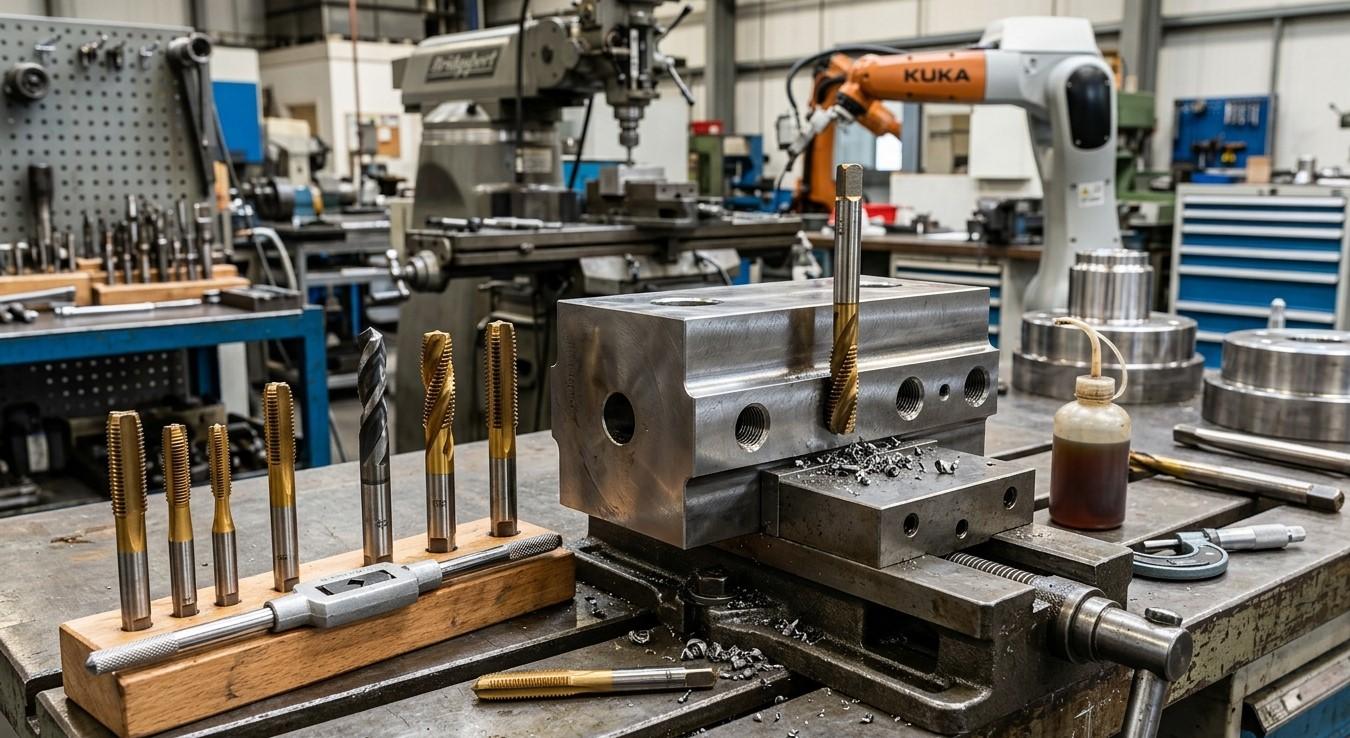
Threaded holes are essential components in machinery, equipment, automotive parts, fabrication projects, and countless industrial assemblies. To create accurate internal threads, manufacturers and engineering workshops commonly use taps. Selecting the correct tap for the material, thread specification, hole type, and production method is important for achieving reliable threads and avoiding problems such as tap breakage, poor thread quality, or incorrect fit.
For companies searching for an Industrial Tools Supplier in Dubai, understanding the different types of taps and their applications can make tooling selection easier. Khokhawala Trading LLC, an Industrial Tools Supplier in Dubai, provides industrial and engineering tools for machining, manufacturing, maintenance, fabrication, and workshop applications.
This guide explains the major types of taps, how they work, where they are used, and the factors businesses should consider when selecting tapping tools for industrial applications.
What Is a Tap?
A tap is a cutting tool used to create internal threads inside a pre-drilled hole. The cutting edges on the tap remove material and form the required thread profile.
Taps are manufactured in different sizes, thread standards, geometries, materials, and coatings to accommodate different applications.
Common tapping applications include:
- Creating threaded holes
- Repairing existing threads
- Manufacturing machine components
- Producing threaded fittings
- Preparing holes for fasteners
- Assembly operations
Tapping can be performed manually or using machines such as drill presses, machining centers, CNC machines, and specialized tapping equipment.
Why Choosing the Right Tap Matters
Using the wrong tap can result in several machining problems. The tap may break, produce an inaccurate thread, generate excessive cutting forces, or wear prematurely.
The correct tap can help:
- Improve thread accuracy
- Increase tool life
- Reduce tap breakage
- Improve productivity
- Produce consistent threads
- Reduce rework
- Improve assembly quality
- Lower tooling costs
Tap selection should therefore be based on the specific material, thread specification, hole type, and production requirements.
Main Types of Taps
There are several types of taps used in industrial and engineering applications. Each design is optimized for particular machining conditions.
1. Hand Taps
Hand taps are designed primarily for manual tapping operations.
A traditional hand-tap set commonly consists of:
- Taper tap
- Plug tap
- Bottoming tap
Taper Tap
A taper tap has a relatively long chamfer that gradually introduces the cutting edges into the material.
It is often the easiest tap to start because the cutting load is distributed over multiple threads.
Plug Tap
Plug taps have a shorter chamfer than taper taps and are widely used for general-purpose tapping.
They provide a balance between easy starting and the ability to produce threads deeper into a hole.
Bottoming Tap
Bottoming taps have a short chamfer and are designed to cut threads close to the bottom of a blind hole.
A common approach is to start with a taper or plug tap and then use a bottoming tap to complete the deeper threads.
2. Spiral Point Taps
Spiral point taps are also known as gun taps.
They have a specialized cutting geometry that pushes chips forward and away from the cutting area.
They are particularly useful for through holes, where chips can exit through the opposite side.
Advantages
Spiral point taps can provide:
- Efficient chip evacuation
- Faster tapping
- Good productivity
- Reduced chip recutting
- Suitability for production applications
They are commonly used in CNC machining and high-volume manufacturing.
3. Spiral Flute Taps
Spiral flute taps have helical flutes that help move chips back toward the opening of a blind hole.
This makes them particularly useful for tapping blind holes where chips cannot exit through the opposite side.
Common applications include:
- CNC machining
- Automotive components
- Machinery parts
- Mold manufacturing
- Precision engineering
Spiral flute taps are often selected when efficient chip evacuation is required from deeper or blind holes.
4. Straight Flute Taps
Straight flute taps have flutes running directly along the length of the tap.
They are commonly used for general-purpose tapping and can be suitable for materials that produce relatively manageable chips.
Applications may include:
- Manual tapping
- General machining
- Maintenance work
- Short-hole applications
Straight flute taps are available in various thread sizes and specifications.
5. Forming Taps
Forming taps, also called roll taps or thread-forming taps, create threads by displacing material rather than cutting it away.
Because they do not produce conventional cutting chips, they can be particularly useful in suitable ductile materials.
Advantages can include:
- No cutting chips
- Strong thread profiles
- Potentially long tool life
- Good thread consistency
- Suitable for certain production environments
However, forming taps require suitable materials and carefully controlled hole dimensions. They are not appropriate for every workpiece material.
6. Pipe Taps
Pipe taps are designed to create threads used for pipe connections and fittings.
They are available in different standards and thread profiles depending on the application.
Pipe taps are commonly used in:
- Hydraulic systems
- Pneumatic equipment
- Plumbing components
- Industrial fittings
- Fluid-handling systems
When selecting pipe taps, the required thread standard and fitting specification must be confirmed carefully.
7. Machine Taps
Machine taps are designed for powered tapping operations.
They can be used with:
- CNC machining centers
- Tapping machines
- Drill presses
- Automated production equipment
Machine taps are available in different geometries for various materials and hole configurations.
They are particularly useful for repetitive production work where consistent thread quality and cycle time are important.
8. Long-Reach Taps
Long-reach taps are designed for applications where the threaded hole is located deep inside a component or is difficult to access.
They can be useful for:
- Deep components
- Specialized machinery
- Large assemblies
- Complex workpieces
The increased length requires careful attention to rigidity because excessive deflection can affect thread accuracy or cause tool damage.
Tap Materials
The material from which a tap is manufactured influences its performance and application range.
High-Speed Steel Taps
High-speed steel, commonly known as HSS, is widely used for general-purpose tapping.
HSS taps can offer:
- Good toughness
- Good wear resistance
- Versatility
- Suitability for many industrial materials
They are commonly used in workshops and general machining environments.
Carbide Taps
Carbide taps can provide high hardness and wear resistance and may be used for specific high-volume or difficult machining applications.
They can be more brittle than HSS, making machine rigidity and setup particularly important.
Tap Coatings
Many industrial taps are available with specialized coatings designed to improve performance.
Depending on the application, coatings can provide:
- Improved wear resistance
- Reduced friction
- Better heat resistance
- Longer tool life
Coating selection should be based on the workpiece material and machining conditions rather than assuming one coating is suitable for all applications.
Choosing the Correct Tap for Different Materials
Workpiece material is one of the most important factors in tap selection.
Aluminum
Aluminum is relatively soft and ductile. Taps with suitable flute geometry and chip evacuation can help prevent chip buildup and improve tapping performance.
Stainless Steel
Stainless steel can generate significant heat and may work-harden. Appropriate tap geometry, lubrication, and cutting conditions are important.
Mild Steel
Mild steel can generally be tapped using suitable HSS or machine taps depending on the application.
Cast Iron
Cast iron produces different chip characteristics and may require tooling selected specifically for the material and application.
Brass
Brass can often be tapped efficiently with suitable sharp cutting geometries.
The manufacturer's recommendations should always be considered when selecting a tap for a specific material.
Through Holes vs Blind Holes
The hole type is another major consideration.
Through Holes
A through hole extends completely through the workpiece.
Spiral point taps are often useful because they push chips forward and out of the hole.
Blind Holes
A blind hole does not extend through the entire component.
Spiral flute taps can be advantageous because their geometry helps move chips toward the opening.
For deep blind holes, tap length, flute geometry, lubrication, and chip evacuation become particularly important.
Selecting the Correct Thread Specification
Before purchasing a tap, the required thread specification should be confirmed.
Important details include:
- Thread diameter
- Thread pitch
- Thread form
- Thread standard
- Tolerance class
- Internal thread depth
Common industrial thread systems include metric and inch-based standards.
Using a tap with the wrong pitch or thread profile can make the finished hole incompatible with its mating fastener.
Tap Drill Size
Selecting the correct drill size before tapping is essential.
If the hole is too small, the tap may experience excessive cutting forces and may break.
If the hole is too large, the resulting thread may not have sufficient engagement.
Manufacturers should use the recommended tap-drill size for the specific thread specification and application.
Lubrication During Tapping
Lubrication can reduce friction and heat during tapping.
The appropriate lubricant depends on the workpiece material and tapping method.
Proper lubrication can help:
- Reduce cutting forces
- Improve thread finish
- Extend tap life
- Reduce heat
- Improve chip evacuation
Some applications may use specialized tapping fluids, while others may require coolant or dry machining depending on the material and tooling system.
Common Tapping Problems
Tap Breakage
Tap breakage may result from:
- Incorrect drill size
- Excessive cutting force
- Poor alignment
- Insufficient lubrication
- Incorrect tap selection
- Excessive depth
Poor Thread Quality
Poor threads may be caused by:
- Worn tap
- Incorrect tap geometry
- Wrong cutting parameters
- Incorrect hole size
- Machine misalignment
Excessive Tool Wear
Tool wear can occur because of unsuitable cutting speed, abrasive materials, insufficient lubrication, or excessive production loads.
Identifying the root cause is more effective than simply replacing the tap repeatedly.
Applications of Taps in Industry
Tapping tools are used across many industrial sectors.
Automotive Manufacturing
Taps are used for threaded holes in engine components, brackets, housings, and other vehicle parts.
General Engineering
Engineering workshops use taps for machinery components, fixtures, shafts, and assemblies.
Fabrication
Fabrication operations often require tapped holes for attaching components and mechanical assemblies.
Aerospace
Precision tapping may be used for components requiring controlled thread dimensions and high manufacturing accuracy.
Maintenance and Repair
Maintenance teams use taps to create, restore, or repair threads in machinery and equipment.
How Precision Measuring Tools Support Tapping
Accurate measurement is important when producing and inspecting threaded components.
Precision measuring tools can be used to verify dimensions and component features before and after tapping.
Common inspection equipment includes:
- Vernier calipers
- Micrometers
- Thread gauges
- Plug gauges
- Depth gauges
- Dial indicators
For businesses searching for a Precision Measuring Tools Supplier in Dubai, choosing appropriate inspection equipment is important for maintaining manufacturing quality.
Maintaining Taps for Longer Tool Life
Proper maintenance can help extend tap life.
Workshops should:
- Clean taps after use
- Store them in protective containers
- Prevent cutting edges from contacting other tools
- Inspect taps for wear
- Use suitable lubrication
- Follow recommended cutting parameters
- Replace damaged taps promptly
Proper storage is particularly important because taps have relatively fine cutting edges that can be damaged through careless handling.
Choosing a Reliable Industrial Tools Supplier
Selecting the right supplier can make sourcing tapping tools easier for workshops and manufacturers.
Businesses searching for an Industrial Tools Supplier UAE should evaluate:
- Product quality
- Tool specifications
- Availability
- Application suitability
- Technical support
- Product range
- Industry experience
Companies looking for an Engineering Tools Supplier in Dubai may prefer a supplier that offers multiple categories of industrial products, including tapping tools, cutting tools, drilling tools, hydraulic tools, measuring instruments, and workshop equipment.
Khokhawala Trading LLC provides industrial and engineering tooling solutions for machining, manufacturing, maintenance, fabrication, and workshop applications.
Conclusion
Taps are essential machining tools for producing accurate internal threads in industrial components and assemblies. From hand taps and spiral point taps to spiral flute taps, straight flute taps, forming taps, pipe taps, and machine taps, each type is designed for specific applications.
Selecting the right tap requires careful consideration of the workpiece material, hole type, thread specification, tap geometry, tap material, coating, drill size, lubrication, and machining method. Correct selection can improve thread quality, increase tool life, reduce tap breakage, and improve production efficiency.
For businesses searching for an Industrial Tools Supplier in Dubai, Industrial Tools Supplier UAE, Engineering Tools Supplier in Dubai, or Precision Measuring Tools Supplier in Dubai, Khokhawala Trading LLC provides industrial and engineering tooling solutions for a variety of professional requirements.
By understanding the differences between tapping tools and matching each tap to the appropriate application, workshops can achieve more reliable threads, reduce machining problems, and maintain consistent manufacturing quality. Combining suitable taps with accurate drilling, proper machining parameters, effective lubrication, and reliable precision measuring tools creates a more efficient and dependable tapping process.

 Arabic
 French
 Spanish
 Portuguese
 Deutsch
 Turkish
 Dutch
 Italiano
 Russian
 Romaian
 Portuguese (Brazil)
 Greek
