


Buying Food Packaging Wholesale: What to Know Before You Order
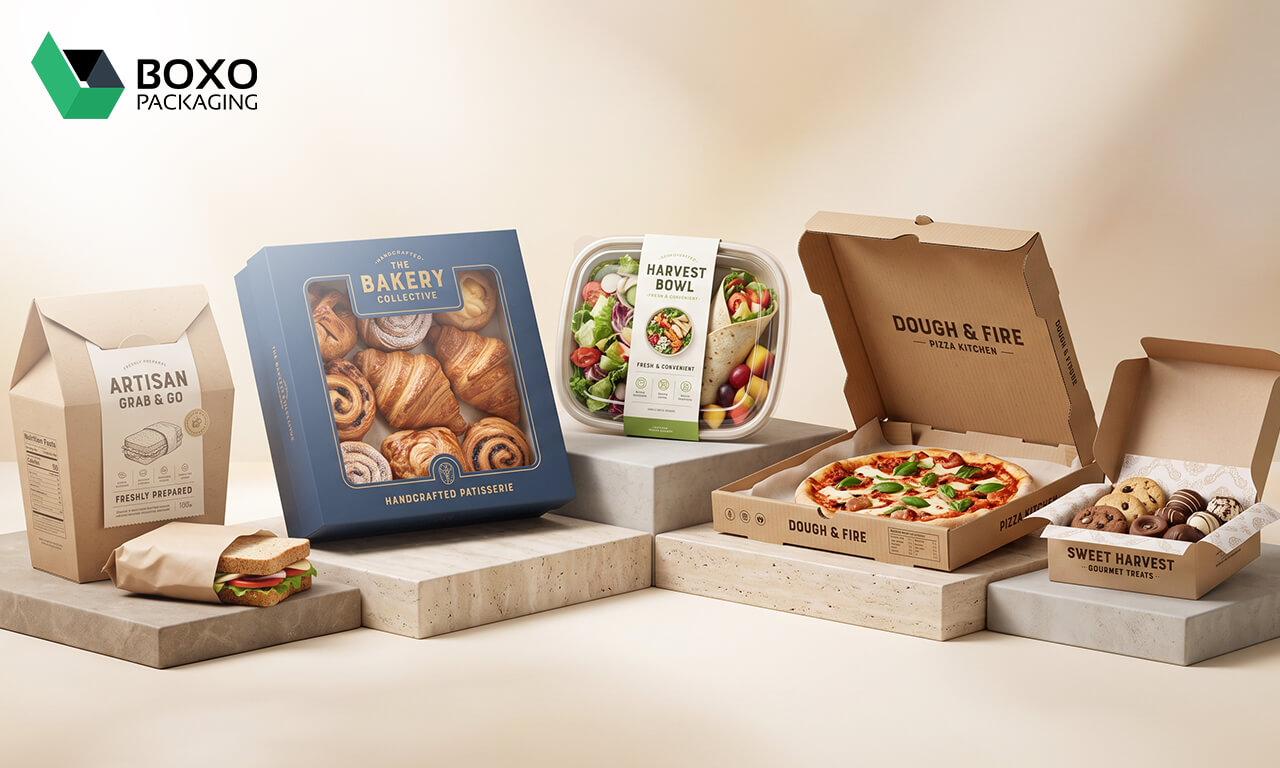
Buying food packaging wholesale looks straightforward on paper. You find a supplier, pick a box or container style, submit a purchase order, and wait for the shipment. In practice, there are a lot of decisions packed into that process, and the ones made early tend to have the biggest downstream consequences. The wrong material choice creates compliance headaches. An underestimated lead time stalls a product launch. An MOQ that seemed manageable at the time ties up working capital in packaging that sits in a warehouse.
This guide is written for food brands, small manufacturers, and retail buyers who are either placing their first wholesale packaging order or rethinking how they approach the process. It covers the factors that actually determine whether a wholesale purchase delivers value, from material specs and regulatory requirements to supplier evaluation and cost structure.
Why Food Packaging Wholesale Is Different From General Packaging
Food packaging operates under a layer of regulatory requirements that general retail packaging does not. Any packaging that comes into direct or indirect contact with food must meet FDA standards for food contact materials under 21 CFR (Code of Federal Regulations). This applies to paperboard boxes, flexible pouches, plastic containers, glass jars, and virtually any other format used for food products.
What this means in practice is that the inks, coatings, adhesives, and substrates used on the interior surfaces of food packaging must be formulated to avoid migration of harmful compounds into the food. For indirect contact packaging like a paperboard cereal box or a kraft sleeve around a snack bag, the regulatory threshold is lower than for direct contact materials, but it still applies.
Before finalizing any wholesale food packaging supplier, request written confirmation that their materials meet applicable FDA food contact requirements. Reputable suppliers maintain this documentation and provide it without hesitation. Suppliers who cannot produce it are a risk you do not want in your supply chain.
Understanding Food Packaging Material Options at Wholesale
The wholesale food packaging market covers a wide range of substrate categories. Knowing the basic trade-offs between them helps you evaluate supplier offerings more accurately.
Paperboard and folding carton packaging is the most common format for dry food products. SBS (Solid Bleached Sulfate) board is the industry standard for products where print quality and a clean white surface matter, such as cereal boxes, snack packaging, and bakery cartons. CUK (Coated Unbleached Kraft) is preferred for brands with a natural or artisan positioning. Both are available in a range of weights, typically 200 to 350 GSM for food applications, and both can be certified under FSC or SFI programs for sustainability-conscious brands.
Corrugated packaging is used for shipping cases, bulk food transport, and retail-ready displays. Single-wall corrugated (typically B or C flute) handles most standard food shipping needs. Double-wall corrugated is specified for heavier loads or products requiring additional crush resistance. When buying corrugated wholesale, pay attention to the ECT (Edge Crush Test) rating, which measures stacking strength, and the Mullen burst rating for puncture resistance.
Flexible packaging, including pouches, bags, and films, requires a different evaluation framework. Multi-layer flexible materials are specified by the functional requirements of each layer: a barrier layer for oxygen or moisture control, a structural layer for integrity, and a sealant layer for closure. Wholesale flexible packaging almost always involves minimum run lengths and longer lead times than rigid formats.
Rigid packaging, including glass jars, plastic containers, and tins, rounds out the major categories. For wholesale buyers, rigid packaging typically involves higher per-unit cost but lower breakage risk in transit and often better shelf presence for premium products.
Minimum Order Quantities: What to Expect and How to Plan
Minimum order quantities are one of the first practical realities of buying wholesale food packaging, and they catch a lot of first-time buyers off guard. MOQs exist because most food packaging is produced on industrial equipment with setup costs that only make economic sense above a certain run length.
For custom printed folding cartons, MOQs typically start at 1,000 units for digital printing and 3,000 to 5,000 units for offset lithography. Stock packaging with no custom printing can often be ordered in much smaller quantities from distributors, sometimes as few as 50 to 100 units, but at a significantly higher per-unit cost.
Corrugated shipping cases ordered wholesale generally start at 500 to 1,000 units for custom printed boxes, with stock brown boxes available in smaller quantities from regional distributors. Flexible packaging typically carries the highest MOQs, often starting at 10,000 units or more for custom printed pouches, though some short-run suppliers have lowered this threshold significantly with digital printing equipment.
When planning around MOQs, model the carrying cost of the inventory you are committing to, not just the per-unit price. A lower per-unit price at a higher MOQ only delivers real savings if you can turn through the inventory before it occupies expensive warehouse space for months.
Lead Times and Production Planning
Lead time is the gap between placing a purchase order and receiving usable packaging at your facility. For food brands with seasonal products, new launches, or retailer deadlines, underestimating lead time is a genuinely expensive mistake.
Standard lead times for wholesale food packaging by category:
-
Stock packaging from domestic distributors: 2 to 10 business days
-
Custom folding cartons, offset printed: 3 to 5 weeks from approved artwork
-
Custom folding cartons, digital printed: 1 to 2 weeks from approved artwork
-
Custom corrugated cases: 3 to 4 weeks from approved artwork
-
Custom flexible pouches: 6 to 12 weeks, depending on structure and print complexity
-
Rigid packaging with custom labeling or decoration: 4 to 8 weeks
These ranges assume approved artwork at the time of order. Artwork revisions, proof approval delays, and material availability issues all extend the timeline. Build buffer into your production schedule, especially for first orders with a new supplier where the approval process is less predictable.
What to Evaluate in a Wholesale Food Packaging Supplier
Not all wholesale packaging suppliers serve the food industry equally well. The evaluation criteria that matter most go beyond price per unit.
Food contact compliance documentation is non-negotiable, as covered above. Beyond that, assess whether the supplier has experience with food brands specifically. A supplier that primarily serves industrial or non-food retail clients may not have the material expertise or compliance awareness that food packaging requires.
Production capabilities matter when your needs evolve. A supplier that can handle your current 5,000-unit folding carton order but cannot scale to 50,000 units without outsourcing production creates a bottleneck at the exact moment your brand is growing. Ask upfront about production capacity and how they handle demand increases.
Sample availability is a meaningful quality signal. A supplier confident in their product provides physical samples before you commit to a full production run. Evaluate samples for print color accuracy, construction quality, board weight consistency, and how the box or container performs when loaded with product and subjected to normal handling.
At Boxo Packaging, providing pre-production samples and material documentation to food brand clients is a standard part of the wholesale ordering process, not an exception. Understanding exactly what you are ordering before you commit to volume is how avoidable quality problems get avoided.
Certifications and Compliance Credentials to Request
When buying food packaging wholesale, the certifications attached to the materials tell you something important about the supply chain behind the product. The most relevant ones for food packaging buyers in the US include:
-
FDA food contact compliance (21 CFR): confirms materials are safe for food contact applications
-
FSC certification (Forest Stewardship Council): verifies virgin paperboard fiber comes from responsibly managed forests
-
SFI certification (Sustainable Forestry Initiative): an alternative forest management certification, widely accepted
-
ISO 9001: indicates the supplier operates a documented quality management system
-
BRC/IOP Packaging Standard: a global food safety standard for packaging manufacturers, increasingly requested by large retailers
Not every supplier will carry all of these, and not every food brand needs all of them. But knowing which certifications your retail partners or co-manufacturers require before you source packaging prevents the need to re-source after a buyer request.
Cost Structure: What Drives Price in Wholesale Food Packaging
Wholesale food packaging pricing is driven by a set of factors that are worth understanding individually, because they tell you where there is room to optimize and where there is not.
Board grade and weight directly affect material cost per unit. Moving from a 270 GSM SBS to a 230 GSM SBS board can reduce cost per unit meaningfully at volume while maintaining adequate structural performance for many food applications. Conversely, upgrading to a higher-grade board for premium shelf presence is a cost that pays back in brand perception.
Print complexity affects press time and plate costs. A two-color print run costs less to set up than a six-color run with Pantone spot colors. For brands with complex, photography-heavy packaging, digital printing at lower volumes may produce a better cost-per-unit outcome than offset at the same run length.
Surface finishes add cost that is sometimes overlooked in initial estimates. Aqueous coating is inexpensive and widely used. Gloss or matte lamination adds moderate cost but significantly improves durability and shelf appearance. Specialty finishes like soft-touch coating or foil stamping are premium additions that are appropriate for some food categories and unnecessary for others.
Sustainability in Wholesale Food Packaging: What Buyers Are Asking For
Sustainability requirements in food packaging procurement have moved from optional to expected in many retail channels. Natural grocery retailers, club stores, and direct-to-consumer brands increasingly ask suppliers to document the environmental attributes of their packaging before onboarding.
The most credible sustainability credentials for wholesale food packaging buyers to look for are specific and verifiable. FSC or SFI chain-of-custody certification on paperboard is a strong baseline. Post-consumer recycled (PCR) content percentages, stated specifically rather than generally, give buyers something concrete to communicate on pack or to retail partners.
Recyclability claims require attention to the full material composition. A paperboard box with plastic lamination may not be accepted in standard curbside recycling streams even though the primary substrate is paper. Aqueous coatings and water-based inks generally do not impede recyclability. When recyclability is an on-pack claim, confirm it with your supplier and review it against the guidelines of the How2Recycle program, which provides standardized, consumer-tested labeling for recyclability in the US market.
Avoiding Common Mistakes in Wholesale Food Packaging Orders
Most problems in wholesale food packaging procurement are predictable and preventable. The mistakes that come up most often follow a consistent pattern.
Ordering without a physical sample is the single most common source of expensive surprises. Colors shift between screen and print. Board weights that look adequate in a spec sheet feel flimsy in hand. Dimensions that appear correct on a dieline may not accommodate the actual product with packaging material included. Always request and evaluate a sample before committing to a full production run.
Underestimating the artwork approval timeline extends lead time more than almost any other variable. Artwork that arrives print-ready on day one is the exception, not the rule. Budget time for at least one revision cycle and one proof review before the production clock starts.
Ignoring secondary packaging requirements is a planning gap that shows up at the fulfillment stage. The retail gift box or food carton is the primary packaging. The corrugated shipper case it ships in, the case count configuration, and how those cases stack on a pallet all affect freight cost and retailer receiving requirements. Plan primary and secondary packaging together, not sequentially.
Finally, choosing a supplier based on unit price alone without evaluating compliance documentation, sample quality, and production reliability creates risk that shows up later at the worst possible time. A packaging failure that forces a product recall or a retailer deduction costs far more than the margin saved on a cheaper box.

 Arabic
 French
 Spanish
 Portuguese
 Deutsch
 Turkish
 Dutch
 Italiano
 Russian
 Romaian
 Portuguese (Brazil)
 Greek
