


╔═══════════════════════════════════════════════════════════════════════════════
║ AJUONA-OBUKPA AUTONOMOUS COMMUNITY ║
║ COMMUNITY INTELLIGENCE PROFILE ║
║ Nsukka LGA | Enugu State | South-East Nigeria ║
╠══════════════════════════════════════════════════════════════════════════════════╣
║ Prepared for: Residents · Diaspora · Investors · NGOs · Government Agencies ║
║ Researchers · Cultural Organisations · Development Partners ║
╚══════════════════════════════════════════════════════════════════════════════════╝
━━━━━━━━━━━━━━━━━━━━━━━━━━━━━━━━━━━━━━━━━━━━━━━━━━━━━━━━━━━━━━━━━━━━━━━━━━━━━━━
📌 SECTION 1 — OPENING SUMMARY
━━━━━━━━━━━━━━━━━━━━━━━━━━━━━━━━━━━━━━━━━━━━━━━━━━━━━━━━━━━━━━━━━━━━━━━━━━━━━━━
Ajuona-Obukpa Autonomous Community — also known historically as Ejuona-Obukpa
and recognized as the senior (first-born) quarter of the great Obukpa people —
is a resilient, tradition-proud community nestled in the heartland of Nsukka
Local Government Area, Enugu State, carrying within its red earth and thatched
compounds the ancient Igbo story of kinship, courage, and an unbroken will
to thrive at the doorstep of Nigeria's first indigenous university.
━━━━━━━━━━━━━━━━━━━━━━━━━━━━━━━━━━━━━━━━━━━━━━━━━━━━━━━━━━━━━━━━━━━━━━━━━━━━━━━
🏛️ SECTION 2 — HISTORY & ORIGIN
━━━━━━━━━━━━━━━━━━━━━━━━━━━━━━━━━━━━━━━━━━━━━━━━━━━━━━━━━━━━━━━━━━━━━━━━━━━━━━━
┌─────────────────────────────────────────────────────────────────────────────┐
│ "They were among the first to settle this fertile land." — oral tradition │
└─────────────────────────────────────────────────────────────────────────────┘
📖 ANCESTRAL ROOTS & FOUNDING STORY
──────────────────────────────────────
Ajuona-Obukpa traces its roots to the broader Obukpa people, one of the oldest
clans in Nsukka LGA. Historical and oral accounts identify Asadu Ideke Alumona
as the common ancestral progenitor of Obukpa, with Nsukka, Okpuje, and
Eha-Alumona towns being descended from his brothers — making these communities
spiritual kin as well as geographical neighbours. Obukpa's people are Igbo by
ethnicity, deeply embedded in the Nsukka cultural zone of South-East Nigeria.
The Obukpa people were among the earliest settlers of the Nsukka region. As
historical sources note, Igbo clans including Obukpa settled there because the
land was fertile and positioned along ancient trading routes connecting Igboland
to Benue and Northern Nigeria. Archaeological evidence from the region points
to human habitation stretching back over a thousand years.
📌 NAME & MEANING
───────────────────
"Ajuona" (also rendered as "Ejuona" in historical records and academic studies)
is believed to derive from the name of the founding ancestor of this quarter —
a naming tradition common across the Nsukka Igbo, where community names honour
the patriarch from whom a group descends. Ajuona is identified in oral records
as the first-born son among the original forebears of Obukpa, which is why
Ajuona-Obukpa holds the distinguished status of the senior quarter. Specific
linguistic etymology of the name, beyond its ancestral association, is not
fully captured in available local records.
🗺️ THE OBUKPA FAMILY & AJUONA'S PLACE
────────────────────────────────────────
The larger Obukpa community is organised into four autonomous communities
formally recognised by the Enugu State Government:
1. 🏘️ Ajuona-Obukpa (Ejuona-Obukpa) — the first-born quarter; senior unit
2. 🏘️ Owerre-Obukpa
3. 🏘️ Obige-Obukpa
4. 🏘️ Ogbagu-Obukpa (including Nkalegu-Obukpa in Igbo-Eze South LGA)
Together, the four communities comprise approximately 57 villages in total,
with Ajuona-Obukpa holding an estimated 12 ancestral villages — the most senior
grouping within the Obukpa constellation.
⚔️ HISTORICAL WAR WITH NSUKKA
─────────────────────────────────
A significant episode in Ajuona-Obukpa's history is a documented pre-colonial
war with the Nsukka community. During this conflict, Nsukka succeeded in
annexing a part of Ejuona-Obukpa's territory, in the process nearly wiping out
an entire village — Umugboguru — of all its inhabitants. Of notable historical
significance is that Ejuona declined the assistance offered by the rest of
Obukpa during this war, fighting independently. This event is remembered in
community oral tradition as a mark of the quarter's fierce self-reliance and
pride — a characteristic that still colours community identity today.
🏛️ IGALA INFLUENCE
─────────────────────
Like several communities in the Nsukka axis, Ajuona-Obukpa's broader Obukpa
heritage bears traces of the Igala kingdom's historical influence. The Achadu
dynasty — a class of warriors and ministers associated with the Attah of Igala
— historically exercised authority over Obukpa and neighbouring Nsukka and
Okpuje. This cross-cultural contact enriched the community's governance
traditions and explains certain ceremonial practices preserved to this day.
📜 JOURNEY TO AUTONOMOUS STATUS
──────────────────────────────────
Ajuona-Obukpa's formal recognition as an autonomous community reflects the
Enugu State Government's policy of granting administrative identity and
traditional governance recognition to distinct community units. The community
now has its own recognised traditional ruler (Igwe), town union, and
administrative identity, formally separate from but culturally connected to
the other Obukpa communities. The specific date of formal gazettement as an
autonomous community is not captured in readily available public records.
━━━━━━━━━━━━━━━━━━━━━━━━━━━━━━━━━━━━━━━━━━━━━━━━━━━━━━━━━━━━━━━━━━━━━━━━━━━━━━━
🤝 SECTION 3 — COMMUNITY IDENTITY & LIFESTYLE
━━━━━━━━━━━━━━━━━━━━━━━━━━━━━━━━━━━━━━━━━━━━━━━━━━━━━━━━━━━━━━━━━━━━━━━━━━━━━━━
💡 CHARACTER & PRIDE
──────────────────────
To know Ajuona-Obukpa is to know a people shaped by land, lineage, and a
fierce sense of who they are. These are communities where the elders' word
still carries weight, where the morning begins with farming and the evening
with conversation under open skies, and where belonging to your kindred —
your extended family unit — defines your social identity more than any
formal document ever could.
The people of Ajuona-Obukpa are proud of their seniority within the Obukpa
family. As the first-born quarter, they carry a dignity and sense of precedence
that is referenced at every major community gathering. This pride is not
arrogance — it is the quiet confidence of a people who know exactly where they
come from.
🏡 FAMILY STRUCTURE & KINSHIP
────────────────────────────────
The community follows the patrilineal Igbo family system. The extended family
unit (umunna) is the cornerstone of social life. Family compounds house multiple
generations, and decisions — from land use to marriage to dispute resolution —
are rarely made outside the family council. The oldest man of each household
or village holds the title of Onyishi in Nsukka tradition, and his blessing is
sought at important moments.
Umuada (daughters of the community who marry out) remain powerful social
actors, returning home for critical events such as funerals, festivals, and
disputes. Women's organisations (Inyom) manage the female social order within
the community and are critical voices in both domestic and public matters.
🌿 EVERYDAY CHARACTER
───────────────────────
Life in Ajuona-Obukpa moves at the rhythm of farming seasons. The community
is primarily agricultural, and most residents are engaged in subsistence and
smallholder farming, with petty trading as a secondary livelihood. Most homes
are built with mud and bricks — sturdy, practical, and rooted in tradition.
The community's proximity to the University of Nigeria, Nsukka (UNN) has
gradually brought educational ambitions to the fore, with younger generations
increasingly seeking secondary and tertiary education.
Core Igbo values define social norms: respect for elders (ọ bụ ezigbo ọmọ
ọ na-asọ ọchie nsọ), hospitality to guests (onye ọbịa), communal labour,
and spiritual reverence. Laughter, storytelling, and communal feasting are
the social glue that holds the community together across generations.
━━━━━━━━━━━━━━━━━━━━━━━━━━━━━━━━━━━━━━━━━━━━━━━━━━━━━━━━━━━━━━━━━━━━━━━━━━━━━━━
👑 SECTION 4 — GOVERNANCE & LEADERSHIP
━━━━━━━━━━━━━━━━━━━━━━━━━━━━━━━━━━━━━━━━━━━━━━━━━━━━━━━━━━━━━━━━━━━━━━━━━━━━━━━
🏆 TRADITIONAL RULER
──────────────────────
The recognised traditional ruler of Ajuona-Obukpa Autonomous Community is:
👑 HRH Igwe Mathias Ezea
Traditional Ruler, Ajuona-Obukpa Autonomous Community
Nsukka LGA, Enugu State, Nigeria
The Igwe serves as the custodian of community culture, the first point of
contact with government agencies, and the ceremonial head of community life.
His role includes presiding over traditional ceremonies, mediating major
disputes, issuing formal community positions on public matters, and
interfacing with the Nsukka LGA and Enugu State governments.
⚠️ NOTE: Like all governance institutions, the Igwe's role is most effective
when it is exercised with broad community consultation. Public records document
a 2020 governance dispute in which a restructuring of the community's security
architecture — dissolving 12 unit-level security heads in favour of a
centralised body — triggered youth-led protests and the arrest of community
members. This episode underlines the importance of participatory governance
and transparent community dialogue. The community's resilience was demonstrated
by its ability to navigate and discuss the tensions openly.
🏛️ TOWN UNION
────────────────
The Ajuona-Obukpa Town Union is the primary civil governance body, parallel
to the traditional institution. It is headed by a President-General (also
known as Towm Union President), with elected executives managing community
development, diaspora relations, infrastructure, and civic affairs. The Town
Union serves as the primary interface between residents, government agencies,
and development partners.
👴 COUNCIL OF ELDERS (NDỊ ỌCHIE)
─────────────────────────────────
The Council of Elders — composed of titled men, village heads (Onyishi of each
village), and senior community figures — plays an advisory and judicial role.
Matters of land, inheritance, community norms, and serious disputes are brought
before this council. Their authority is rooted in custom and is respected
across the community.
🧑🤝🧑 AGE GRADES (OTU)
─────────────────────────
Age grades are a fundamental Nsukka Igbo institution. Each cohort of men born
within a similar time period forms an age grade, with collective responsibilities
for community security, communal labour (road maintenance, market cleanup,
festival security), and social bonding. Age grades also serve as a democratic
counterweight — individual leaders must maintain the respect of their age
grade peers to hold community standing. The community's 12 security unit
structure (prior to the 2020 restructuring) appears to have been aligned with
village-level age grade structures.
👩 WOMEN'S LEADERSHIP (INYOM & UMUADA)
──────────────────────────────────────────
Women are organised into two complementary institutions:
- Inyom: The association of women resident in the community (wives)
- Umuada: The daughters of the community (women born into Ajuona-Obukpa
who may live elsewhere but retain rights and responsibilities at home)
Both groups wield significant social authority, particularly in domestic
disputes, funerals, and the moral regulation of community behaviour. They are
increasingly represented in town union discussions and development planning.
🌍 DIASPORA STRUCTURES
────────────────────────
Community members living in Nigerian cities (Lagos, Abuja, Port Harcourt,
Enugu) and abroad maintain diaspora associations that connect to the home
community. These groups contribute to development projects (school renovations,
road repairs, borehole construction) and participate in major community
decisions through the Town Union. Specific names and formal registration of
diaspora associations are not captured in available public records.
━━━━━━━━━━━━━━━━━━━━━━━━━━━━━━━━━━━━━━━━━━━━━━━━━━━━━━━━━━━━━━━━━━━━━━━━━━━━━━━
🗺️ SECTION 5 — VILLAGES & INTERNAL STRUCTURE
━━━━━━━━━━━━━━━━━━━━━━━━━━━━━━━━━━━━━━━━━━━━━━━━━━━━━━━━━━━━━━━━━━━━━━━━━━━━━━━
Ajuona-Obukpa is composed of 12 ancestral villages, making it the most
senior grouping among the four Obukpa autonomous communities. Each village
is headed by its Onyishi (eldest man), who represents the village in council
and is the custodian of its land, traditions, and internal affairs.
📋 VILLAGE STRUCTURE
─────────────────────
Available documentation confirms the existence of 12 villages within
Ajuona-Obukpa, but comprehensive individual village names and their sub-unit
breakdowns are not fully recorded in publicly accessible sources. Community
members and local governance records would be the authoritative reference.
What is known:
• Administrative records (Nsukka LGA district listings) reference Ajuona
as a distinct sub-district of the Obukpa District, alongside Obige,
Odim, Ogbeagu, Owerre, and Ugokpe.
• The village Umugboguru is referenced in historical records as one of the
villages of Ejuona-Obukpa that suffered heavily during the pre-colonial
war with Nsukka town.
• The security architecture that existed prior to 2020 was based on 12
unit-level structures — corresponding to the 12 villages, each managing
local security through its own community-appointed unit head.
🏘️ FAMILY GROUPS & KINDREDS
─────────────────────────────
Within each village, family groups (kindreds/umunna) form the smallest unit
of social organisation. Each kindred traces patrilineal descent from a common
ancestor and governs itself in matters of family land, inheritance, marriage,
and internal disputes. The kindred head is typically the most senior titled
man or eldest male elder.
📌 For full village-level mapping and kindred documentation, the Ajuona-Obukpa
Town Union and the Nsukka LGA traditional authority office are the appropriate
local authorities to consult.
━━━━━━━━━━━━━━━━━━━━━━━━━━━━━━━━━━━━━━━━━━━━━━━━━━━━━━━━━━━━━━━━━━━━━━━━━━━━━━━
🎭 SECTION 6 — CULTURE, FESTIVALS & HERITAGE
━━━━━━━━━━━━━━━━━━━━━━━━━━━━━━━━━━━━━━━━━━━━━━━━━━━━━━━━━━━━━━━━━━━━━━━━━━━━━━━
┌─────────────────────────────────────────────────────────────────────────────┐
│ "Culture is the heartbeat of the Nsukka people — it pulses through │
│ every festival, every meal, every masquerade." │
└─────────────────────────────────────────────────────────────────────────────┘
Ajuona-Obukpa is part of the Nsukka cultural zone, one of the most
culturally rich and ceremonially distinct sub-groups within Igboland. The
community's cultural life is dense, layered, and alive — a living tapestry
of ancestral reverence, agricultural thanksgiving, and communal celebration.
🎉 KEY FESTIVALS
──────────────────
1. 🌾 IRI JI / ONWA ASA — New Yam Festival
┄┄┄┄┄┄┄┄┄┄┄┄┄┄┄┄┄┄┄┄┄┄┄┄┄┄┄┄┄┄┄┄┄┄┄┄┄┄
The most universal celebration in the Nsukka Igbo calendar. The New Yam
Festival (Iri Ji, also called Onwa Asa in Nsukka tradition) marks the
successful harvest of yam — the king of crops — and gives thanks to the
earth, the ancestors, and the divine for abundance. The Onyishi or the
Igwe performs the first ritual: roasting and tasting the new yam before
the community joins in. This ceremony signals the opening of the harvest
and is followed by communal feasting, music, dance, masquerade outings,
and family reunions. For diaspora members, the New Yam Festival is the
single most powerful occasion for homecoming — a moment when Ajuona-Obukpa
becomes its fullest, most joyful self.
2. 👻 ODO FESTIVAL — Return of the Ancestors
┄┄┄┄┄┄┄┄┄┄┄┄┄┄┄┄┄┄┄┄┄┄┄┄┄┄┄┄┄┄┄┄┄┄┄┄┄┄┄
The Odo Festival is unique to the northern Igbo of the Nsukka and Udi
zones. Odo masquerades represent the spirits of the dead returning to
visit the living. The festival cycle runs over several months and involves
masked figures — the Odo — who "visit" family homes, sit with relatives,
receive gifts, offer blessings, and eventually depart back to the spirit
world. The Odo Festival strengthens bonds between generations, with elders
passing down its rituals and meanings to the young. It is a deeply solemn
yet joyful spiritual experience that defines community belonging like
nothing else. Women observe specific protocols during Odo outings; the
full initiation is a space for male elders and initiates.
3. 🎭 OMABE — Spirit Guardian Masquerade
┄┄┄┄┄┄┄┄┄┄┄┄┄┄┄┄┄┄┄┄┄┄┄┄┄┄┄┄┄┄┄┄┄┄┄┄
The Omabe masquerade tradition — found across the Nsukka axis — features
masquerades considered spiritually charged guardians that enforce moral
order within the community. Unlike Odo, which represents returning
ancestors, Omabe is feared as an instrument of the gods, punishing
wrongdoing and rewarding the righteous. The Omabe tradition traces roots
to Igala cultural contact and is accompanied by the announcement of the
chief priest, community-wide preparations, and spectacular masquerade
performances that draw visitors from across the Nsukka region.
💍 MARRIAGE CUSTOMS
─────────────────────
Marriage in Ajuona-Obukpa follows Igbo tradition in two major stages:
- Iku aka (introduction): The man's family formally visits the woman's family
- Igba nkwu (wine carrying/traditional marriage): The bride carries palm wine
through the gathering and presents it to her chosen husband — a public
declaration of consent and celebration witnessed by both families
Both ceremonies are community events, with food, music, dance, and the
participation of extended family and neighbours. Christian and civil
marriages are held alongside or following traditional rites.
⚰️ BURIAL CUSTOMS
───────────────────
Death in Ajuona-Obukpa is treated as a transition, not an ending. A person
who has lived well and died at old age is celebrated in a "second burial"
(burial of a titled person or elder) — a multi-day affair involving feasting,
masquerade outings, music, and the gathering of family from across the country.
The Umuada (community daughters) play a critical role in overseeing burial
rites and ensuring proper traditions are observed. The Odo Festival is partly
a communal expression of this belief in ancestral continuity.
🥁 MUSIC & DANCE
─────────────────
Music is the soundtrack of Ajuona-Obukpa life. Key traditions include:
- Igba: drum music that drives ceremony and dance
- Ogene: the resonant iron gong, used in festivals, funerals, and announcements
- Odomala: ceremonial dance performed at festivals and masquerade events
- Ọfọ music: ceremonial beats marking age-grade rituals and title ceremonies
🍲 TRADITIONAL FOOD
─────────────────────
The community's cuisine reflects its agricultural base and Igbo identity:
- Ji (Yam): the cultural king of crops, eaten roasted, boiled, or as pottage
- Abacha: African salad made from dried shredded cassava — a Nsukka delicacy
- Ofe onugbu: Bitter leaf soup with palm oil, crayfish, and assorted meats
- Ofe ede: Cocoyam soup
- Ofe akwu: Banga (palm nut) soup
- Ofe egusi: Melon seed soup
- Ugba (oil bean): Used as a condiment and fermented delicacy
- Palm wine: Social and ceremonial drink at every gathering
👘 TRADITIONAL ATTIRE
──────────────────────
Men wear George wrappers or isi-agu (lion-head fabric) at ceremonies, with
red cap (ozu) signifying title holders. Women wear vibrant ankara, George
wrappers, and headties (ichafu) in community colours. Elders and titled men
carry the Ọfọ staff — a sacred wooden symbol of authority and ancestral
blessing.
🚫 CULTURAL TABOOS & NORMS
────────────────────────────
- Certain masquerade spaces are restricted to uninitiated persons and women
- The eating of new yam before the official iri ji ceremony is prohibited
- Land within the community has deep ancestral meaning; sale to outsiders
requires full family and community consent
- Disrespect to elders and titled men is a serious social offence
📣 ORAL HISTORY & STORYTELLING
─────────────────────────────────
The community's history is carried primarily in oral form — in folktales
(ilu na ifo), proverbs (ọ bụ n'ilu ka eji ama ihe), and the recollections of
elders who serve as living archives. Community-wide gatherings, funerals, and
festivals are the primary venues for this intergenerational knowledge transfer.
Comprehensive written documentation of this oral tradition is an important
preservation opportunity.
━━━━━━━━━━━━━━━━━━━━━━━━━━━━━━━━━━━━━━━━━━━━━━━━━━━━━━━━━━━━━━━━━━━━━━━━━━━━━━━
⛪ SECTION 7 — RELIGION & FAITH INSTITUTIONS
━━━━━━━━━━━━━━━━━━━━━━━━━━━━━━━━━━━━━━━━━━━━━━━━━━━━━━━━━━━━━━━━━━━━━━━━━━━━━━━
🕊️ FAITH LANDSCAPE
─────────────────────
Ajuona-Obukpa is a predominantly Christian community, a reflection of the
deep penetration of Catholic and Anglican missions into the Nsukka zone
during the colonial and post-colonial era. Pentecostal and evangelical
churches have grown significantly in influence since the 1990s, particularly
among the youth.
✝️ CHRISTIAN INSTITUTIONS
───────────────────────────
- Catholic Church: The Roman Catholic Church holds significant historical
roots in the Nsukka area, with parish infrastructure likely serving
Ajuona-Obukpa or immediately neighbouring communities. Catholic faith
communities are central to education (Catholic schools) and healthcare.
- Anglican (Church of Nigeria): The Church of Nigeria (Anglican Communion)
maintains a strong presence across Nsukka communities, with parish
churches serving villages within the Ajuona-Obukpa area.
- Pentecostal & Evangelical Churches: Assemblies of God, Redeemed Christian
Church of God (RCCG), Living Faith Church (Winners Chapel), and other
Pentecostal bodies have established a presence, drawing particularly
younger residents. These churches organise youth programmes, skills
training, and welfare activities.
📿 TRADITIONAL RELIGION (ODINANI)
────────────────────────────────────
The traditional Igbo religion — Odinani — remains a living cultural and
spiritual framework even among Christians. Festivals such as Odo and Omabe
operate at the intersection of traditional spirituality and community
identity. Many residents participate in both Christian worship and traditional
ceremonies, viewing them as complementary dimensions of life rather than
mutually exclusive.
Sacred sites, ancestral groves, and shrines associated with community
founders and protective deities exist within or near the community and are
respected regardless of personal religious affiliation.
🌍 FAITH-BASED DEVELOPMENT
────────────────────────────
Churches in and around Ajuona-Obukpa serve as significant community
infrastructure:
- Church halls used for meetings, classes, and civic events
- Church-linked schools expand educational access
- Faith communities provide welfare support to vulnerable families
- Churches serve as trusted social networks for diaspora reconnection
━━━━━━━━━━━━━━━━━━━━━━━━━━━━━━━━━━━━━━━━━━━━━━━━━━━━━━━━━━━━━━━━━━━━━━━━━━━━━━━
💼 SECTION 8 — ECONOMY & MARKETPLACE
━━━━━━━━━━━━━━━━━━━━━━━━━━━━━━━━━━━━━━━━━━━━━━━━━━━━━━━━━━━━━━━━━━━━━━━━━━━━━━━
🌾 FARMING — THE ECONOMIC BACKBONE
──────────────────────────────────────
Agriculture is the primary livelihood of the majority of Ajuona-Obukpa
residents. The community's fertile land in the Nsukka zone supports a
range of crops:
🍠 Yam (Ji) — staple and cultural crop; Nsukka is renowned for yam
🌿 Cassava (Akpu) — widely cultivated for home use and local trade
🌿 Cocoyam (Ede) — important food crop
🌿 Vegetables — okra, bitter leaf, uziza, garden egg
🌴 Palm products — palm oil, palm kernel, palm wine
🌽 Maize & Groundnuts — important secondary crops
🐓 Livestock — poultry, goats, and pigs for home use and sale
Farming is largely subsistence and smallholder, with surplus sold at local
markets. Access to improved seedlings, fertiliser, and modern irrigation
could significantly increase agricultural productivity.
🛒 TRADING & MARKET ACTIVITY
──────────────────────────────
Petty trading is the second most important livelihood. The community connects
to the broader Nsukka market system, including major periodic markets in the
LGA. Women are the dominant actors in petty trade, selling foodstuffs,
cooked food, produce, and household goods. The proximity to Nsukka town
and UNN creates demand for food supplies, artisan products, and local services.
🔨 ARTISANSHIP & SKILLED TRADES
──────────────────────────────────
Local craftspeople include:
- Blacksmiths and metalworkers (in Nsukka tradition)
- Carpenters, masons, and building tradespeople
- Tailors and seamstresses
- Hairdressers and beauticians
- Mechanics and motorcycle (okada) operators
🏍️ TRANSPORT
─────────────
Motorcycle taxis (okada) are the dominant form of local transport, serving
both residents and providing income for youth operators. Commercial vehicles
connect the community to Nsukka town, UNN campus, and major markets.
🎓 UNN PROXIMITY — AN ECONOMIC ASSET
──────────────────────────────────────
The University of Nigeria, Nsukka (UNN) — Nigeria's first indigenous
university, founded in 1960 — is a neighbouring institution and Obukpa is
one of its official host communities. This proximity creates:
- Demand for rental housing from students and staff
- Markets for food, goods, and services
- Employment opportunities in the university and its supply chain
- Educational access for community members
- A channel for research partnerships and development initiatives
However, the UNN relationship has not been without tension. Environmental
challenges — particularly flooding and erosion linked to UNN development —
have been a source of dispute, with Obukpa communities (including
Ajuona-Obukpa) pursuing legal action to seek remediation.
💸 CIVIL SERVICE & PROFESSIONAL EMPLOYMENT
─────────────────────────────────────────────
A portion of residents — particularly those with secondary and tertiary
education — are employed in civil service (LGA, state), teaching, healthcare,
and professional roles in Nsukka, Enugu city, or larger Nigerian cities.
These workers form an important bridge between the community and formal
institutions.
🌍 DIASPORA REMITTANCES
─────────────────────────
Diaspora members in Lagos, Abuja, Port Harcourt, Enugu, and internationally
send remittances home for family upkeep, house construction, school fees,
and community projects. Remittances are one of the most impactful informal
development flows into the community.
💡 PRODUCTS & SERVICES SUITABLE FOR MARKETPLACE LISTING
──────────────────────────────────────────────────────────
The following locally produced goods and services are suitable for listing
on digital platforms such as AutonomousCommunities.com:
✅ Fresh yam, cassava, and cocoyam (local farm produce)
✅ Palm oil, palm kernel, and palm wine
✅ Abacha (African salad) and traditional processed foods
✅ Handmade crafts and artisan goods
✅ Tailoring and fashion services
✅ Building and construction services (masonry, carpentry)
✅ Motorcycle transport listings (with route and contact information)
✅ Farm labour and casual agricultural services
✅ Local catering and event food services
✅ Rental accommodation (relevant to UNN proximity)
━━━━━━━━━━━━━━━━━━━━━━━━━━━━━━━━━━━━━━━━━━━━━━━━━━━━━━━━━━━━━━━━━━━━━━━━━━━━━━━
🏫 SECTION 9 — EDUCATION, HEALTH & INFRASTRUCTURE
━━━━━━━━━━━━━━━━━━━━━━━━━━━━━━━━━━━━━━━━━━━━━━━━━━━━━━━━━━━━━━━━━━━━━━━━━━━━━━━
📚 EDUCATION
─────────────
The community has access to primary and secondary school education, reflecting
both government-owned and community/church-supported schools common across
Nsukka LGA. However, available academic studies of Obukpa communities
(including Ajuona-Obukpa) indicate that a significant proportion of residents
have no formal education or have only reached secondary level — a pattern
typical of rural communities in the Nsukka zone.
Key educational realities:
- Primary schools serve villages across Ajuona-Obukpa (specific school names
and numbers not captured in available public records)
- Secondary school access is available locally or within short travel
distance to Nsukka town
- The University of Nigeria, Nsukka (UNN) is a transformative presence:
community members have access to Nigeria's first indigenous university,
which has historically inspired surrounding communities to increase school
enrollment
- Adult literacy and vocational skills remain areas of limited development
🏥 HEALTH
───────────
Healthcare is provided through a shared infrastructure across the Obukpa
autonomous communities:
🏥 Comprehensive Health Center (Obige-Obukpa):
The primary referral facility serving the Obukpa cluster, including
Ajuona-Obukpa residents. This is a 30-bed facility with 75 medical
and non-medical staff, including a qualified medical doctor.
🏠 Community Health Post (Ajuona-Obukpa):
A primary-level health post within the autonomous community serves
as the first point of healthcare contact for residents. One health
post exists in each of the four Obukpa autonomous communities.
Healthcare challenges:
- Limited in-facility drug supply and specialist capacity
- Distance and transport access for emergency referral to Nsukka General
Hospital or University of Nigeria Teaching Hospital (UNTH), Enugu
- Low rate of indoor piped water supply increases waterborne disease risk
- Awareness gaps on preventive health, family planning, and nutrition
💧 WATER & SANITATION
──────────────────────
This is one of the most critical infrastructure gaps. Research studies
conducted in Obukpa (2017–2022) confirm that the majority of homes have no
indoor piped water supply. Residents rely on:
- Community boreholes (where available)
- Open wells
- Rivers, streams, and seasonal water sources
This situation directly contributes to waterborne disease risks (diarrhoea,
typhoid) and is a development priority.
⚡ ELECTRICITY
──────────────
The community is connected to the national grid through the national
electricity distribution network, but electricity supply is irregular —
a challenge common to most of rural Nigeria. Residents rely on generators,
solar lanterns, and battery-powered devices to supplement unreliable grid
supply.
🛣️ ROADS & TRANSPORT INFRASTRUCTURE
──────────────────────────────────────
Road conditions are a documented challenge within and around Ajuona-Obukpa.
Community protests have explicitly referenced road condition as a development
need — "Fix our roads" was among the public demands raised during the 2021
UNN environmental protest in which Obukpa communities participated. Internal
community roads are unpaved and subject to erosion during rainy seasons.
The main road access to Nsukka town is available but the quality of feeder
roads within the community requires urgent attention.
📶 INTERNET & DIGITAL CONNECTIVITY
─────────────────────────────────────
Internet penetration in Ajuona-Obukpa is limited. Mobile data services via
MTN, Airtel, Glo, and 9Mobile are available at varying signal strengths, but
stable broadband and fibre connectivity is absent at the community level.
Smartphones are increasingly owned by younger residents, making mobile-first
digital platforms the most accessible route for community digital engagement.
🏪 MARKETS & COMMERCIAL INFRASTRUCTURE
─────────────────────────────────────────
The community connects to market days and periodic markets within the Nsukka
LGA system. Proximity to Nsukka town and UNN campus provides access to
larger commercial infrastructure. Specific market structures within
Ajuona-Obukpa are not fully documented in available public sources.
🔒 SECURITY POSTS & PUBLIC SERVICES
─────────────────────────────────────
The community historically maintained a decentralised security structure
through 12 village-level security units. Security-related governance
discussions (as noted in Section 4) indicate active engagement with
community safety, though the organisational model has been subject to
restructuring. Nearest police divisional station is in Nsukka town.
━━━━━━━━━━━━━━━━━━━━━━━━━━━━━━━━━━━━━━━━━━━━━━━━━━━━━━━━━━━━━━━━━━━━━━━━━━━━━━━
🔐 SECTION 10 — SECURITY, POPULATION & DIASPORA
━━━━━━━━━━━━━━━━━━━━━━━━━━━━━━━━━━━━━━━━━━━━━━━━━━━━━━━━━━━━━━━━━━━━━━━━━━━━━━━
👥 POPULATION
──────────────
The broader Obukpa community (all four autonomous communities combined) has
an estimated population of approximately 60,000 people, as referenced in peer-
reviewed public health studies conducted in 2017–2022.
Ajuona-Obukpa, as the autonomous community comprising 12 of the approximately
46 ancestral villages of Obukpa, is estimated to represent approximately 25%
of the broader Obukpa population, suggesting a resident population range of
approximately 12,000–18,000 people. However, this is an analytical estimate
and available local records do not provide a current official figure for
Ajuona-Obukpa specifically.
Population characteristics:
- Predominantly young population, reflecting Nigeria's broader demographic
profile with over 60% likely under the age of 30
- Strong elder population that is the custodian of cultural knowledge
- Out-migration of educated youth to Nsukka town, Enugu, Lagos, and Abuja
for employment and opportunity
- Return migration during festivals (New Yam) and life events (marriages,
funerals, burials)
🛡️ SECURITY & COMMUNITY SAFETY
─────────────────────────────────
Ajuona-Obukpa is generally a peaceful community, consistent with the broader
Nsukka zone which is not identified as a high-conflict area. Community safety
is maintained primarily through:
- Village-level security volunteers coordinated through age grades and
community security structures
- Traditional authority mediation of disputes before they escalate
- Town Union intervention in community conflicts
- Connection to the Nsukka LGA police division for serious incidents
A governance dispute over the restructuring of the security architecture in
2020 highlighted the importance of community buy-in in safety management.
The incident — which involved youth protests and temporary police involvement —
was resolved through community dialogue and reflects normal community dynamics
rather than a chronic security threat.
🌍 DIASPORA PROFILE
─────────────────────
Ajuona-Obukpa has a significant and growing diaspora, characteristic of
communities in the university town of Nsukka. Community members are spread
across:
Within Nigeria:
🏙️ Lagos (commerce, professional services, media)
🏛️ Abuja (civil service, government, NGOs)
🏭 Port Harcourt (oil sector, industry)
🎓 Enugu city (education, healthcare, administration)
🏫 Nsukka town and UNN campus (academia, education)
Internationally:
🌐 United States, United Kingdom, Canada, and other diaspora hubs
(students, professionals, medical workers, engineers)
📬 DIASPORA CONTRIBUTIONS
───────────────────────────
- Financial remittances for family upkeep and house construction
- Community development funding (boreholes, school maintenance, roads)
- Return of expertise for community projects
- Political advocacy at state and national levels
- Cultural preservation through homecoming and festival participation
🎊 HOMECOMING ACTIVITIES
──────────────────────────
The New Yam Festival (Iri Ji/Onwa Asa) is the primary homecoming season,
when diaspora members return in large numbers. Major family events — marriages,
funerals, title-taking — also serve as occasions for diaspora return and
community renewal.
━━━━━━━━━━━━━━━━━━━━━━━━━━━━━━━━━━━━━━━━━━━━━━━━━━━━━━━━━━━━━━━━━━━━━━━━━━━━━━━
🏛️ SECTION 11 — GOVERNMENT, NGO & DEVELOPMENT RELEVANCE
━━━━━━━━━━━━━━━━━━━━━━━━━━━━━━━━━━━━━━━━━━━━━━━━━━━━━━━━━━━━━━━━━━━━━━━━━━━━━━━
🗺️ LGA & STATE CONTEXT
──────────────────────────
Ajuona-Obukpa falls under:
- Nsukka Local Government Area (Nsukka LGA)
- Enugu State Government
- Enugu North Senatorial Zone (Federal constituency)
The community is formally recognised as an autonomous community by the Enugu
State Government, with a gazetted traditional ruler (Igwe) and an official
community governance structure. It participates in LGA-level traditional ruler
councils and has standing to engage with state development programmes.
🎓 UNN HOST COMMUNITY STATUS
──────────────────────────────
One of Ajuona-Obukpa's most significant development assets is its status as
part of the host community cluster for the University of Nigeria, Nsukka —
Nigeria's first indigenous university (founded 1960). This relationship:
- Creates obligations for UNN to engage host communities in development
- Provides access to UNN research, extension services, and facilities
- Opens doors to academic partnerships, research collaboration, and
community health programmes through UNTH (University of Nigeria Teaching
Hospital, Enugu)
- Creates leverage for environmental remediation (erosion, flooding) linked
to university development activities
🌍 SDG ALIGNMENT
──────────────────
Ajuona-Obukpa's development needs and opportunities directly map to the
UN Sustainable Development Goals:
🎯 SDG 1: No Poverty — rural agriculture support, market access
🍽️ SDG 2: Zero Hunger — smallholder farming, nutrition programmes
🏥 SDG 3: Good Health — community health posts, WASH improvements
📚 SDG 4: Quality Education — school infrastructure, adult literacy
♀️ SDG 5: Gender Equality — women's enterprise, Umuada leadership
💧 SDG 6: Clean Water — borehole programmes, sanitation
⚡ SDG 7: Affordable Energy — solar energy access
💼 SDG 8: Decent Work — youth enterprise, agricultural value chains
🌿 SDG 15: Life on Land — sustainable farming, erosion control
🤝 SDG 17: Partnerships — diaspora engagement, NGO collaboration
🏢 NGO & GOVERNMENT PARTNERSHIP OPPORTUNITIES
─────────────────────────────────────────────────
- WASH (Water, Sanitation & Hygiene) programmes — high priority
- Primary healthcare strengthening and community health worker training
- Smallholder agriculture value chain development
- Youth skills and vocational training programmes
- Women's enterprise and cooperative development
- Digital literacy and internet connectivity projects
- Road and erosion control infrastructure
- Cultural heritage documentation and preservation
- UNN-community engagement research partnerships
━━━━━━━━━━━━━━━━━━━━━━━━━━━━━━━━━━━━━━━━━━━━━━━━━━━━━━━━━━━━━━━━━━━━━━━━━━━━━━━
⚡ SECTION 12 — CHALLENGES & OPPORTUNITIES
━━━━━━━━━━━━━━━━━━━━━━━━━━━━━━━━━━━━━━━━━━━━━━━━━━━━━━━━━━━━━━━━━━━━━━━━━━━━━━━
⚠️ CHALLENGES
────────────────
🛣️ Roads & Erosion
Internal community roads are largely unpaved and severely affected by
erosion — a structural challenge across Nsukka communities. This limits
movement, increases transportation costs, and reduces market access.
Flooding linked to UNN infrastructure is an additional documented concern.
💧 Water & Sanitation
The majority of homes lack in-door piped water. Residents depend on
open wells, streams, and community boreholes. This elevates waterborne
disease risk and places daily burdens especially on women and children.
🏥 Healthcare Access
While a health post exists, the nearest comprehensive facility is in
Obige-Obukpa. Specialist healthcare, emergency services, and maternal
care require transport to Nsukka or Enugu city — a significant barrier
for vulnerable populations.
📶 Digital Invisibility
The community has minimal online presence. Its history, culture,
governance, and economic assets are largely unknown to the wider world,
limiting its ability to attract investment, NGO support, government
attention, and diaspora-driven development.
📚 Education Gaps
Adult literacy remains low in the broader Obukpa cluster per academic
research. Skills development beyond traditional trades is limited.
🔋 Electricity
Irregular power supply affects small businesses, cold storage of farm
produce, and educational outcomes (study hours, internet access).
💼 Youth Unemployment
Without local enterprises, trained youth migrate to cities for work,
draining the community of productive energy. Those who remain face
limited formal employment options.
🏦 Market Access & Value Chain
Farmers sell produce at low margins due to lack of storage, processing,
and direct market access. The value chain from farm to consumer remains
unoptimised.
🤝 Governance & Internal Cohesion
The 2020 security governance dispute reveals the need for stronger
participatory governance and conflict resolution frameworks within
the community leadership structure.
✅ OPPORTUNITIES
──────────────────
🌾 Agriculture & Food Systems
Fertile land, favourable climate, and strong farming culture create
ideal conditions for improved smallholder productivity, cooperative
farming, organic produce certification, and food processing enterprises.
Nsukka yam — already regionally recognised — could be marketed as a
premium product.
🏛️ UNN Partnership
The proximity to UNN is a significantly underutilised asset. Agriculture
extension, health research, environmental science (addressing erosion),
entrepreneurship incubation, and adult education could all flow from a
structured community-university partnership.
🌍 Diaspora Investment
An organised diaspora engagement programme could channel remittances
into structured development projects: borehole construction, school
upgrades, road repairs, and youth enterprise funds.
📱 Digital Marketplace
Listing community businesses, farms, and services on platforms like
AutonomousCommunities.com could connect local producers directly with
wider markets — reducing middlemen and increasing farmer income.
🎭 Cultural Tourism
The Odo Festival, Omabe masquerade, New Yam Festival, and the
community's historical depth offer real cultural tourism potential,
especially given UNN's academic tourist draw to Nsukka.
👩💼 Women & Youth Enterprise
Women's cooperatives for food processing (abacha, palm oil, cassava),
tailoring, and petty trade; youth hubs for digital skills, mechanics,
and agribusiness — these are high-impact, low-cost opportunities.
🌱 Cooperatives & Collective Action
Agricultural cooperatives, savings groups (esusu), and thrift
cooperatives are culturally familiar structures that, if formalised
and digitally enabled, could access microfinance and development grants.
🤝 NGO & Government Visibility
With a digital profile and formal community development plan, Ajuona-
Obukpa can compete for UNICEF, WHO, USAID, EU, and federal/state
government programmes targeting rural WASH, health, and education.
━━━━━━━━━━━━━━━━━━━━━━━━━━━━━━━━━━━━━━━━━━━━━━━━━━━━━━━━━━━━━━━━━━━━━━━━━━━━━━━
💻 SECTION 13 — AUTONOMOUS COMMUNITIES DIGITAL PROFILE
━━━━━━━━━━━━━━━━━━━━━━━━━━━━━━━━━━━━━━━━━━━━━━━━━━━━━━━━━━━━━━━━━━━━━━━━━━━━━━━
┌─────────────────────────────────────────────────────────────────────────────┐
│ Platform: AutonomousCommunities.com │
│ Purpose: Digital home for Nigeria's autonomous communities │
└─────────────────────────────────────────────────────────────────────────────┘
Ajuona-Obukpa Autonomous Community can build a complete, credible, and
visible digital presence on AutonomousCommunities.com. Here is how each
platform feature serves the community:
🏠 COMMUNITY PROFILE PAGE
───────────────────────────
Create a verified, searchable community profile that includes: community
history, leadership details (Igwe, Town Union), village structure, cultural
heritage, geographic coordinates, and contact information. This becomes the
community's official digital identity — accessible to any investor, NGO,
researcher, or government agency searching for information.
👥 COMMUNITY GROUP
─────────────────────
A dedicated group for residents and diaspora to connect, share news, discuss
development issues, and organise. Replaces fragmented WhatsApp groups with a
structured, searchable, and permanent community hub.
🛒 MARKETPLACE
────────────────
List locally produced goods: yam, cassava, palm oil, abacha, artisan products,
and services (transport, construction, catering). Farmers and traders gain
digital market access beyond Nsukka LGA, potentially reaching Enugu city,
Lagos, Abuja, and diaspora buyers.
📅 EVENTS & FESTIVALS
──────────────────────
Announce and promote the New Yam Festival, Odo Festival, community days,
and other events. Diaspora members can register intent to attend. Cultural
organisations can discover and engage with the community's heritage calendar.
📣 ANNOUNCEMENTS
──────────────────
Official announcements from the Igwe, Town Union, and community leadership
can be published in real time — replacing the reliance on word of mouth and
WhatsApp broadcasts with an authoritative, timestamped public record.
👑 LEADERSHIP VISIBILITY
──────────────────────────
Profiles for HRH Igwe Mathias Ezea, the Town Union President, women's
leadership, and key community figures create accountability and visibility
for governance. Institutional partners (NGOs, government agencies) can
identify and contact verified leaders directly.
🌍 DIASPORA ENGAGEMENT
────────────────────────
A dedicated channel for diaspora members to register, contribute to projects,
vote on development priorities, and stay connected to home. Diaspora
associations can formalise their connection to the community through the platform.
📊 PROJECT TRACKING
─────────────────────
Community development projects (borehole construction, road repair, school
renovation) can be listed with funding goals, timelines, and progress updates
— creating transparency and enabling crowdfunding from both local and diaspora
contributors.
📈 INTELLIGENCE DASHBOARD
───────────────────────────
Community leaders can access data on visitor traffic to the profile, interest
from investors and NGOs, marketplace activity, and diaspora engagement — using
real-time intelligence to improve outreach and development decision-making.
━━━━━━━━━━━━━━━━━━━━━━━━━━━━━━━━━━━━━━━━━━━━━━━━━━━━━━━━━━━━━━━━━━━━━━━━━━━━━━━
🎯 SECTION 14 — WHO SHOULD ENGAGE?
━━━━━━━━━━━━━━━━━━━━━━━━━━━━━━━━━━━━━━━━━━━━━━━━━━━━━━━━━━━━━━━━━━━━━━━━━━━━━━━
This community profile is relevant to the following stakeholders:
🏠 RESIDENTS
Stay informed about community news, events, and governance. Connect
with neighbours across villages. Promote your business or farm.
🌍 DIASPORA MEMBERS
Stay connected, contribute to development, register for homecoming
events, and maintain your place in the Ajuona-Obukpa family.
👑 TRADITIONAL & CIVIC LEADERS
Build institutional visibility, communicate with stakeholders, and
attract partnerships that serve the community's development needs.
🌾 FARMERS & TRADERS
List your produce and services in the digital marketplace. Access
buyers beyond the local market. Join cooperatives and value chains.
👩 YOUTH & WOMEN'S GROUPS
Access enterprise opportunities, skills training information, and
a platform to organise and advocate for your generation's priorities.
🤝 NGOs & DEVELOPMENT ORGANISATIONS
Identify verified community contacts, understand development needs,
find partnership opportunities aligned with SDG priorities.
🏛️ GOVERNMENT AGENCIES
Access demographic, infrastructure, and governance data. Engage with
verified community leaders for programme planning and delivery.
(Nsukka LGA, Enugu State Government, Federal MDAs)
💰 INVESTORS & AGRIBUSINESSES
Identify agricultural and enterprise opportunities in a well-located,
culturally rich, and land-abundant community near UNN.
🔬 RESEARCHERS & ACADEMICS
Build on existing public health, cultural, and historical research
on Obukpa communities. Establish community research partnerships
with the support of verified local contacts.
🎭 CULTURAL ORGANISATIONS
Document, celebrate, and promote the rich Nsukka Igbo heritage
of Ajuona-Obukpa — the Odo Festival, Omabe, oral history, and more.
━━━━━━━━━━━━━━━━━━━━━━━━━━━━━━━━━━━━━━━━━━━━━━━━━━━━━━━━━━━━━━━━━━━━━━━━━━━━━━━
⭐ SECTION 15 — STRENGTHS & IMPROVEMENT AREAS
━━━━━━━━━━━━━━━━━━━━━━━━━━━━━━━━━━━━━━━━━━━━━━━━━━━━━━━━━━━━━━━━━━━━━━━━━━━━━━━
✅ TOP STRENGTHS
─────────────────
🥇 Senior community identity: As the first-born quarter of Obukpa, Ajuona-
Obukpa carries deep cultural authority and ancestral pride within the
larger Obukpa and Nsukka family.
🎭 Rich and living cultural heritage: Odo Festival, Omabe masquerade, New
Yam, oral traditions, and Nsukka Igbo arts make this community a
cultural treasure with real tourism and heritage potential.
🎓 UNN proximity: Sitting at the doorstep of Nigeria's first university is
a permanent development advantage — in education, research, employment,
and institutional partnerships.
👥 Community cohesion: Despite documented tensions, the community's town
union, age grade, and women's structures provide resilient governance
infrastructure that other communities lack.
🌾 Fertile agricultural land: The Nsukka zone is known for productive soils.
Ajuona-Obukpa's farming base is a real economic asset that can be
scaled with modest investment.
🌍 Active diaspora: Community members spread across Nigeria and beyond
maintain strong ties home, providing a reliable channel for
remittances and expertise.
👩 Women's social infrastructure: The Umuada and Inyom institutions give
women structured roles and authority — a meaningful foundation for
gender-inclusive development.
📜 Documented history: The community's ancestral origins, war history,
and cultural practices are traceable through academic and oral sources —
a stronger documentation base than many rural communities.
🔧 AREAS FOR IMPROVEMENT
──────────────────────────
💧 Water & Sanitation: Urgent need for expanded borehole access, piped
water supply, and household sanitation improvement.
🛣️ Road Infrastructure: Internal community roads require investment in
grading, paving, and erosion control.
📶 Digital Presence: The community is entirely absent from the digital
world. A verified online profile would unlock access to development
attention, diaspora investment, and market opportunities.
🏥 Healthcare: Expanding the health post to a functional primary health
centre with regular drug supply, maternal health services, and trained
community health workers.
⚡ Electricity: Exploring solar micro-grid or reliable energy alternatives
for homes, schools, and businesses.
🤝 Governance Dialogue: Strengthening participatory governance mechanisms
to ensure community decisions — particularly on security and resources —
are made with broad consultation and buy-in.
📚 Youth Skills Development: Establishing a vocational training centre,
digital skills programme, or enterprise hub that gives young people
local opportunities to earn.
🌾 Agricultural Value Chain: Supporting farmers with storage, processing,
and market linkages to improve income from existing production.
━━━━━━━━━━━━━━━━━━━━━━━━━━━━━━━━━━━━━━━━━━━━━━━━━━━━━━━━━━━━━━━━━━━━━━━━━━━━━━━
📊 SECTION 16 — OVERALL RATING (Score out of 10)
━━━━━━━━━━━━━━━━━━━━━━━━━━━━━━━━━━━━━━━━━━━━━━━━━━━━━━━━━━━━━━━━━━━━━━━━━━━━━━━
┌──────────────────────────────────────────┬────────────────────────────────┐
│ DIMENSION │ SCORE │ BRIEF RATIONALE │
├──────────────────────────────────────────┼──────────┼────────────────────┤
│ 🎭 Cultural Identity │ 8 / 10 │ Strong Nsukka Igbo │
│ │ ████████│ traditions, active │
│ │ ░░ │ festivals & pride │
├──────────────────────────────────────────┼──────────┼────────────────────┤
│ 👑 Governance │ 6 / 10 │ Structures exist; │
│ │ ██████ │ participatory gaps │
│ │ ░░░░ │ need attention │
├──────────────────────────────────────────┼──────────┼────────────────────┤
│ 💼 Economy │ 5 / 10 │ Subsistence base; │
│ │ █████ │ strong potential │
│ │ ░░░░░ │ unrealised │
├──────────────────────────────────────────┼──────────┼────────────────────┤
│ 📶 Digital Readiness │ 3 / 10 │ Minimal digital │
│ │ ███ │ presence; mobile │
│ │ ░░░░░░░ │ access entry point │
├──────────────────────────────────────────┼──────────┼────────────────────┤
│ 🌍 Diaspora Strength │ 6 / 10 │ Active but largely │
│ │ ██████ │ informal; platform │
│ │ ░░░░ │ could organise │
├──────────────────────────────────────────┼──────────┼────────────────────┤
│ 👦 Youth Opportunity │ 5 / 10 │ UNN proximity │
│ │ █████ │ helps; local │
│ │ ░░░░░ │ enterprise limited │
├──────────────────────────────────────────┼──────────┼────────────────────┤
│ 🏗️ Infrastructure │ 4 / 10 │ Roads, water, and │
│ │ ████ │ power supply are │
│ │ ░░░░░░ │ critical gaps │
├──────────────────────────────────────────┼──────────┼────────────────────┤
│ 🔐 Security │ 6 / 10 │ Broadly peaceful; │
│ │ ██████ │ governance tension │
│ │ ░░░░ │ manageable │
├──────────────────────────────────────────┼──────────┼────────────────────┤
│ 🌱 Development Potential │ 7 / 10 │ Land, UNN access, │
│ │ ███████ │ culture & diaspora │
│ │ ░░░ │ = strong pipeline │
├──────────────────────────────────────────┼──────────┼────────────────────┤
│ 🤝 Institutional Partnership Potential │ 7 / 10 │ Host community │
│ │ ███████ │ status + SDG- │
│ │ ░░░ │ aligned needs │
└──────────────────────────────────────────┴──────────┴────────────────────┘
📊 COMPOSITE SCORE: 5.7 / 10 — A community with deep roots, clear
strengths, and a compelling development trajectory awaiting the
right partnerships, investment, and digital visibility to unlock
its full potential.
━━━━━━━━━━━━━━━━━━━━━━━━━━━━━━━━━━━━━━━━━━━━━━━━━━━━━━━━━━━━━━━━━━━━━━━━━━━━━━━
💬 CLOSING STATEMENT
━━━━━━━━━━━━━━━━━━━━━━━━━━━━━━━━━━━━━━━━━━━━━━━━━━━━━━━━━━━━━━━━━━━━━━━━━━━━━━━
"Overall, Ajuona-Obukpa Autonomous Community is best described as an
ancient, proud, and culturally vibrant Igbo community that has stood
at the heart of the Nsukka story for centuries — a people who fought
their own wars, carried their own identity, and now stand ready,
with the right support and visibility, to translate their deep-rooted
heritage, fertile land, and growing diaspora energy into a thriving
future for every resident who calls this community home."
━━━━━━━━━━━━━━━━━━━━━━━━━━━━━━━━━━━━━━━━━━━━━━━━━━━━━━━━━━━━━━━━━━━━━━━━━━━━━━━
📌 NOTES ON DATA SOURCES & LIMITATIONS
━━━━━━━━━━━━━━━━━━━━━━━━━━━━━━━━━━━━━━━━━━━━━━━━━━━━━━━━━━━━━━━━━━━━━━━━━━━━━━━
This profile has been compiled using:
✅ Peer-reviewed public health studies (Pan African Medical Journal, PMC,
2017–2022) conducted specifically in Obukpa communities
✅ Academic historical records (EverybodyWiki, Nsukka Wikipedia sources)
✅ Verified news media reports (Vanguard News, Daily Post Nigeria)
✅ Nsukka LGA administrative records and district listings
✅ Cultural documentation from regional Nsukka scholarship
Where specific data for Ajuona-Obukpa is unavailable, this profile:
- Draws contextually from documented data on the broader Obukpa cluster
- Clearly distinguishes estimates from confirmed facts
- Invites community leadership to verify, correct, and enrich this record
📬 To contribute verified data, corrections, or additional community
information, community leaders and residents are encouraged to engage
through AutonomousCommunities.com and the Ajuona-Obukpa Town Union.
━━━━━━━━━━━━━━━━━━━━━━━━━━━━━━━━━━━━━━━━━━━━━━━━━━━━━━━━━━━━━━━━━━━━━━━━━━━━━━━
📄 Profile Reference: Ajuona-Obukpa Autonomous Community
📍 Location: Nsukka LGA, Enugu State, Nigeria
🗓️ Profile Date: June 2026
🌐 Platform: AutonomousCommunities.com
⚖️ Disclaimer: This profile is prepared for informational and
development purposes. Sensitive community details
should be verified with local leadership before
institutional use.
━━━━━━━━━━━━━━━━━━━━━━━━━━━━━━━━━━━━━━━━━━━━━━━━━━━━━━━━━━━━━━━━━━━━━━━━━━━━━━━
-
Public Group
-
7 Posts
-
2 Photos
-
0 Videos
-
Reviews
-
Villages
Search

 Arabic
 French
 Spanish
 Portuguese
 Deutsch
 Turkish
 Dutch
 Italiano
 Russian
 Romaian
 Portuguese (Brazil)
 Greek
Recent Updates
-
👻 WHEN ANCESTORS WALK AMONG US: — AJUONA-OBUKPA'S SACRED ODO FESTIVAL
"They do not come from afar. The Odo come from within us — from the earth that holds our fathers, and the memory that holds our people together."
[ There is no festival like it anywhere else in the world. ]
Every cycle, in Ajuona-Obukpa and across the Nsukka zone, something extraordinary happens — the boundary between the living and the departed grows thin. The Odo masquerades emerge: towering, elaborately adorned figures that represent the spirits of beloved ancestors returning home to visit their families, offer blessings, and remind the living that the bond between generations cannot be broken by death.
They sit in family compounds. Mothers offer them food. Children peer from behind doorways. Elders recite names of those who have gone before. And for those sacred weeks, Ajuona-Obukpa is a community of two worlds — the present and the eternal — occupying the same beloved ground.
The Odo Festival is unique to the northern Igbo of the Nsukka and Udi zones. It is not a performance for tourists. It is a covenant — a living, breathing proof that Ajuona-Obukpa has never forgotten where it came from or who it belongs to.
🌿 When Odo comes, the community does not sleep. It remembers.
📅 The Odo cycle is a multi-month cultural experience. If you are a researcher, cultural organisation, or documentarian — Ajuona-Obukpa's Odo tradition is one of Nigeria's most under-documented cultural treasures.
Connect with us through AutonomousCommunities.com.
#AjuonaObukpa #OdoFestival #NsukkaIgbo #AncestralSpirits #EnuguCulture #IgboHeritage #ObukpaPride #AutonomousCommunities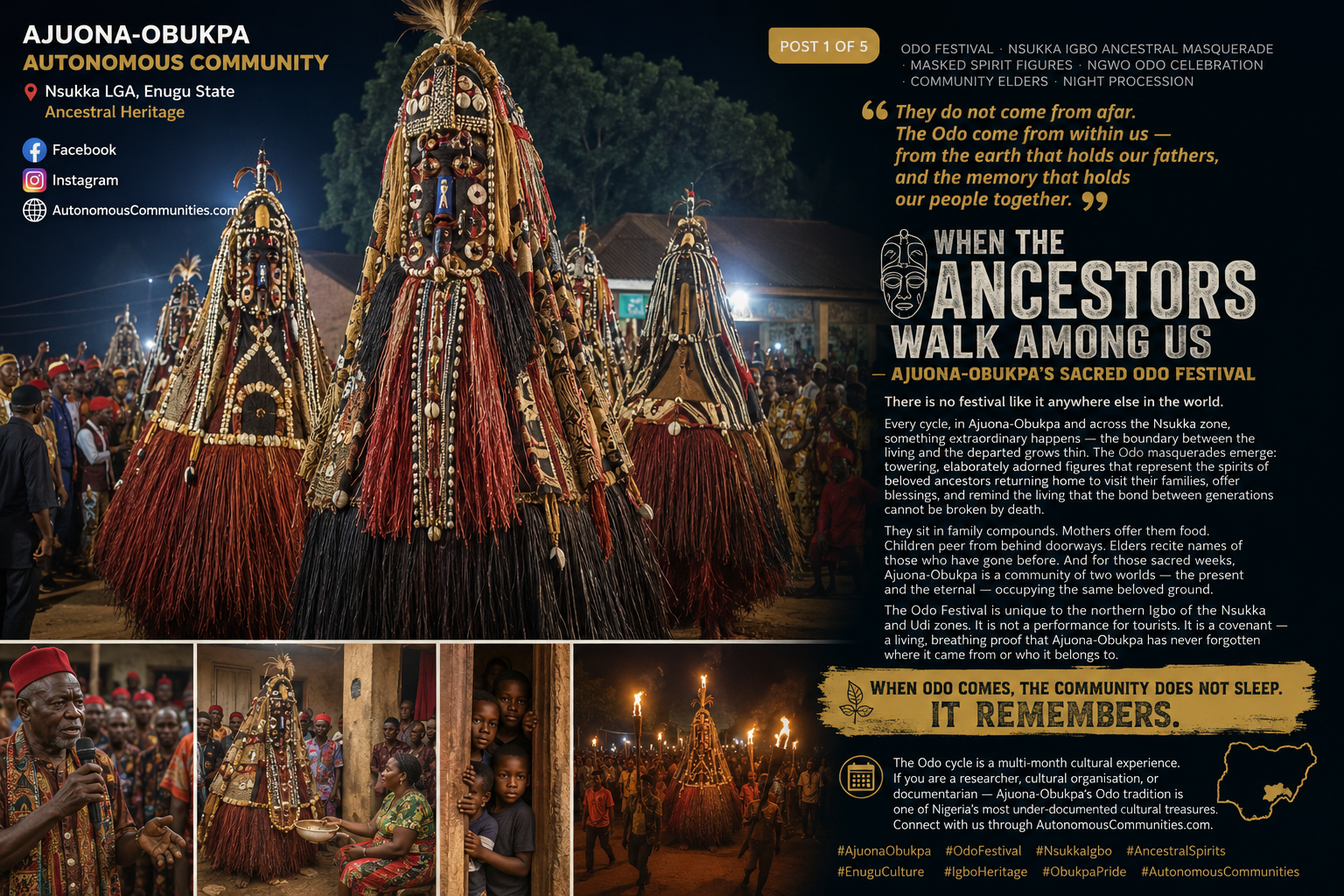 0 Comments 1 Shares 1K Views 0 Reviews
-
🌾 FROM OUR RED EARTH TO YOUR TABLE — AJUONA-OBUKPA'S LIVING MARKET PLACE
The sun has barely risen when the farmers of Ajuona-Obukpa are already at work. Women carrying yam tubers on their heads, moving with purpose toward the market. Men checking their palm trees for the first palm wine of the morning. Children running ahead, eyes bright, already learning from watching what real work looks like.
'This community feeds people. It always has'.
Ajuona-Obukpa sits in the heart of the Nsukka yam belt — a region whose yam is known across southeastern Nigeria for its quality, size, and taste. It produces palm oil pressed by hands that have done it for generations. It makes Abacha — the famous Nsukka-style African salad, dried and shredded cassava dressed in palm oil, ukpaka, and seasoning — that no restaurant in Lagos can quite replicate.
The women who carry this economy do not have titles or LinkedIn profiles. They have stalls, baskets, early mornings, and years of knowledge that no textbook teaches. They are the market. They are the economy.
🛒 And now, for the first time, their goods can reach you — wherever you are — through the AutonomousCommunities.com digital marketplace.
🧺 Farmers, traders, and food processors of Ajuona-Obukpa: list your yam, palm oil, abacha, and services on our community marketplace. Diaspora members: buy directly from home. The market is now open online.
#AjuonaObukpaMarket #NsukkaYam #BuyFromHome #AbachaLovers #PalmOilNigeria #IgboWomenEnterprise #FarmToTable #SupportLocalNigeria #AutonomousCommunities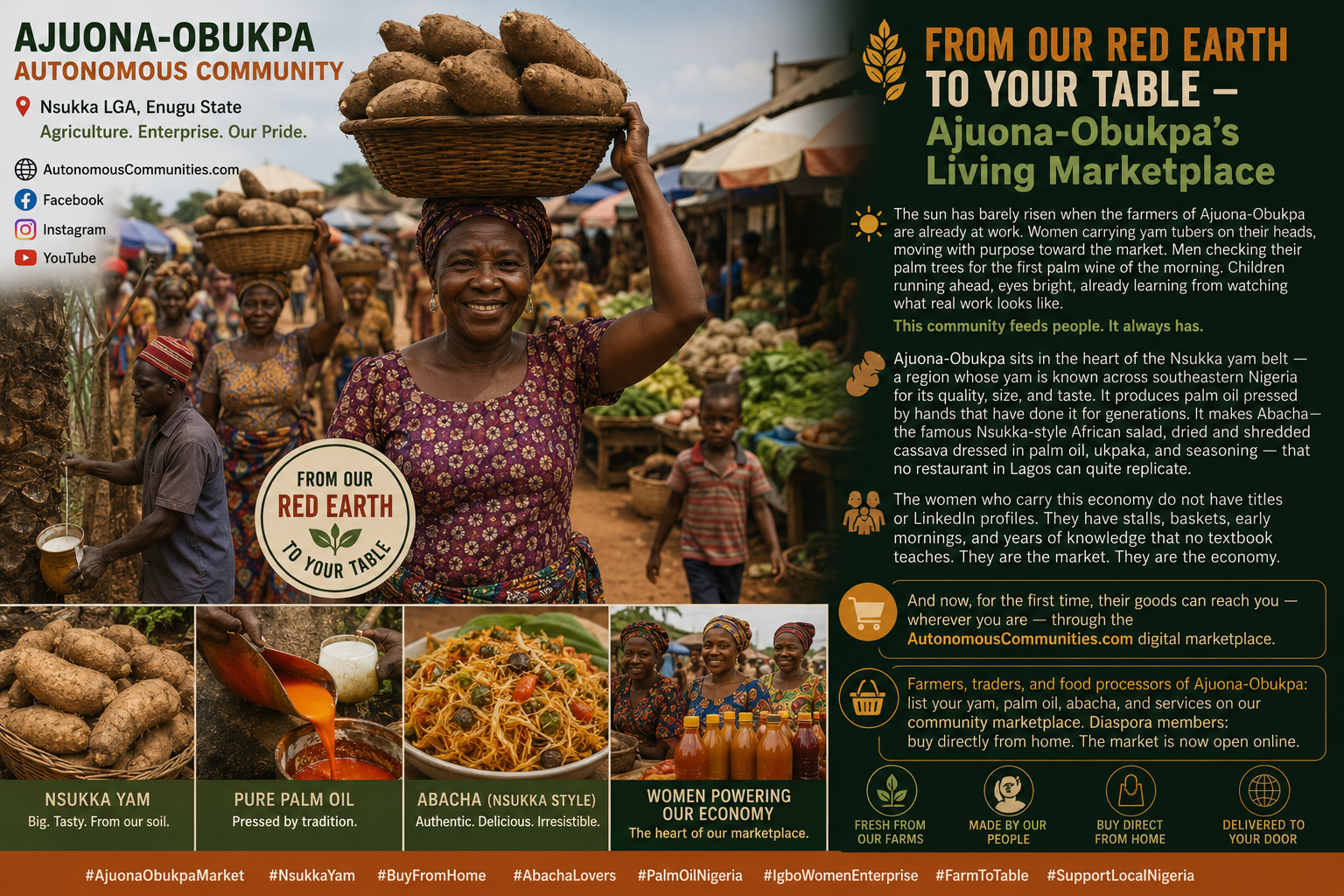 0 Comments 1 Shares 1K Views 0 Reviews
-
🏥 OUR COMMUNITY HAS ONE HEALTH POST - TWELVE VILLAGES WE NEED YOUR HELP!
1 Health post for 12 villages;~0% Homes with piped water; 60K+People in Obukpa cluster
Let us be direct with you, because our community deserves honesty more than it needs silence.
In Ajuona-Obukpa — a community of 12 ancestral villages, thousands of residents, and centuries of history — there is one community health post. One. And the majority of households in our community have no indoor piped water. When a mother goes into labour at night, the road to Nsukka General Hospital is dark and unpaved. When a child develops a fever, the medicine counter may be empty.
This is not a story of failure. It is a call to action — from a proud, resilient, and organised community that is ready to receive and manage the partnerships it deserves.
Ajuona-Obukpa already has a functioning Town Union, a recognised Igwe (HRH Igwe Mathias Ezea), active women's associations, and a community that has shown it can organise. What it needs now are partners who show up: for boreholes, for PHC equipment, for maternal health training, for clean water — for dignity.
💙 We are not asking for charity. We are inviting partnership with a community that is ready to receive it well.
🤝 NGOs, government health agencies, diaspora health professionals, and development partners: Ajuona-Obukpa has a verified community profile, recognised leadership, and urgent WASH and PHC needs aligned with SDG 3 and SDG 6. Contact us through AutonomousCommunities.com — our door is open and our leadership is ready.
#AjuonaObukpaHealth #WASHNigeria #RuralHealthNigeria #PHCEnugu #CleanWaterNigeria #SDG3 #SDG6 #CommunityDevelopment #NsukkaLGA #AutonomousCommunities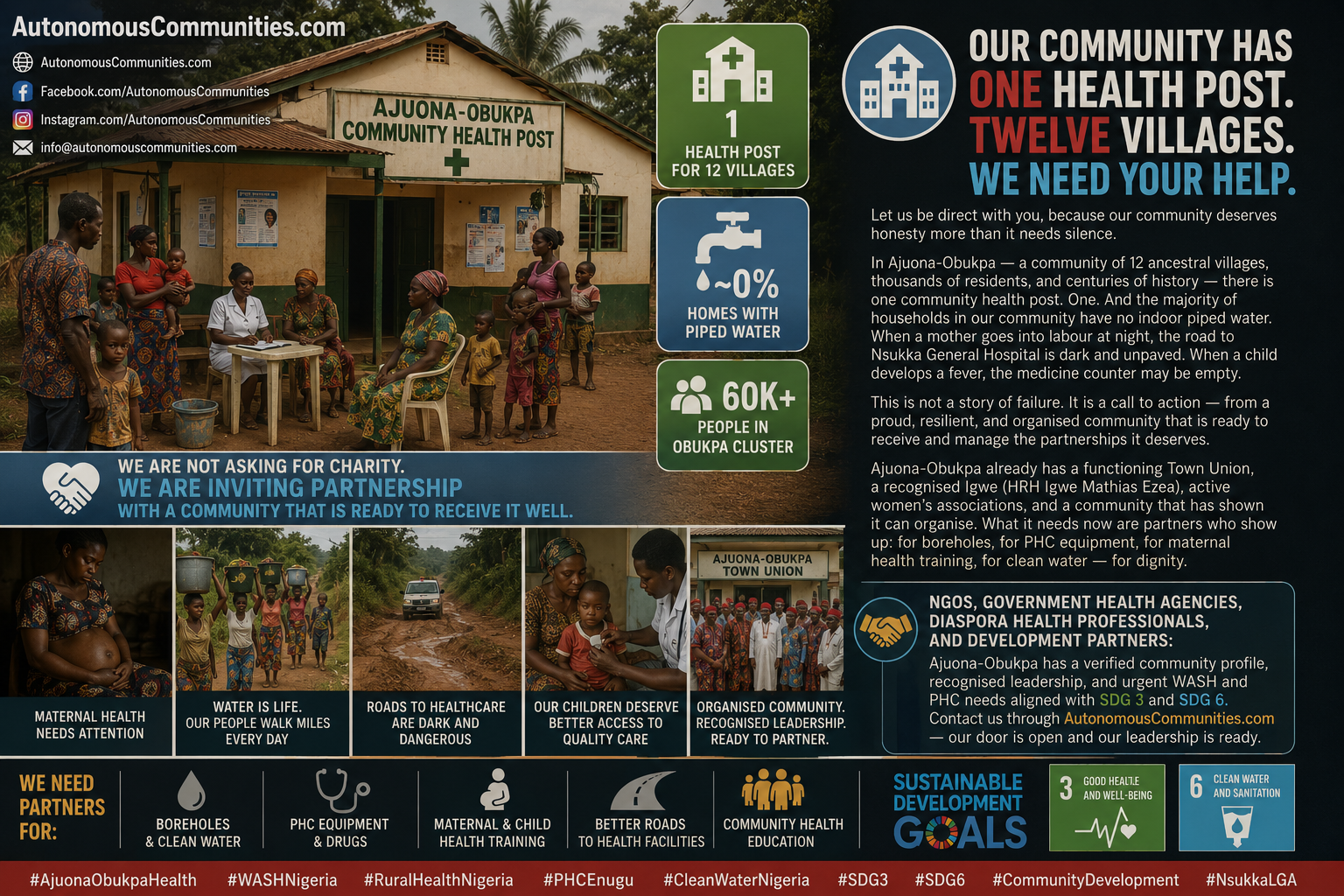 0 Comments 1 Shares 1K Views 0 Reviews
-
🔥 FEAR IT! RESPECT IT!! HONOUR IT!!! — THE MIGHTY OMABE OF AJUONA OBUKPA
'Not all masquerades come to dance. Some come to judge'.
In Ajuona-Obukpa, the Omabe tradition stands as one of the most powerful and spiritually charged institutions of Nsukka Igbo cultural life. Where Odo brings the warmth of returning ancestors, Omabe carries the authority of the divine — a force of moral order, community discipline, and sacred law that no wrongdoer in the community takes lightly.
The arrival of Omabe is announced by the chief priest. The community prepares. The masquerades — spectacular in appearance and commanding in presence — move through the community rewarding the righteous and addressing those who have broken the moral compact of communal life.
This tradition, which traces deep roots to Igala cultural contact across the Nsukka zone, draws visitors from across the LGA and beyond. It is living proof that Ajuona-Obukpa did not receive its history passively — it built it through centuries of cultural exchange, resilience, and spiritual depth.
👁️ To see Omabe is to see the soul of our community in its most ancient, most honest form.
🎥 Are you a filmmaker, photographer, or cultural journalist? Ajuona-Obukpa's Omabe tradition deserves national and international documentation. Reach out through our community profile to discuss access and collaboration.
#OmabeMasquerade #AjuonaObukpa #NsukkaFestival #IgboCulture #SacredTradition #EnuguHeritage #CulturalTourism #NigeriaFestivals #AutonomousCommunities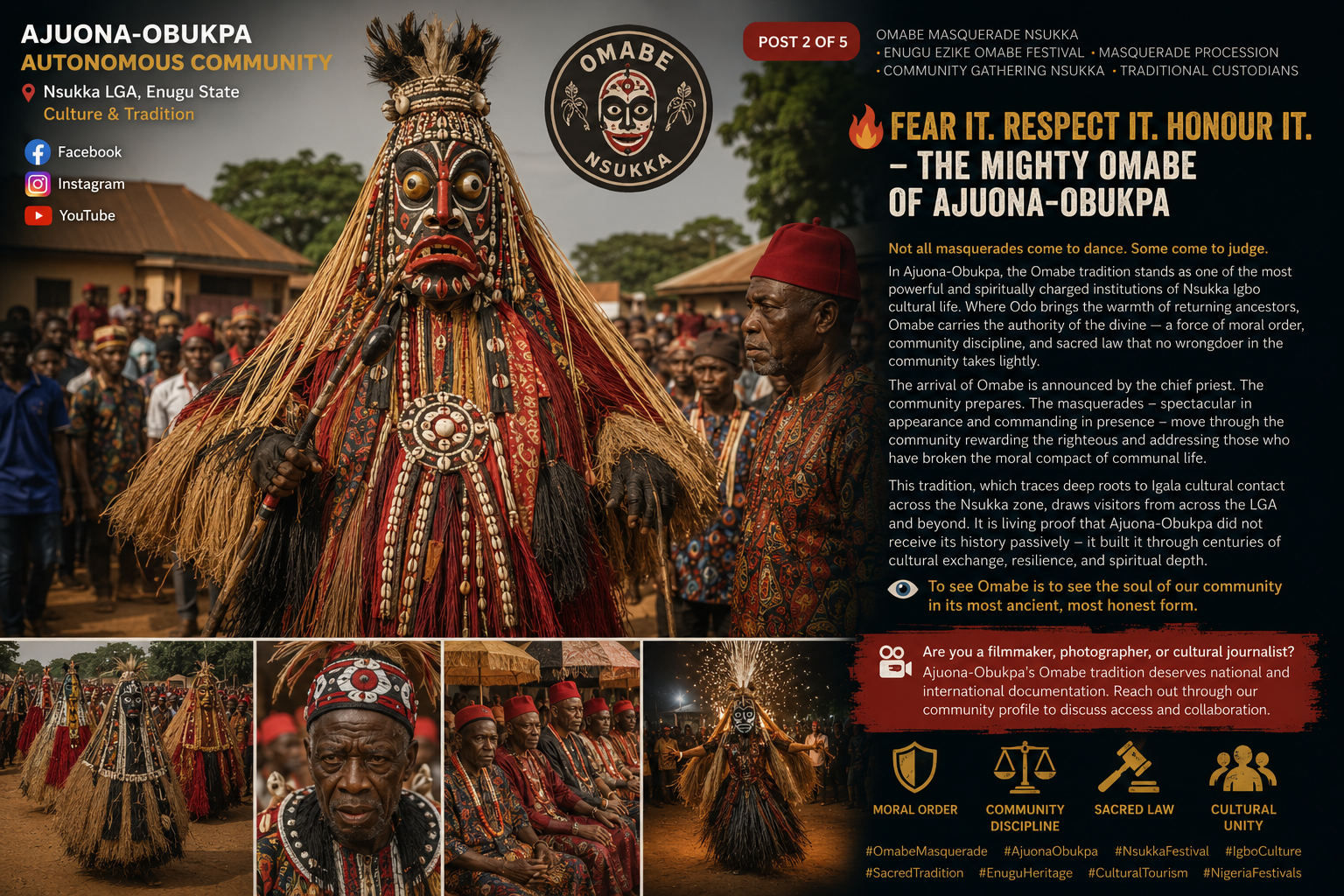 0 Comments 1 Shares 1K Views 0 Reviews
-
🏛️ FIRST BORN NEIGHBOUR TO NIGERIA'S FIRST UNIVERSITY - THIS IS AJUONA-OBUKPA
'1st Born — Senior Obukpa Quarter; 12 Ancestral Villages; 1960 UNN Founded Next Door'
In the Obukpa family — one of the oldest peoples in Nsukka LGA — there is one community that carries a special title: the first-born quarter. That is Ajuona-Obukpa. With 12 ancestral villages and a history that stretches beyond colonial memory, this is a community that has known who it is for centuries.
And then, in 1960, something happened next door. The University of Nigeria, Nsukka — Nigeria's first indigenous university — opened its gates on land that neighbours Ajuona-Obukpa. Since that day, the community has lived side by side with one of Africa's great institutions of learning, its children walking past lecture halls on the way to farms, its sons and daughters studying in those halls and returning home with degrees that change families.
This proximity is not just geography. It is opportunity. Research partnerships. Agricultural extension. Medical access through UNTH. Housing demand. Employment. A constant reminder that education is not far away — it is next door.
🎓 Ajuona-Obukpa is not just adjacent to Nigeria's intellectual history. It is part of it. And the next chapter of that story is ours to write.
📣 To UNN faculty, researchers, and development offices: Ajuona-Obukpa is your host community. We are ready to build structured partnerships in health, agriculture, enterprise, and cultural research. Let's talk.
#AjuonaObukpa #UNNHostCommunity #NsukkaProud #FirstBornQuarter #ObukpaPride #EnuguEducation #UNN1960 #IgboHeritage #AutonomousCommunities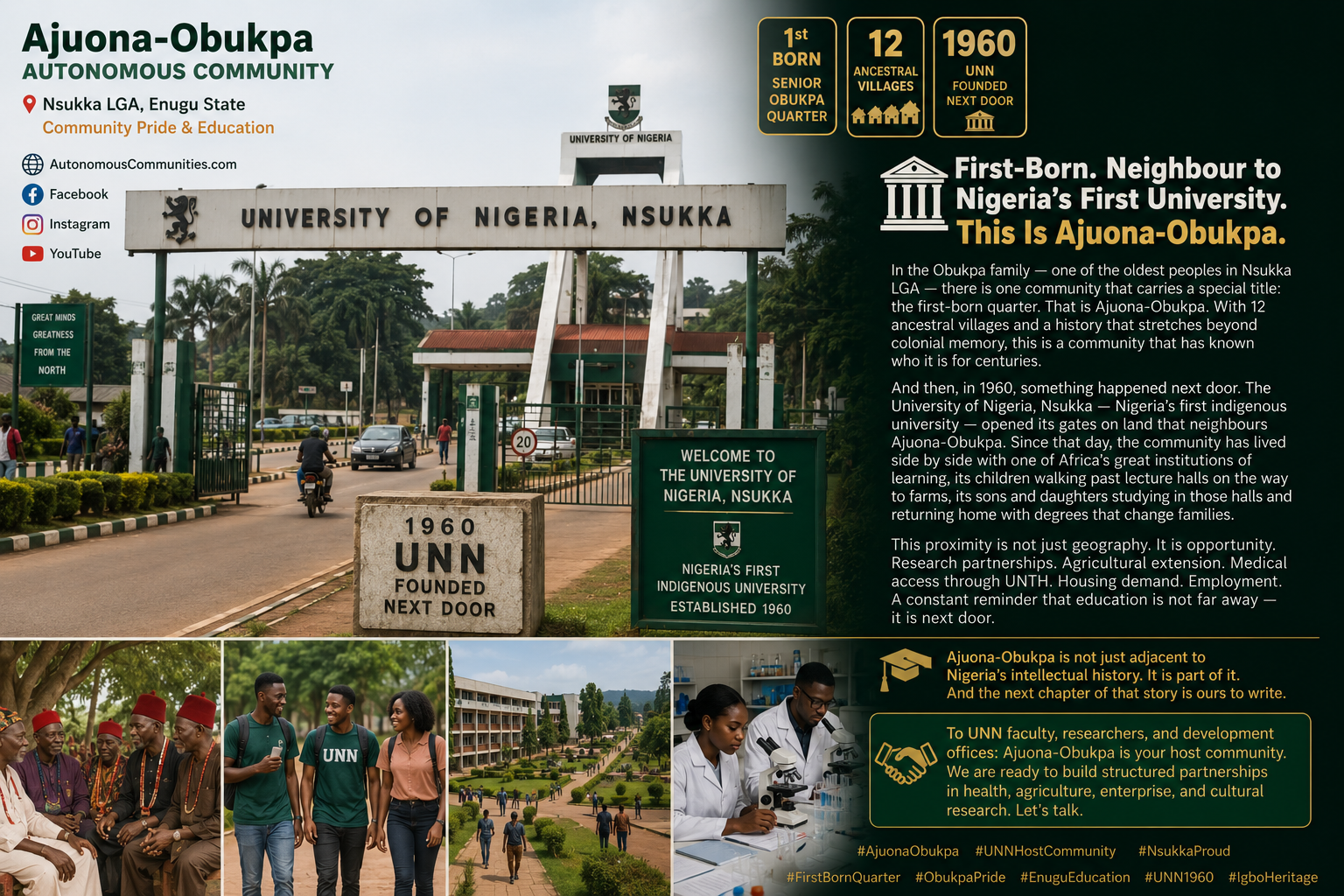 0 Comments 1 Shares 1K Views 0 Reviews
More Stories
