




══════════════════════════════════════════════════════════════════
🌍 IHEAGU-NRU AUTONOMOUS COMMUNITY
A Full Community Profile for AutonomousCommunities.com
══════════════════════════════════════════════════════════════════
📍 Location: Nru Nsukka Suburb | Nsukka LGA | Enugu State | Nigeria
🏅 Status: Oldest Sub-Community in Nru Nsukka
📮 Postal Code: 410106 | ISO: NG.EN.NS
🗺️ Coordinates: 6°51′24″N 7°23′45″E
🏛️ Formal Autonomous Name: Nru-Nsukka Autonomous Community
(Also popularly known as Iheagu-Nru)
🕊️ Pioneer Igwe (Deceased): Late HRH Sylvanus Arumah (Eze Udo I of Nru)
⚖️ Current Status: Igweship succession process underway (as of 2026)
══════════════════════════════════════════════════════════════════
━━━━━━━━━━━━━━━━━━━━━━━━━━━━━━━━━━━━━━
✨ 1. OPENING SUMMARY
━━━━━━━━━━━━━━━━━━━━━━━━━━━━━━━━━━━━━━
Iheagu-Nru Autonomous Community is the eldest and most historically
rooted of the Nru Nsukka communities — a people whose deep ancestral
pride, tradition of producing leaders of national consequence, and
firm attachment to the culture of seniority define who they are and
how they believe the future must be built.
━━━━━━━━━━━━━━━━━━━━━━━━━━━━━━━━━━━━━━
🏺 2. HISTORY & ORIGIN
━━━━━━━━━━━━━━━━━━━━━━━━━━━━━━━━━━━━━━
🔖 Name & Meaning
The name "Iheagu" is drawn from the Nsukka Igbo dialect and refers
to the original settlement identity of this community within the
broader Nru Nsukka cluster. Together with its sister communities
Ezema-ne-Edem and Umuoyo, Iheagu forms one of three autonomous
communities that emerged from the historic Nru Nsukka suburb of
Nsukka town.
The wider community cluster is known by the traditional expression
"Nru n'ato" — meaning "the three Nrus" — with Iheagu holding first
place by age and seniority. In all traditional reckoning, Iheagu-Nru
is listed first: it is the eldest, the original, the root from which
Nru's identity grows.
Notably, when the autonomous community was formally registered with
the Enugu State government, the then town union of the community chose
the name "Nru-Nsukka Autonomous Community" rather than retaining the
traditional "Iheagu" name — a decision that generated internal debate.
Community members have noted that "even the larger Nsukka Town told
us not to answer Nru," while the town union persisted with the formal
name. As a result, the community is known both formally as
Nru-Nsukka Autonomous Community and popularly as Iheagu-Nru —
a dual identity that reflects an ongoing, living conversation about
what the community should call itself and how it wishes to be known
to the world.
🏡 Roots & Settlement
Iheagu-Nru is part of the Nru Nsukka suburban settlement cluster —
one of the three original autonomous communities that historically
made up the Nsukka urban area (alongside Nkpunanor and Ihe n'Owerre).
Nru itself — the wider cluster — has been described as a community
that shares common ancestry, language, and cultural tradition across
its sub-communities.
Iheagu holds the position of seniority within Nru. This is not merely
ceremonial — seniority in Nsukka Igbo culture governs inheritance,
land rights, spiritual obligations, and the rotation of traditional
leadership. Iheagu's elderhood is the community's most foundational
identity marker, referenced at every governance meeting, festival
gathering, and kinship occasion.
🏛️ The Journey to Autonomy
Iheagu-Nru's journey to formal autonomous community status was part
of a broader restructuring of the Nru Nsukka area, driven by the
Enugu State government. The pioneer traditional ruler of the entire
Nru community — HRH Sylvanus Arumah (Eze Udo I of Nru) — originally
held authority over all of Nru Nsukka. As the restructuring created
separate autonomous communities, his reign was formally restricted
to Iheagu's territory. He thus became the pioneer traditional ruler
specifically of Iheagu-Nru.
Following the passing of Late Igwe Sylvanus Arumah, the community
has been navigating the process of installing a successor. As of
2026, that process is ongoing, with internal discussions centred
on how the community's constitution — and the revered principle
of seniority — should govern the selection of the next Igwe.
The community's two main quarters, Ezema and Evonashi, are at
the centre of this conversation. The traditional prime minister,
Onowu Sylvanus Okoro, has publicly called for dialogue and peace:
"What we want is peace. If we destroy ourselves for Igwe,
who will the traditional ruler rule?" — a call that resonates
with the community's best instincts.
📜 Note on Historical Records
Available local records are limited for the deeper pre-colonial
ancestral history of Iheagu-Nru. Oral history, elder testimony,
and the archives of the Nru Nsukka Town Union remain the primary
sources. Systematic documentation by community scholars, returning
diaspora, and the University of Nigeria Nsukka would be invaluable.
━━━━━━━━━━━━━━━━━━━━━━━━━━━━━━━━━━━━━━
🤝 3. COMMUNITY IDENTITY & LIFESTYLE
━━━━━━━━━━━━━━━━━━━━━━━━━━━━━━━━━━━━━━
💛 Character & Values
Iheagu-Nru is a community that wears its age with dignity. The
people carry a consciousness of being first — first in seniority,
first in historical standing within Nru — and this shapes how they
approach community decisions, disputes, and development. There is a
deep cultural emphasis on doing things correctly, in the right order,
with proper consultation of elders and respect for the customs of
their ancestors.
The community has a strong culture of seniority (known broadly
in Nsukka Igbo tradition as following lineage and age-order in
all matters of importance), which governs everything from village
leadership to the rotation of the Igwe stool. When this principle
is perceived to be bypassed, it is a matter of deep community
concern — as seen in the ongoing governance conversations of 2026.
Iheagu-Nru people are also known for producing individuals of
public distinction. The community sent Late Sen. Fidelis Okoro
to the Nigerian Senate, where he served the Enugu North Senatorial
District with distinction from 1999 to 2007. This tradition of
civic participation and political engagement runs deep.
👨👩👧👦 Family & Kinship
The extended family compound remains the basic social unit.
Patrilineal kinship (umunna) governs land rights, social
obligations, and collective identity. The community is organised
into two principal quarters — Ezema and Evonashi — each of
which contains multiple villages, themselves made up of family
lineage groups.
Marriage, birth, and burial all remain community-wide events —
occasions where the whole village and often the wider Iheagu
community comes together. Respect for elders, honour for the
ancestors, and care for the young are values lived daily, not
merely stated at gatherings.
🌄 Everyday Life
Daily life in Iheagu-Nru moves to a rhythm of farming, trading,
schooling, church, and family. Its proximity to the University
of Nigeria Nsukka (UNN) — one of Nigeria's most prestigious
universities, located nearby — creates an intellectually vibrant
surrounding environment. Many Iheagu-Nru residents and their
children are connected to UNN as students, staff, or service
providers.
Nsukka town's amenities — its markets, hospitals, transport
hubs, and commercial zones — are accessible from the community.
The community's own daily life is marked by the sounds of
morning farm preparation, afternoon market activity, and
evening family gathering. Young people increasingly move
between village life and urban opportunities in Nsukka,
Enugu, and beyond — but many maintain strong emotional
and practical ties to Iheagu-Nru.
━━━━━━━━━━━━━━━━━━━━━━━━━━━━━━━━━━━━━━
👑 4. GOVERNANCE & LEADERSHIP
━━━━━━━━━━━━━━━━━━━━━━━━━━━━━━━━━━━━━━
🏛️ Traditional Leadership — A Community in Transition
The pioneer traditional ruler of Iheagu-Nru, Late HRH Sylvanus
Arumah (Eze Udo I of Nru), was a figure of historical significance —
the first Igwe of the entire Nru community, whose authority was
later formally restricted to Iheagu following the creation of
separate autonomous communities from the larger Nru structure.
His passing has left the throne temporarily vacant, and the
community is in active succession dialogue as of 2026.
The community's constitution stipulates that the Igwe position
rotates between the two main quarters — Ezema and Evonashi —
in seniority order. The late Igwe came from the Ezema quarter,
making the Evonashi quarter the next in line to produce the
community's Igwe.
⚖️ Governance Conversation
A notable and publicly documented conversation is underway in
Iheagu-Nru about the best process for conducting the Igweship
election. At its heart is a tension between two perspectives:
community elders who insist on strict adherence to village
seniority order within the quarter producing the Igwe, and
others who support an open contest within the quarter based
on merit. The traditional prime minister, Onowu Sylvanus Okoro,
has called for inclusive dialogue at a General Assembly as the
path forward.
This is a living governance conversation — not a crisis, but a
community working through what it means to honour its traditions
while navigating modern governance requirements. Its resolution
will shape Iheagu-Nru's institutional character for a generation.
🎖️ Traditional Prime Minister (Onowu)
Onowu Sylvanus Okoro serves as the traditional prime minister
of Iheagu-Nru — a senior title of dignity and responsibility
within the community's traditional governance structure,
equivalent to the spokesperson and mediating voice among
the high-ranking title holders.
🧓 Elders & Onyishi System
Each village in Iheagu-Nru is headed by an Onyishi — the oldest
man in the village. This position is never campaigned for or
contested. When one Onyishi passes, the next eldest man in the
village assumes the role. Village heads (Onyishi) are signatories
to community governance documents, custodians of ancestral land
knowledge, and the primary voices in inter-village deliberation.
The signatories to the community's constitution include village
heads, the traditional ruler, the oldest woman (Omerubo), and
the youth leader — reflecting a governance framework that
formally includes multiple community voices.
👩 Women's Leadership — The Omerubo
In Iheagu-Nru's traditional governance system, the oldest woman
in the community holds a recognised position: the Omerubo.
This role has formal standing in community governance, as
evidenced by her inclusion as a signatory to the community's
constitution. The Omerubo Mrs Monica Ugwuanyi is a confirmed
holder of this position. This is a culturally significant
leadership role that affirms the community's recognition of
women's standing in its formal governance architecture.
🌱 Town Union & Development Structures
The Nru-Nsukka Town Union (as the community formally calls its
development union) has historically been the driving civil
governance body of Iheagu-Nru. It manages community affairs,
interfaces with the LGA and state government, and coordinates
development projects. The Town Union used the community constitution
to conduct its own executive elections, indicating that community
governance functions are active even during the Igweship
transition period.
🌐 Diaspora Leadership
Available local records are limited on a formally registered
diaspora association for Iheagu-Nru. However, the community
has a tradition of sons and daughters in positions of public
influence across Nigeria and beyond (evidenced by its history
of producing senior politicians, administrators, and clergy),
suggesting an active but informally organised diaspora network.
━━━━━━━━━━━━━━━━━━━━━━━━━━━━━━━━━━━━━━
🗺️ 5. VILLAGES & INTERNAL STRUCTURE
━━━━━━━━━━━━━━━━━━━━━━━━━━━━━━━━━━━━━━
🏘️ Community Composition
Iheagu-Nru Autonomous Community is organised into two principal
quarters (divisions), each comprising multiple villages:
🔵 Quarter 1: EZEMA
The quarter from which the late pioneer Igwe, HRH Sylvanus
Arumah, emerged. Ezema quarter contains multiple villages,
each headed by an Onyishi (the eldest man in that village).
Specific village names within this quarter are noted in the
community's governance constitution, though available local
records are limited on a full confirmed inventory.
🟢 Quarter 2: EVONASHI
By the constitution's rotation arrangement, Evonashi quarter
is next in line to produce the community's traditional ruler.
Like Ezema, Evonashi is composed of multiple villages,
each governed by its Onyishi.
📋 Village Count
Consistent with the Nru Nsukka pattern, each community in Nru
has a minimum of ten villages. Available local records are limited
on the complete confirmed list of named villages in Iheagu-Nru
specifically. A community-commissioned village inventory and
documentation project would be a high-value first step.
🏔️ Notable Landmarks & Spaces
• Iheagu-Nru shares the wider Nru Nsukka geography with
neighbours Ezema-ne-Edem and Umuoyo.
• The community shares external boundaries with Ede-Oballa,
Orba, and Eha-Alumona communities.
• The Fen Park area on the Enugu Road serves as a key
navigation point for the broader Nru zone.
• The University of Nigeria Nsukka (UNN) is located
nearby, making this community part of a university
town ecosystem of significant national importance.
━━━━━━━━━━━━━━━━━━━━━━━━━━━━━━━━━━━━━━
🥁 6. CULTURE, FESTIVALS & HERITAGE
━━━━━━━━━━━━━━━━━━━━━━━━━━━━━━━━━━━━━━
🎭 Cultural Affiliation
Iheagu-Nru is an Igbo community within the Nsukka cultural zone —
a sub-region of Igboland with its own distinct dialect, governance
traditions, and festival calendar. The Nsukka Igbo are known for
their strong oral tradition, the Onyishi elder governance system,
and a rich masquerade culture.
🌾 New Yam Festival (Iri Ji / Iwa Ji)
The New Yam Festival is the most significant agricultural and
spiritual celebration in the Nsukka Igbo calendar, and Iheagu-Nru
observes it with the full weight of communal tradition. The Onyishi
of the senior village (or the chief priest) performs the first
ritual — breaking roasted yam and offering it to the gods and
ancestors — before the community feasts. Prayers of gratitude
to the land, the ancestors, and the divine are offered; palm wine
flows; families prepare large communal meals; and traditional music
and dance fill the air. Men wear isiagu tops and red caps; women
adorn themselves in vibrant wrappers, coral bead necklaces, and
headties.
For Iheagu-Nru — as the eldest Nru community — the New Yam
celebration also carries additional weight as an affirmation
of ancestral priority and community identity.
🎭 Masquerade Traditions (Mmanwu)
Masquerades are a living and powerful cultural institution in
the Nsukka zone. The broader Iriji-Mmanwu Festival — combining
the New Yam and masquerade traditions — typically draws thousands
of participants in August or September. Masked figures (Mmanwu)
serve multiple roles: entertainment, social regulation, spiritual
intermediation between the living and the ancestral world, and
cultural transmission. Available local records are limited on
the specific masquerade traditions unique to Iheagu-Nru, but
the Mmanwu tradition is deeply embedded in Nsukka Igbo life
and almost certainly has local expressions within the community.
💒 Marriage Customs
Traditional Igbo marriage (Igba Nkwu) is a community-wide
celebration in Iheagu-Nru, involving family negotiations,
the palm wine ceremony (the bride finding her husband in
the crowd with a cup of palm wine as public acceptance),
gift exchange, feasting, and dancing. Most families today
add a Christian church blessing. Marriage is understood
not as a private arrangement between two individuals but
as an alliance between families, villages, and lineages.
⚱️ Burial & Remembrance Customs
Burial rites in Iheagu-Nru follow Igbo tradition: proper
send-off ceremonies befitting the status of the deceased,
a mourning period, and in many cases a second funeral
celebration (nzu funeral celebration) weeks or months
after initial burial. Elders and title-holders receive
particularly elaborate farewells. The burial of Late Igwe
Sylvanus Arumah — the community's pioneer Igwe — was a
moment of collective mourning and communal memory.
🎵 Music, Dance & Oral Tradition
Ogene (metal gong), drums, and communal singing mark all
major festivals and ceremonies. The Nsukka Igbo have a
rich tradition of oral history — proverbs, ancestral
narratives, and elder stories that serve as the community's
living library. The Onyishi elders are the custodians of
this knowledge. Efforts to document these traditions are
growing in importance as modernisation accelerates.
🍲 Food & Cuisine
Iheagu-Nru's cuisine reflects the rich agricultural heritage
of the Nsukka zone. Yam is the centrepiece — pounded yam,
yam porridge, and roasted yam are staples. Egusi soup, ofe
onugbu (bitter leaf soup), ofe oha, and palm oil-based stews
complete the table. Cassava, cocoyam, and palm products enrich
the menu. Palm wine (nkwu enu) is the celebratory drink of
choice.
👗 Traditional Attire
Men's ceremonial wear: isiagu (lion-head print) top, traditional
red cap (symbol of title and honour), and wrapper or trousers.
Women: vibrant wrappers and blouses, coral bead necklaces,
and head ties. Traditional attire is prominently displayed
at festivals, funerals, community meetings, and title-taking
ceremonies — events where Iheagu-Nru's collective identity
is most visibly expressed.
🔮 Taboos & Sacred Traditions
Available local records are limited on the specific taboo
system of Iheagu-Nru. As with most Nsukka Igbo communities,
sacred groves, ancestral shrines, and specific ceremonial
protocols are likely protected by customary rules maintained
by elders and the community's traditional institutions.
━━━━━━━━━━━━━━━━━━━━━━━━━━━━━━━━━━━━━━
⛪ 7. RELIGION & FAITH INSTITUTIONS
━━━━━━━━━━━━━━━━━━━━━━━━━━━━━━━━━━━━━━
🙏 Religious Overview
Iheagu-Nru is predominantly Christian, as is consistent with
the broader Nsukka LGA where Christianity is the most widely
practised religion. The community likely includes Catholic,
Anglican, Baptist, Pentecostal, and other denominations,
alongside practitioners of Odinani (traditional Igbo religion).
The presence of Rev. Fr. Malachy Ezeah — a Catholic priest
and son of the community who has publicly engaged with
community governance matters — is evidence of the deep
integration between faith leadership and community life
in Iheagu-Nru.
✝️ Faith Institutions
Available local records are limited on a complete inventory
of churches specifically within Iheagu-Nru. Given the
community's size and its position within the Nru Nsukka
zone, multiple denominational churches are almost certainly
present. The Roman Catholic Diocese of Nsukka, the Anglican
Diocese of Nsukka, and various Pentecostal bodies all have
a strong presence across the Nsukka zone.
🕯️ Traditional Religion (Odinani)
Practitioners of Odinani within Iheagu-Nru maintain the
ancestral spiritual practices of the Nsukka Igbo — reverence
for the earth goddess Ala, the ancestors, and local deities.
The Onyishi elders often serve as custodians of sacred spaces
and ancestral protocols, even as Christian worship dominates
public life.
🌱 Faith-Based Development Roles
Church institutions in Iheagu-Nru play important roles beyond
worship: organising women's guilds and youth fellowships,
supporting the elderly and vulnerable, contributing to
community welfare informally, and serving as trusted
platforms for civic dialogue. The involvement of a Catholic
priest (Rev. Fr. Ezeah) in public community discourse on
governance reflects the natural authority that faith leaders
carry in Iheagu-Nru's social fabric.
━━━━━━━━━━━━━━━━━━━━━━━━━━━━━━━━━━━━━━
💼 8. ECONOMY & MARKETPLACE
━━━━━━━━━━━━━━━━━━━━━━━━━━━━━━━━━━━━━━
🌍 Economic Character
Like the wider Nru Nsukka zone, Iheagu-Nru's economy rests
on a foundation of agriculture, artisanship, small-scale
trading, and civil service employment. The community's
proximity to the University of Nigeria Nsukka and Nsukka
town's commercial infrastructure adds a layer of economic
opportunity beyond the purely rural.
🌾 Agriculture
Farming is the dominant occupation in Iheagu-Nru. The entire
Nru Nsukka zone is described as "predominantly farmers and
craftsmen." Key crops include yam (the cultural and commercial
centrepiece), cassava, cocoyam, vegetables, and palm produce.
Smallholder farming remains the norm, with produce sold in
local markets. The agricultural land base is a significant
development asset waiting for organised value-chain investment.
🔨 Artisanship & Trades
The broader Nru Nsukka identity includes a strong tradition
of craftsmen — bricklayers, carpenters, roofers, and various
skilled tradespeople. Available local records are limited on
the specific craft specialisations unique to Iheagu-Nru
compared to its neighbours, but artisan skills are embedded
across the community's economic profile.
🏪 Trade & Commerce
Community members participate actively in local trade —
both within the community itself and in the broader Nsukka
commercial ecosystem. The Ogige Main Market in Nsukka town
is the major trading hub for the zone, and Iheagu-Nru
residents are regular participants. Local petty trading,
food vending, and service provision are active within
the community.
🎓 Civil Service, Education & University Economy
The proximity to UNN creates meaningful civil service and
service economy employment opportunities. Community members
work as university staff, administrative officers, security
personnel, food vendors, transport operators, and property
rental providers. The university economy is a quiet but
significant driver of household income for many families.
🏅 Notable Sons & the Public Sector Legacy
The community's tradition of public service and political
engagement — exemplified by Late Sen. Fidelis Okoro,
who served in the Nigerian Senate from 1999 to 2007
and was described as "a grassroots politician who helped
the district in various ways" — reflects a community
that understands the value of placing its people in
positions of public influence. This tradition of public
service creates both role models for young people and
informal networks that benefit community development.
💸 Diaspora Remittances
Available local records are limited on the aggregate volume
of diaspora remittances flowing into Iheagu-Nru. However,
given the community's tradition of producing educated
professionals, politicians, and clergy, a meaningful
diaspora in Nigerian cities and internationally
(UK, USA, Canada, and Europe) is likely contributing
remittances that support household welfare, school fees,
home construction, and community development.
📦 Products & Services Suitable for Listing on AutonomousCommunities.com
• Agricultural produce: yam, cassava, palm oil, cocoyam,
vegetables
• Artisan services: carpentry, bricklaying, construction trades
• Food and catering (traditional Nsukka Igbo cuisine)
• Property rental (student and visitor market near UNN)
• Transport and logistics services within Nsukka zone
• Professional services from community members (legal,
educational, clerical)
━━━━━━━━━━━━━━━━━━━━━━━━━━━━━━━━━━━━━━
🏫 9. EDUCATION, HEALTH & INFRASTRUCTURE
━━━━━━━━━━━━━━━━━━━━━━━━━━━━━━━━━━━━━━
🎓 Education
Iheagu-Nru benefits from being embedded in one of the most
educationally rich zones in southeastern Nigeria. The University
of Nigeria Nsukka — Nigeria's first fully indigenous university,
founded in 1960 — sits nearby, offering community members
access to tertiary education, adult learning programmes,
and a culture of intellectual engagement.
The community likely has access to primary and secondary
schools within or near Nru Nsukka. Available local records
are limited on the specific schools, enrolment figures,
and educational infrastructure directly serving Iheagu-Nru.
A formal community education inventory would be extremely
valuable for development planning.
The community has a tradition of producing educated leaders:
the late Rev. Fr. Malachy Ezeah (a community son who became
a Catholic priest) exemplifies the community's investment in
education and professional development.
🏥 Health Facilities
Available local records are limited on dedicated health
facilities within Iheagu-Nru specifically. Residents likely
rely on Nsukka town's health infrastructure, which includes:
• The University of Nigeria Teaching Hospital (UNTH) at
Ituku-Ozalla — the zone's major referral hospital
• Nsukka General Hospital
• Private clinics and pharmacies in Nsukka town
A dedicated primary healthcare centre within Iheagu-Nru
would be a transformative investment for the community.
🛣️ Roads & Transportation
Iheagu-Nru is connected to Nsukka town and surrounding
communities through the Nru Nsukka road network. The
Fen Park junction on the Enugu Road is a key access
node for the broader Nru zone. Internal community roads
and their maintenance condition follow the general
pattern of peri-urban Nsukka communities — functional
but in need of regular attention.
Access to Nsukka town and onward to Enugu city (via the
Enugu-Nsukka Road) places Iheagu-Nru within a reasonable
distance of the state capital, supporting economic and
institutional engagement.
⚡ Electricity
The community is served by the national grid through the
Enugu Electricity Distribution Company (EEDC), with the
irregular power supply pattern that affects most of
Nigeria's peri-urban communities. Generator ownership
and growing solar adoption are common responses.
💧 Water Supply
Available local records are limited on the specific water
supply infrastructure of Iheagu-Nru. Access to reliable,
clean water — whether through boreholes, communal water
schemes, or pipe-borne supply — is a common challenge
across the Nsukka zone and likely affects the community.
📶 Internet & Digital Access
Mobile network coverage (MTN, Airtel, Glo) is available
across the Nsukka area. Fixed broadband is limited.
The proximity to UNN creates some digital infrastructure
spillover, but community-level digital connectivity
remains an area for development.
🛒 Markets
• Ogige Main Market, Nsukka — the major commercial hub
accessible to community traders and businesses
• Smaller community-level trading points within the
Nru Nsukka zone
• Access to the broader Nsukka market network
🔒 Security Infrastructure
Available local records are limited on dedicated police
posts or security infrastructure within Iheagu-Nru.
Community-level security relies primarily on the
Onyishi elder system, age grade vigilance structures,
and informal community watch — consistent with broader
Nsukka practice.
━━━━━━━━━━━━━━━━━━━━━━━━━━━━━━━━━━━━━━
🔐 10. SECURITY, POPULATION & DIASPORA
━━━━━━━━━━━━━━━━━━━━━━━━━━━━━━━━━━━━━━
🕊️ Safety & Community Order
Iheagu-Nru's primary security infrastructure is social rather
than institutional: the Onyishi elder network, age grade
associations, and the moral authority of the traditional
governance system together maintain community order. The
ongoing governance dialogue about the Igweship succession,
while publicly visible, is being handled through structured
community channels — a General Assembly call by the Onowu
is the proposed platform for resolution — reflecting the
community's preference for dialogue over confrontation.
The call of the traditional prime minister — "What we want
is peace. If we destroy ourselves for Igwe, who will the
traditional ruler rule?" — captures Iheagu-Nru's essential
disposition: governance disagreements are resolved through
community deliberation, not conflict.
👥 Population
Available local records are limited for a precise current
population figure for Iheagu-Nru specifically. Nsukka LGA's
estimated population is approximately 369,012 (as recorded
in available census data). As the eldest and one of the
largest communities in the Nru Nsukka zone — with a minimum
of ten villages across two quarters — Iheagu-Nru's population
likely runs into several thousand residents, with a significant
additional diaspora population in Nigerian cities and abroad.
🧒 Age & Demographic Profile
Iheagu-Nru has a youthful demographic profile consistent
with Nigeria's national pattern. Young people form the
majority, engaged in education, trade, and urban employment
in Nsukka, Enugu, and other cities. The elderly population
holds the community's governance and cultural authority
through the Onyishi system and elder council. The gap
between the youth's economic life and the elders' cultural
authority is a dynamic that community leadership must
navigate sensitively.
✈️ Migration & Diaspora
Iheagu-Nru has a diaspora in:
• Nigerian cities: Lagos, Abuja, Enugu, Port Harcourt,
and other major urban centres
• International: United Kingdom, United States, Canada,
and other diaspora destinations
The community's tradition of producing educated professionals
and public figures suggests its diaspora includes lawyers,
academics, civil servants, clergy, and business people.
These individuals are potential anchor investors in
community development if properly engaged through
formal diaspora structures.
Homecoming visits — especially at Christmas, New Yam season,
and major family occasions — remain the primary mechanism
for diaspora reconnection. Formalising this into an organised
Diaspora Association with structured contribution mechanisms
would significantly expand community development capacity.
━━━━━━━━━━━━━━━━━━━━━━━━━━━━━━━━━━━━━━
🏛️ 11. GOVERNMENT, NGO & DEVELOPMENT RELEVANCE
━━━━━━━━━━━━━━━━━━━━━━━━━━━━━━━━━━━━━━
📌 LGA & State Relevance
Iheagu-Nru falls within Nsukka Local Government Area — one
of Enugu State's most strategically significant LGAs, home
to the University of Nigeria and the largest urban cluster
in northern Enugu State. The community holds formal state
recognition as an autonomous community (under the name
Nru-Nsukka Autonomous Community), placing it within the
official traditional institution framework of Enugu State.
As the eldest and historically most senior community in
the Nru Nsukka zone, Iheagu-Nru carries significant
symbolic and practical weight in any discussions involving
the broader Nru community cluster.
🏅 Notable Institutional Connection — Political Legacy
The community produced Late Senator Fidelis Okoro, who
represented Enugu North Senatorial District in the Nigerian
National Assembly from 1999 to 2007. During his tenure, he
served on Senate committees covering Industries, Police
Affairs, Agriculture, and the Niger Delta — giving the
community a direct historical connection to national
policy-making. Senators and representatives who hail from
a community are typically significant conduits for
development projects, institutional recognition, and
government attention. Iheagu-Nru's political tradition
is an asset that development planners should note.
🇺🇳 SDG Alignment
Iheagu-Nru's development needs and opportunities connect
to multiple UN Sustainable Development Goals:
• SDG 1 (No Poverty) — agri-enterprise, skills, and
livelihood development
• SDG 2 (Zero Hunger) — cooperative farming and food
security
• SDG 4 (Quality Education) — school quality, adult
learning, skills training
• SDG 6 (Clean Water) — water supply and sanitation
• SDG 8 (Decent Work) — youth employment and women's
enterprise
• SDG 11 (Sustainable Communities) — governance,
infrastructure, and housing
• SDG 16 (Peace, Justice, Strong Institutions) —
supporting the community's governance transition
and constitutional resolution
• SDG 17 (Partnerships) — diaspora, NGO, government,
and investor collaboration
🤝 NGO & Government Partnership Opportunities
• Support for the community's governance transition
(constitutional mediation, institutional capacity building)
• Primary healthcare centre establishment
• Agricultural cooperative formation and market linkage
• Youth skills and vocational training programmes
• Women's enterprise and cooperative development
• Digital literacy and connectivity expansion
• Road rehabilitation and water infrastructure projects
• Community heritage documentation and cultural tourism
• Diaspora association formalisation and remittance
channelling
🏅 Institutional Visibility
The community's formal autonomous status, active town union,
Onyishi governance network, and senior title-holder structures
(including the Onowu) provide clear counterpart institutions
for external development partners. The community's political
tradition and its notable sons and daughters provide
additional entry points for institutional engagement.
━━━━━━━━━━━━━━━━━━━━━━━━━━━━━━━━━━━━━━
⚠️ 12. CHALLENGES & OPPORTUNITIES
━━━━━━━━━━━━━━━━━━━━━━━━━━━━━━━━━━━━━━
🔴 CHALLENGES
❶ Igweship Transition — The community is navigating a
leadership succession process complicated by
constitutional disputes and differing views on
seniority vs. merit. Resolution is the community's
most pressing institutional priority.
❷ Road Infrastructure — Internal roads and access routes
require maintenance and improvement; this limits
economic activity and emergency response.
❸ Healthcare Access — No confirmed dedicated community
health facility; residents depend on Nsukka town
hospitals, which can be inaccessible in emergencies.
❹ Water Supply — Reliable clean water access requires
assessment and infrastructure investment.
❺ Youth Unemployment — Limited formal employment
pathways for educated young people returning
from urban centres.
❻ Digital Invisibility — Near-zero online presence
limits visibility to investors, researchers,
diaspora, and institutions.
❼ Community Documentation — Village inventory,
population data, heritage records, and
institutional memory are insufficiently preserved.
❽ Diaspora Formalisation — No registered diaspora
association means diaspora goodwill and resources
remain informally organised and under-utilised.
❾ Internet Connectivity — Limited broadband access
constrains participation in the digital economy.
❿ Market Access for Smallholders — Farmers and
artisans lack organised value chains to reach
markets beyond Nsukka.
🟢 OPPORTUNITIES
✅ Governance Resolution as a Strength — Successfully
resolving the Igweship process through dialogue,
guided by the Onowu's call for peace, would
establish Iheagu-Nru as a model of mature
community governance.
✅ Political Legacy — Leveraging the community's
tradition of producing national leaders (Late
Sen. Fidelis Okoro) to attract institutional
attention, government programmes, and
development partnerships.
✅ Agriculture — Rich farming land and a farming-
oriented community is a foundation for
organised cooperative farming, agro-processing,
and market linkage programmes.
✅ Diaspora-Led Development — Formalising a
Diaspora Association unlocks remittances,
crowdfunding for infrastructure, and
professional skills repatriation.
✅ Digital Marketplace — Listing products and
services on AutonomousCommunities.com and
other platforms opens new markets for
farmers, artisans, and service providers.
✅ UNN Partnership — The University of Nigeria
Nsukka is a natural partner for community
research, student enterprise programmes,
agricultural extension services, and
community development projects.
✅ Youth Vocational Training — Formalising
artisan and trade skills through accredited
vocational programmes creates certifiable
employment pathways.
✅ Women's Enterprise — Organising women
farmers and traders into cooperatives
unlocks microfinance, government grants,
and NGO support channels.
✅ Cultural Tourism — The community's age,
ancestral heritage, and festival traditions
(particularly as the eldest Nru community)
have cultural and heritage tourism potential.
✅ Primary Healthcare — A community health post,
achievable through government allocation,
NGO partnership, or diaspora funding, would
be immediately impactful.
━━━━━━━━━━━━━━━━━━━━━━━━━━━━━━━━━━━━━━
💻 13. AUTONOMOUS COMMUNITIES DIGITAL PROFILE
━━━━━━━━━━━━━━━━━━━━━━━━━━━━━━━━━━━━━━
🌐 Your Community. Your Digital Home.
AutonomousCommunities.com offers Iheagu-Nru a dedicated digital
home — the first official online presence for a community whose
age, history, and leadership tradition deserve to be visible
to the world.
Here is how Iheagu-Nru can use the platform:
📄 Community Profile Page
A verified, publicly accessible page documenting the
community's history, internal structure, leadership,
cultural heritage, and development story. This becomes
the authoritative online identity for Iheagu-Nru —
findable by investors, NGOs, government agencies,
diaspora members, and researchers.
👥 Community Group
A secure digital space where residents, youth, women,
elders, and diaspora can stay connected regardless
of location. Announcements, discussions, news, and
project updates can all flow through the group.
🛒 Marketplace
A community marketplace where farmers, artisans,
traders, and service providers can list products
and services for local, national, and diaspora
customers — opening new revenue channels without
leaving the community.
📅 Events & Announcements
Publish and promote New Yam Festival dates, community
meetings, the Igweship election updates,
General Assembly sessions, and homecoming events.
Diaspora members can plan visits around community
events and participate digitally in real time.
👑 Leadership Visibility
A verified leadership directory for the Onowu,
village Onyishi heads, the Town Union executives,
the Omerubo (oldest woman), and youth leaders
— giving external institutions clear and legitimate
contacts for partnership engagement.
🌍 Diaspora Engagement
A diaspora registration section enables community
members abroad to sign up, contribute to development
projects, and coordinate homecoming initiatives.
Crowdfunding drives for specific projects (a health
post, a community hall, road rehabilitation) can
be coordinated from the platform.
📊 Project Tracking
Track development projects publicly — keeping
donors, government partners, and community
members informed of progress, expenditure,
and impact.
📈 Intelligence Dashboard
Access data insights on community engagement,
marketplace activity, and diaspora participation
to support informed decision-making by community
leaders and development partners.
━━━━━━━━━━━━━━━━━━━━━━━━━━━━━━━━━━━━━━
🤝 14. WHO SHOULD ENGAGE?
━━━━━━━━━━━━━━━━━━━━━━━━━━━━━━━━━━━━━━
Iheagu-Nru Autonomous Community is relevant to and welcoming of:
👨👩👧 Residents — Stay connected, access community services,
participate in governance, and represent your
village online.
✈️ Diaspora Members — Register, contribute to community
development, fund projects, and stay connected
to home no matter where you are.
👑 Traditional & Community Leaders — Build institutional
visibility, coordinate governance, and access
development partnerships through a verified
digital platform.
🌾 Farmers & Cooperatives — Access markets, find buyers,
receive training, and connect with agricultural
development programmes.
🔨 Artisans & Trades — List your services, reach new
customers beyond Nsukka, and professionalise
your trade.
🏪 Small Businesses & Traders — Open a digital storefront
and grow your customer base to include the diaspora
and the wider Nigerian market.
👩 Women's Groups — Access microfinance platforms,
cooperative frameworks, government grants, and
NGO training resources.
🧒 Youth Organisations — Coordinate programmes,
seek mentors, connect with diaspora youth,
and showcase community projects.
🏛️ NGOs & Development Organisations — Find a
structured, historically significant community
partner with legitimate governance structures
and a clear development agenda.
🏢 Government Agencies — Access community data,
identify priority infrastructure needs,
and engage with traditional governance
through verified institutional contacts.
💰 Investors & Entrepreneurs — Explore agriculture,
property, transport, and service investment
opportunities in a stable, strategically
located community near UNN.
🔬 Researchers & Academics — Engage with a community
of remarkable historical depth, active governance
dynamics, and rich cultural traditions —
ideal for political science, anthropology,
development studies, and Igbo cultural research.
⛪ Faith Organisations — Partner for welfare
programmes, heritage documentation,
and community development initiatives
anchored in shared values.
━━━━━━━━━━━━━━━━━━━━━━━━━━━━━━━━━━━━━━
💪 15. STRENGTHS & IMPROVEMENT AREAS
━━━━━━━━━━━━━━━━━━━━━━━━━━━━━━━━━━━━━━
✅ TOP STRENGTHS
1. 🏅 Eldest community in Nru Nsukka — seniority
confers cultural authority, historical credibility,
and ancestral pride.
2. 🌟 Legacy of national leadership — produced Late Sen.
Fidelis Okoro, a two-term senator and nationally
respected politician; also the pioneer Igwe of
the entire Nru community.
3. 🧓 Onyishi governance system — a proven,
age-ordered, impartial village leadership
structure that prevents leadership contests
at village level.
4. 🌾 Agricultural land base — foundation for
cooperative farming, agro-processing,
and food security investment.
5. 🎓 University proximity — access to UNN's
intellectual, professional, and economic
ecosystem.
6. 👩 Formal recognition of women's leadership —
the Omerubo (oldest woman) holds a formal
governance role, including constitutional
signatory status.
7. ⛪ Faith leadership integration — the involvement
of community clergy (e.g. Rev. Fr. Ezeah) in
civic matters demonstrates a responsible and
engaged faith community.
8. 🏛️ Formal autonomous community status — enables
institutional engagement, government programmes,
and legal recognition.
9. 🤝 Dialogue culture — the Onowu's public call
for peaceful General Assembly resolution
of the governance dispute signals a community
that values conversation over confrontation.
10. 🌍 Diverse and educated diaspora — in Nigerian
cities and abroad, with professional skills
and resources that can be formally channelled
into development.
🔧 REALISTIC AREAS TO IMPROVE
1. 🏛️ Igweship succession resolution — the most
urgent institutional priority; peaceful
resolution through the General Assembly
framework is achievable.
2. 💻 Digital presence — near zero online visibility;
the most impactful and quickest gap to close
with the right platform and will.
3. 📋 Community documentation — village inventory,
population data, cultural records, and
institutional history all need formal preservation.
4. 🌍 Diaspora formalisation — establishing a
registered Diaspora Association with
governance and contribution mechanisms.
5. 🏥 Healthcare infrastructure — a primary
healthcare centre is the most impactful
physical investment needed.
6. 🛣️ Road quality — community access roads
need assessment and rehabilitation.
7. 💧 Water supply — clean water access requires
a dedicated infrastructure plan.
8. 🧒 Youth employment pathways — formal
vocational and enterprise programmes
beyond informal apprenticeships.
9. 👩 Women's formal leadership — while the
Omerubo role is significant, formal
women's development and enterprise
structures would expand impact.
10. 🏪 Market infrastructure — improved local
trading facilities within the community
would reduce dependence on Nsukka main
market for everyday commerce.
━━━━━━━━━━━━━━━━━━━━━━━━━━━━━━━━━━━━━━
📊 16. OVERALL RATING (Out of 10)
━━━━━━━━━━━━━━━━━━━━━━━━━━━━━━━━━━━━━━
🎭 Cultural Identity ████████░░ 8.5 / 10
Oldest Nru community; strong ancestral pride;
Onyishi system intact; living festival traditions;
formal Omerubo role. Culture is the community's
deepest asset.
🏛️ Governance ██████░░░░ 6.0 / 10
Formal structures in place (Town Union, Onowu,
Onyishi network); the ongoing Igweship transition
is a genuine challenge that lowers the current
score but is resolvable through dialogue.
Constitution provides a framework.
💼 Economy █████░░░░░ 5.5 / 10
Farming and trading form a solid base; UNN
proximity adds opportunity; limited enterprise
formalisation and market infrastructure hold
back higher performance.
💻 Digital Readiness ██░░░░░░░░ 2.5 / 10
Minimal to none. The most critical gap — and
the fastest to address. No online presence means
invisibility to investors, diaspora, and
development partners.
🌍 Diaspora Strength █████░░░░░ 5.5 / 10
An educated, distributed diaspora exists but
is informally organised. No registered diaspora
association. High latent strength waiting to
be activated.
🧒 Youth Opportunity ████░░░░░░ 4.5 / 10
Strong educational access near UNN; but
limited formal youth employment programmes,
enterprise support, or youth governance
platforms within the community.
🏗️ Infrastructure ████░░░░░░ 4.0 / 10
Roads functional but needing maintenance;
no confirmed community health post; water
supply gaps; basic market facilities.
Infrastructure investment is overdue.
🔒 Security ███████░░░ 7.0 / 10
Social security mechanisms (Onyishi elders,
age grades) are effective. The governance
dialogue is being handled through legitimate
channels. No major public safety incidents recorded.
📈 Development Potential █████████░ 8.5 / 10
Eldest community in Nru; national political
legacy; UNN proximity; agricultural land base;
educated diaspora; and a governance conversation
that — once resolved — will position the community
strongly for partnerships and investment.
🤝 Institutional Partnership Pot. ████████░░ 7.5 / 10
National political legacy (Late Sen. Okoro);
formal autonomous community recognition;
active Town Union; religious leadership
integration; and the Onowu's public platform
all make this a credible institutional partner.
Governance resolution would raise this to 9.0+.
━━━━━━━━━━━━━━━━━━━━━━━━━━━━━━━━━━
🌟 COMPOSITE SCORE: 5.9 / 10
(Deep foundations. High potential.
Governance resolution is the unlock.)
━━━━━━━━━━━━━━━━━━━━━━━━━━━━━━━━━━
━━━━━━━━━━━━━━━━━━━━━━━━━━━━━━━━━━━━━━
🌟 CLOSING STATEMENT
━━━━━━━━━━━━━━━━━━━━━━━━━━━━━━━━━━━━━━
"Overall, Iheagu-Nru Autonomous Community is best described as
a community of immense, lived ancestral authority — the eldest
child of Nru Nsukka — whose tradition of seniority, its
memory of giving Nigeria a senator, and its instinct for
dialogue over division all point toward a people who know
that greatness must be earned through patience, principle,
and the kind of peace that the Onowu described as the only
thing that makes rulership meaningful; a community standing
at a threshold where the resolution of one governance
conversation could unleash decades of development, and where
the right digital platform, diaspora partnership, and
institutional visibility could finally match its deep
historical roots with a future worthy of them."
━━━━━━━━━━━━━━━━━━━━━━━━━━━━━━━━━━━━━━━━━━━━━━━━━━━━━━━━━━━━━━━━━
📌 PROFILE PREPARED FOR: AutonomousCommunities.com
📅 Date of Preparation: June 2026
📍 Community: Iheagu-Nru Autonomous Community
(Formally: Nru-Nsukka Autonomous Community)
📍 LGA: Nsukka | State: Enugu | Country: Nigeria
🔗 For updates, corrections, or partnership enquiries, contact
the Nru-Nsukka Town Union, the Onowu, or the village Onyishi
network.
━━━━━━━━━━━━━━━━━━━━━━━━━━━━━━━━━━━━━━━━━━━━━━━━━━━━━━━━━━━━━━━━━
-
Groupe public
-
7 Articles
-
2 Photos
-
0 Vidéos
-
Aperçu
-
Villages
Rechercher
© 2026 Autonomous Communities
 French
 English
 Arabic
 Spanish
 Portuguese
 Deutsch
 Turkish
 Dutch
 Italiano
 Russian
 Romaian
 Portuguese (Brazil)
 Greek
Mises à jour récentes
-
🌍 IHEAGU-NRU IS THE ELDEST COMMUNITY IN NRU NSUKKA. ITS HISTORY IS DEEP. ITS POTENTIAL IS DEEPER. AND SOMEWHERE BETWEEN LAGOS, LONDON, AND HOUSTON — THERE ARE SONS AND DAUGHTERS WHO CAN HELP CLOSE THE GAP.
Here is the honest picture of Iheagu-Nru today:
🌾 Farmers grow yam, cassava, cocoyam, and vegetables on some of the most historically farmed land in the Nsukka zone — but most of it sells raw, at the mercy of middlemen, at harvest-time prices
🔨 Artisans — bricklayers, carpenters, roofers, tradespeople — carry skills that built every home in the community but have no digital marketplace to reach customers beyond Nsukka town
🏥 Residents travel to Nsukka General Hospital for care that a well-run community PHC centre could handle on-site — if the investment existed
💧 Water comes from boreholes and wells, not from taps — a daily burden that falls most heavily on women and girls
💻 The community has near-zero digital presence — meaning that investors, NGOs, government planners, and diaspora members searching for Iheagu-Nru online will find almost nothing
Now here is what changes when the community and its diaspora decide to act together: 🚀
✅ A registered Diaspora Association that collects organised contributions — not just WhatsApp transfers at Christmas — but structured, transparent, project-linked funding
✅ A community marketplace on AutonomousCommunities.com listing every farmer's produce, every artisan's service, every caterer's menu — reachable by diaspora buyers worldwide
✅ A primary health post — achievable through diaspora crowdfunding or NGO partnership in 12 months or less
✅ A verified community profile that makes Iheagu-Nru findable, credible, and partnership-ready to any institution in the world
✅ A cooperative farming structure that gives smallholder farmers collective bargaining power, storage access, and fair prices
The Omerubo Mrs Monica Ugwuanyi — the oldest woman in Iheagu-Nru, a signatory to the community's constitution — represents every grandmother who has waited long enough for clean water at the tap, for a health worker within walking distance, for a market that pays her what her yam is actually worth.
Iheagu-Nru's history is already written. Its future is still being decided — and the diaspora is holding the pen.
📍 Iheagu-Nru Autonomous Community | Nru Nsukka | Nsukka LGA | Enugu State, Nigeria
🌐 Join the development conversation. Register your community.
List your products. Connect your diaspora: AutonomousCommunities.com
━━━━━━━━━━━━━━━━━━━━━━━
💬 If you are from Iheagu-Nru and you are reading this from Lagos, London, Houston, or Dublin — your community is calling. What will you do? Drop a comment. Share this post. Start the conversation. 👇🌍
━━━━━━━━━━━━━━━━━━━━━━━
#IheaguNru #NruNsukka #DiasporaNigeria #CommunityDevelopment #IgboWomen #OmeruboNru #RuralNigeria #NsukkaNigeria #EnuguState #AgricultureNigeria #AutonomousCommunities #SDGNigeria #WaterAccess #HealthForAll #DiasporaInvestment #NigeriaRising #BuildingTogether #FarmToMarket #IgboDiaspora0 Commentaires 1 Parts 1KB Vue 0 Aperçu -
🎓 IMAGINE GROWING UP IN A COMMUNITY WHERE NIGERIA'S FIRST FULLY INDIGENOUS UNIVERSITY IS YOUR NEAREST NEIGHBOUR. THAT IS THE EVERYDAY REALITY OF IHEAGU-NRU.
The University of Nigeria, Nsukka — founded in 1960, the year Nigeria found its independence — sits just beyond the hills of Iheagu-Nru's horizon. Its lecture halls, its libraries, its laboratories, its culture of intellectual rigour: all of it within reach of a community whose children can literally hear its bells.
And this proximity is not merely geographic. It is aspirational infrastructure. 🏛️📚
When a child in Iheagu-Nru grows up seeing UNN students on the roads, UNN lecturers shopping in Nsukka market, UNN campuses growing and expanding year after year — that child grows up understanding that higher education is not abstract. It is local. It is possible. It is for people from here.
The community has already proven this. It produced Rev. Fr. Malachy Ezeah — a son of Iheagu-Nru who earned the highest distinction of Catholic priestly formation and who remains actively engaged in the civic and spiritual life of his community. It produced a senator. It produces civil servants, teachers, administrators, and professionals who carry the Nru name into national and international spaces.
But there is more to do. 💡
✅ The community needs a fully documented school inventory
✅ Girls' education needs dedicated attention and advocacy
✅ A vocational training centre — using the artisan skills already embedded in
the community — could create certified, employable tradespeople
✅ A UNN–Iheagu-Nru partnership for community research, extension services,
and student enterprise programmes is not a dream — it is a proposal
waiting to be written
The smartest investment Iheagu-Nru's diaspora can make in the next generation is a child who finishes school with real skills and real options.
Proximity to greatness is not enough. You have to reach for it.
📍 Iheagu-Nru Autonomous Community | Nru Nsukka | Nsukka LGA | Enugu State
🌐 Support Iheagu-Nru's next generation: AutonomousCommunities.com
━━━━━━━━━━━━━━━━━━━━━━━
💬 Are you an Iheagu-Nru son or daughter who studied at UNN or another university? Tell us your course — and what you've done with it. Inspire the next generation. 👇
━━━━━━━━━━━━━━━━━━━━━━━
#IheaguNru #UNN #UniversityOfNigeriaNsukka #NsukkaNigeria #EnuguState #EducationNigeria #IgboEducation #YouthDevelopment #SDG4 #RuralEducation #AutonomousCommunities #NextGeneration #GirlsEducation #InvestInYouth #CommunitySchools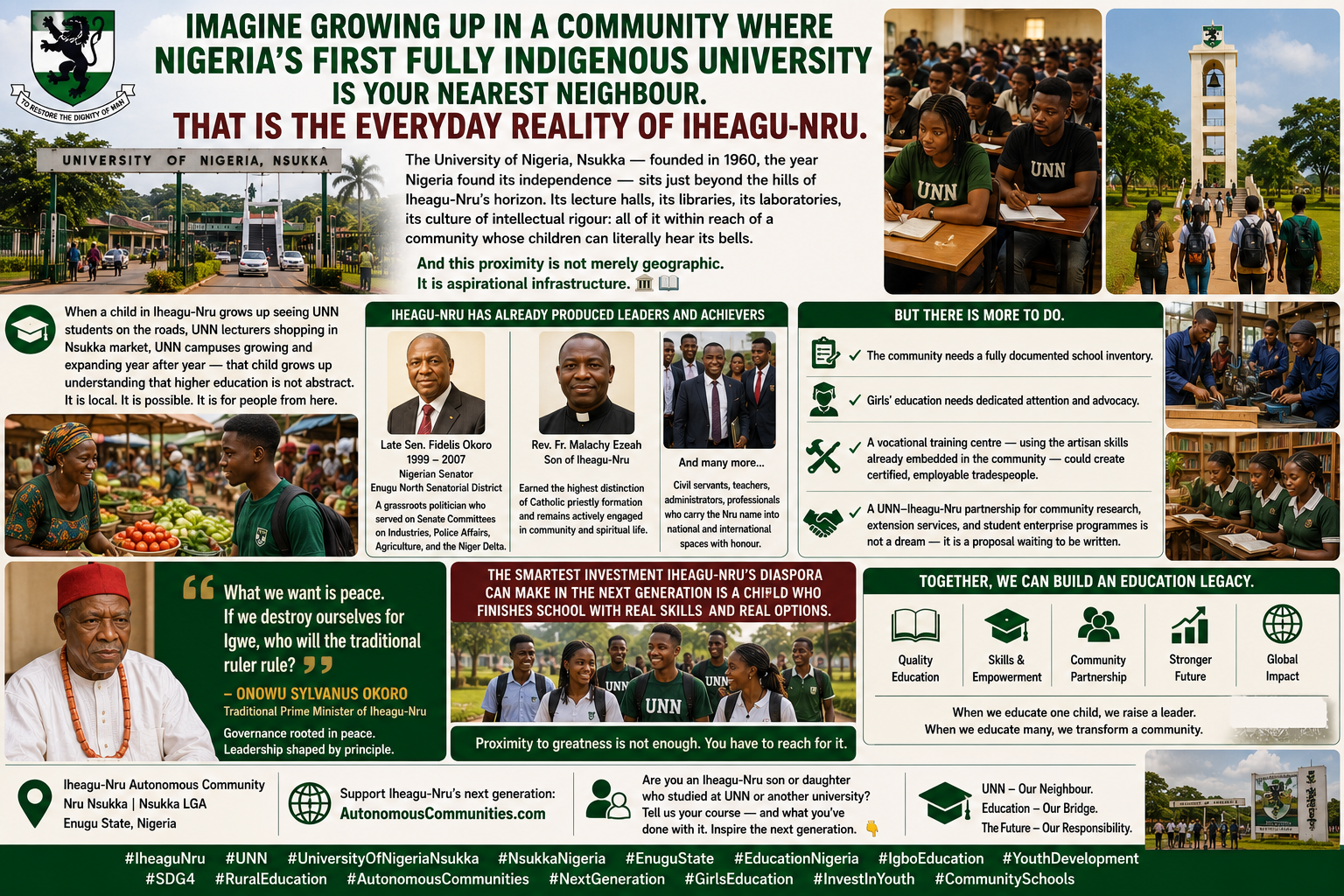 0 Commentaires 1 Parts 1KB Vue 0 Aperçu
-
🏛️ THIS COMMUNITY SENT A SON TO THE NIGERIAN SENATE. HIS NAME WAS FIDELIS OKORO. AND IHEAGU-NRU HAS NEVER FORGOTTEN WHAT IT MEANS TO PRODUCE LEADERS OF CONSEQUENCE.
From 1999 to 2007, Late Senator Fidelis Okoro sat in the chambers of the Nigerian National Assembly as the representative of the Enugu North Senatorial District — carrying with him the name, the values, and the identity of a small community in the Nru Nsukka suburb called Iheagu-Nru.
He served on Senate committees on Industries, Police Affairs, Agriculture, and the Niger Delta. He was described by those who knew him as "a grassroots politician who helped the district in various ways" — someone who understood that the highest seat of power is built on the most local act of service.
🌟That is the Iheagu-Nru tradition: produce people who go far, do good, and carry the community's honour with them.
And the governance structure that produced this kind of leader is not accidental. It is the Onyishi system — one of Igboland's most elegantly democratic governance models:
🧓 The Onyishi is the oldest man in each village. He holds his position not by election, not by wealth, not by politics — but by the irreversible fact of age. When one Onyishi passes, the next eldest man assumes the role automatically. No campaigns. No disputes. No room for manipulation.
In a continent where governance contests have torn communities apart, Iheagu-Nru's Onyishi system is a reminder that sometimes the wisest governance is the one that removes the argument entirely.
And at the community's highest traditional level, the Onowu Sylvanus Okoro — traditional prime minister of Iheagu-Nru — continues to model the same values the late senator embodied:
"What we want is peace. If we destroy ourselves for Igwe, who will the traditional ruler rule?"
Governance rooted in peace. Leadership shaped by principle. A community that knows the difference between winning an argument and building a future.
📍 Iheagu-Nru Autonomous Community | Nru Nsukka | Nsukka LGA | Enugu State
🌐 Engage with Iheagu-Nru's leadership: AutonomousCommunities.com
━━━━━━━━━━━━━━━━━━━━━━━
💬 Drop a 🕊️ for Late Sen. Fidelis Okoro. And tag any Iheagu-Nru leader — traditional or elected — who has made the community proud.
━━━━━━━━━━━━━━━━━━━━━━━
#IheaguNru #SenatorFidelisOkoro #NruNsukka #IgboGovernance #OnyishiSystem #OnowuNru #NsukkaNigeria #EnuguState #LeadershipLegacy #PeaceAndGovernance #AutonomousCommunities #IgboLeadership #NigerianSenate #ProudCommunity #GovernanceMatters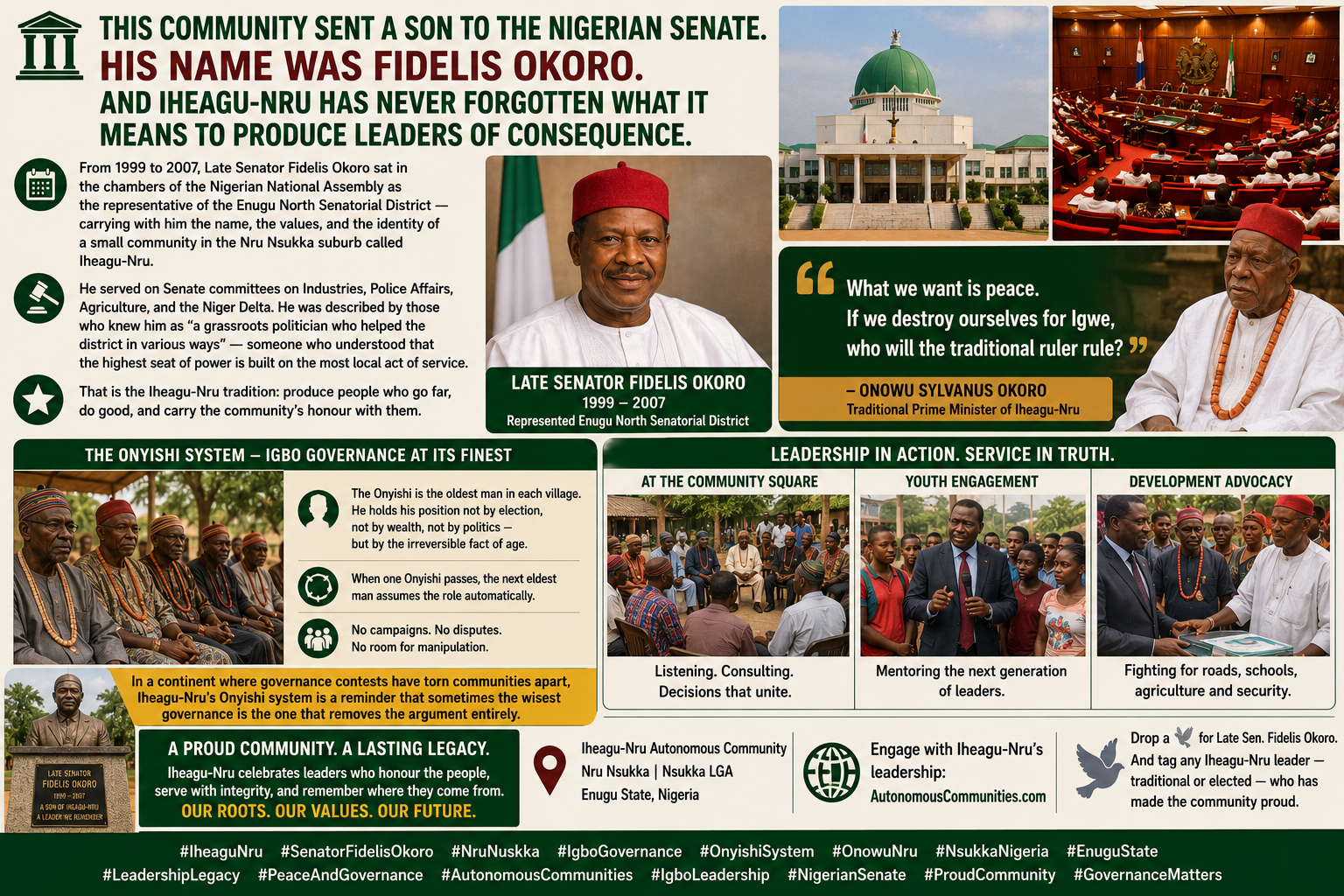 0 Commentaires 1 Parts 1KB Vue 0 Aperçu
-
🌾 WHEN THE FIRST YAM IS LIFTED FROM THE EARTH IN IHEAGU-NRU, THE ANCESTORS LEAN IN TO WATCH.
There is a moment — just before the Onyishi of the senior village breaks the roasted yam and offers it to the gods — when Iheagu-Nru holds its collective breath. Farmers who have sweated through months of planting and tending and waiting. Mothers who have prayed over the fields. Elders who have seen many harvests and know better than to take even one for granted.
Then the libation is poured. The prayer rises. The ancestors receive their portion first — because in Iheagu-Nru, the living never forget that the earth that feeds them is not theirs alone. 🍠🥁
Iri Jị Ọhụrụ — the New Yam Festival — is the year's most sacred exhale.
The masquerades of the Nsukka cultural zone — some of Nigeria's most sophisticated and spiritually potent — emerge from behind the curtain between the living world and the ancestral one. They do not walk like ordinary men. They move like memory given form. Like the weight of every grandfather who ever farmed this soil, wearing a new face to visit the descendants they still love. 🎭
Men arrive in isiagu tops and red caps — the lion-head fabric that says "I know who I am." Women dazzle in vibrant wrappers, coral beads at the throat, headties tied with the precise artistry of women who have learned from their mothers and will teach their daughters. Palm wine flows from gourds that have been blessed. Ogene gongs ring out across the hills.
For Iheagu-Nru — the eldest of the three Nru communities — the New Yam Festival carries extra weight. It is not only a harvest celebration. It is an annual act of ancestral acknowledgement. A reminder that this community's covenant with the earth is older than anyone alive can fully remember.
Some traditions don't need to be explained. They need to be experienced.
📍 Iheagu-Nru Autonomous Community | Nsukka LGA | Enugu State, Nigeria
🌐 Discover Iheagu-Nru's culture: AutonomousCommunities.com
━━━━━━━━━━━━━━━━━━━━━━━
💬 Tag an Iheagu-Nru son or daughter who needs to be back home for the next New Yam Festival. Some things cannot be streamed. 🙌
━━━━━━━━━━━━━━━━━━━━━━━
#IheaguNru #NewYamFestival #IriJi #Mmanwu #NsukkaMasquerade #IgboCulture #NruNsukka #AncestralTradition #NsukkaNigeria #EnuguState #IgboFestival #CultureIsAlive #AutonomousCommunities #ProudlyIgbo #HarvestSeason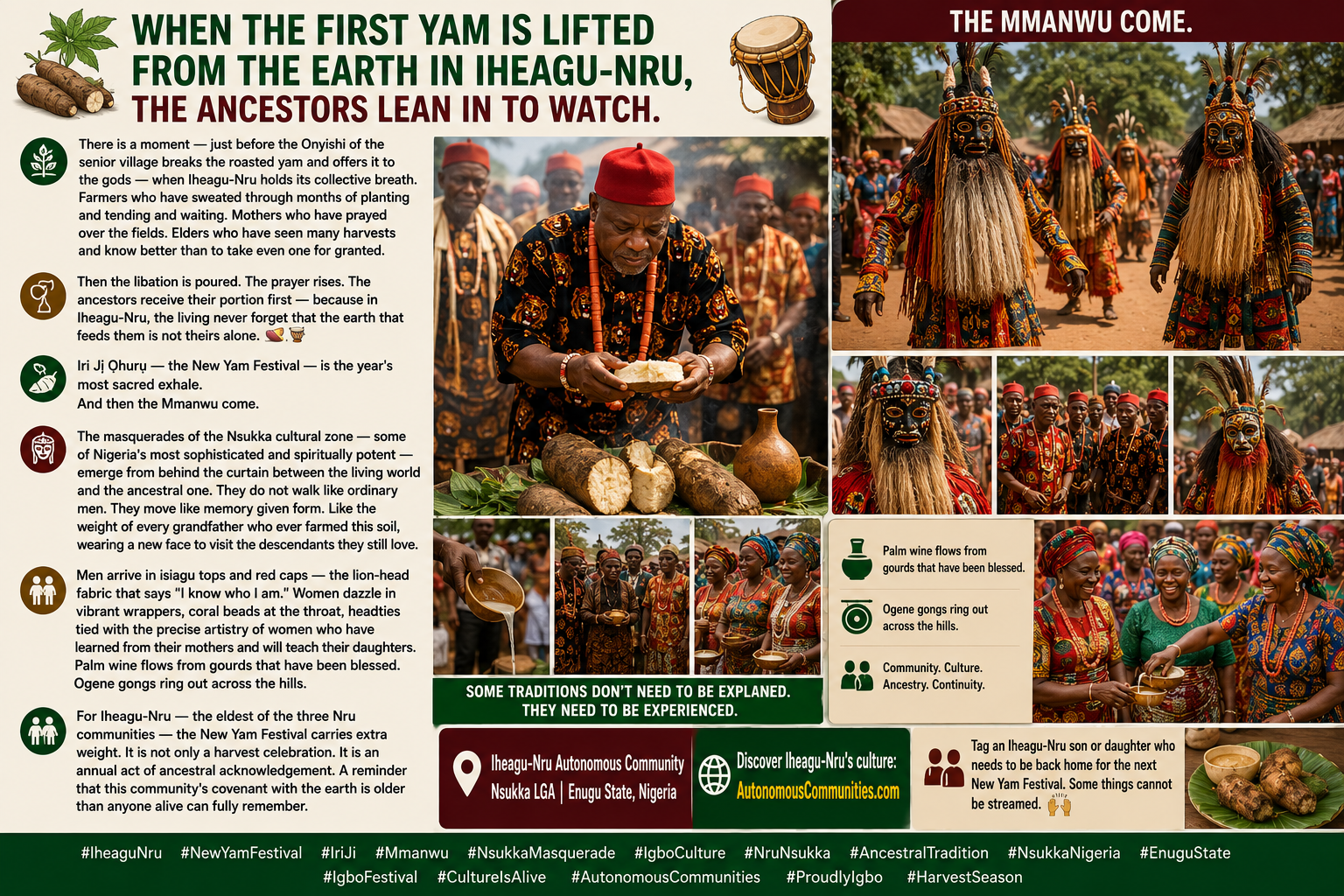 0 Commentaires 1 Parts 1KB Vue 0 Aperçu
-
👑 BEFORE THERE WAS NRU, THERE WAS IHEAGU. AND BEFORE EVERYTHING ELSE — THERE WAS THE COVENANT.
In the Nsukka Igbo tradition, seniority is not a detail. It is the architecture. It determines who speaks first at a gathering. Who inherits the ancestral land. Who carries the heaviest responsibility — and therefore the deepest honour.
Iheagu-Nru Autonomous Community is the eldest. The first-born of the three Nru communities — older than Ezema-ne-Edem, older than Umuoyo. When anyone recites the order of Nru — "Nru n'atọ" (the three Nrus) — Iheagu's name comes first. Not by politics. Not by negotiation. By birth. 🏛️
And it was from this community that the Late HRH Sylvanus Arumah — Eze Udo I of Nru — emerged as the pioneer traditional ruler of the entire Nru Nsukka area. The first Igwe to sit the throne that unified all of Nru. A man whose memory this community holds with the particular tenderness reserved for a first.
His passing has opened a governance conversation that speaks to the very soul of Iheagu-Nru's identity: how do you choose a successor when your entire cultural framework is built on the principle that age-order, seniority, and ancestral protocol are not negotiable?
The community's traditional prime minister, Onowu Sylvanus Okoro, has already offered the answer the ancestors would approve:
"What we want is peace. If we destroy ourselves for Igwe, who will the traditional ruler rule?"
That is not a call for delay. That is the voice of a community that has been old enough, long enough, to know that rushing produces rubble — and that what is built on a proper foundation stands for generations.
📍 Iheagu-Nru Autonomous Community | Nru Nsukka Suburb | Nsukka LGA | Enugu State
🌐 AutonomousCommunities.com
━━━━━━━━━━━━━━━━━━━━━━━
💬 Do you have memories of Late Igwe Sylvanus Arumah — Eze Udo I of Nru? Share them in the comments. His legacy belongs to all of us. 🙏
━━━━━━━━━━━━━━━━━━━━━━━
#IheaguNru #NruNsukka #EzeUdo #IgweNru #NruNato #IgboGovernance #OnyishiSystem #NsukkaNigeria #EnuguState #TraditionalRuler #IgboHeritage #AutonomousCommunities #CommunityFirst #PeaceOverPolitics #EldestOfNru0 Commentaires 1 Parts 1KB Vue 0 Aperçu
Plus de lecture
