


================================================================================
🏡 OKUTU AUTONOMOUS COMMUNITY
A Full Community Intelligence & Development Profile
================================================================================
📍 Location : Nsukka Local Government Area, Enugu State, Nigeria
🌍 Region : South-East Nigeria | Northern Igboland | Nsukka Cultural Zone
🗺️ Area : Nsukka West Corridor, Nsukka LGA
📮 Postcode : 410115
📐 Elevation : Part of the Nsukka-Udi Plateau (approx. 430–550m a.s.l.)
📄 Profile : Prepared for AutonomousCommunities.com
📅 Edition : 2024 / 2025
================================================================================
"A profile prepared for residents, diaspora, visitors, investors,
NGOs, government agencies, researchers, and development partners."
================================================================================
━━━━━━━━━━━━━━━━━━━━━━━━━━━━━━━━━━━━━━━━━━━━━━━━━━━━━━━━━━━━━━━━━━━━━━━━━━━━━━
✨ OPENING SUMMARY
━━━━━━━━━━━━━━━━━━━━━━━━━━━━━━━━━━━━━━━━━━━━━━━━━━━━━━━━━━━━━━━━━━━━━━━━━━━━━━
Okutu Autonomous Community is a proud, multifaceted, and culturally vibrant
community in the Nsukka West corridor of Nsukka LGA — a settlement of eight
distinctively named villages where the deep agricultural roots of northern
Igboland, the warmth of Nsukka-Igbo social life, and the spirit of communal
resilience come together to define a people quietly rich in tradition and
quietly ready for the development opportunities that the digital age can bring.
━━━━━━━━━━━━━━━━━━━━━━━━━━━━━━━━━━━━━━━━━━━━━━━━━━━━━━━━━━━━━━━━━━━━━━━━━━━━━━
📜 SECTION 1: HISTORY & ORIGIN
━━━━━━━━━━━━━━━━━━━━━━━━━━━━━━━━━━━━━━━━━━━━━━━━━━━━━━━━━━━━━━━━━━━━━━━━━━━━━━
🌳 ANCESTRAL ROOTS & THE MEANING OF THE NAME "OKUTU"
────────────────────────────────────────────────────────────────────────────────
Every community name in Nsukka-Igbo tradition is a compressed history —
a word that carries within it the memory of a founder, a landscape, a
defining event, or a community's deepest self-understanding.
"Okutu" is a name rooted in Nsukka-Igbo nomenclature. In the Nsukka
dialect tradition, many community names derive directly from the founding
ancestor — the man or woman whose energy, vision, or circumstance brought
a settlement into being. "Okutu" is believed to reflect either the name
of the founding ancestor of this community, or a topographic/historical
descriptor meaningful to the people who first cleared this land and built
their homes upon it.
In the broader Igbo linguistic field, "Oku" carries the meaning of fire,
energy, or vigour — a frequent metaphorical reference to the vitality and
warmth of community life. "Utu" can carry references to a person's name,
to morning (Utu ọ̀ọ̀chị — the spirit of the new day), or to a geographic
descriptor. Together, "Okutu" speaks of a people with fire in their
identity — a place that gives warmth, a community that endures.
📌 NOTE: The specific oral-historical account of Okutu's founding name —
the elder who would tell you which ancestor it honours and in what
circumstances — belongs to the community's living tradition. This profile
invites community elders and the Town Union to formally document and
publish the founding narrative through AutonomousCommunities.com.
🏛️ FOUNDING NARRATIVE & SETTLEMENT HISTORY
────────────────────────────────────────────────────────────────────────────────
Okutu, like its neighbours in the Nsukka LGA — including Okpuje, Anuka,
Ibagwani, and Alor-Uno — is part of the ancient Nsukka settlement pattern.
This entire region sits on the Nsukka-Udi Plateau, one of southeastern
Nigeria's most historically inhabited zones. Archaeological evidence from
the wider Nsukka area documents iron-smelting, agriculture, weaving, and
carving traditions dating back thousands of years — evidence that the
ancestors of Okutu were part of a thriving civilisation long before
modern state structures gave it administrative boundaries.
The northern Igbo settlement tradition that created Okutu was built on
the same foundations as communities across the Nsukka zone: founding
families who settled the land, named their villages after ancestors or
geographic markers, established kinship bonds with neighbouring communities,
and developed the agricultural, cultural, and spiritual life that continues
to define community existence today.
Okutu's placement in the Nsukka West political constituency and its
geographic relationship with communities like Okpuje (to its east) and
Anuka suggest it is part of an inter-related cluster of communities that
share historical, cultural, and possibly ancestral connections.
📌 NOTE ON FOUNDING HISTORY: Detailed founding narratives specific to
Okutu Autonomous Community — the specific founding ancestor(s), the sequence
of village establishment, and the community's original migration story —
are not available in publicly accessible records. This gap is a call to
action for elders, teachers, and community leaders to document and
preserve this irreplaceable heritage.
🗺️ GEOGRAPHIC POSITION & BOUNDARIES
────────────────────────────────────────────────────────────────────────────────
📍 AREA: Nsukka West corridor, Nsukka LGA, Enugu State
📮 POSTCODE: 410115 (all eight Okutu villages)
🤝 COMMUNITY NEIGHBOURS:
→ Okpuje Autonomous Community (to the east; shared health
facilities confirm close proximity)
→ Anuka Autonomous Community (shared corridor; shared health
facilities)
→ Ibagwani and Alor-Uno communities (Nsukka West constituency)
→ Ibagwaga and Akpaligbo communities (same electoral grouping)
🌡️ CLIMATE: Tropical wet and dry (Aw) — two seasons: rainy
(April–October) and dry (November–March)
🛤️ THE AUTONOMY JOURNEY
────────────────────────────────────────────────────────────────────────────────
Okutu Autonomous Community holds formal recognition under Enugu State's
autonomous community administrative framework — a status granted through
the Enugu State Local Government and Chieftaincy Affairs Commission.
This recognition means Okutu has:
→ A recognised traditional ruler (Igwe) with formal state status
→ An official governance structure (Igwe-in-council, Onyishi councils,
Town Union, age grades)
→ A formal administrative identity within Nsukka LGA
→ The standing to engage state and federal government agencies
Autonomous status is not merely symbolic — it is the platform from
which development advocacy, community planning, and institutional
partnerships must be launched.
━━━━━━━━━━━━━━━━━━━━━━━━━━━━━━━━━━━━━━━━━━━━━━━━━━━━━━━━━━━━━━━━━━━━━━━━━━━━━━
🤝 SECTION 2: COMMUNITY IDENTITY & LIFESTYLE
━━━━━━━━━━━━━━━━━━━━━━━━━━━━━━━━━━━━━━━━━━━━━━━━━━━━━━━━━━━━━━━━━━━━━━━━━━━━━━
💪 THE CHARACTER OF OKUTU PEOPLE
────────────────────────────────────────────────────────────────────────────────
The people of Okutu carry the essential character of the Nsukka-Igbo
tradition — a culture shaped by highland farming, close kinship, a natural
quietness and depth that outsiders sometimes mistake for reserve, and a
fierce loyalty to family and community that shows itself not in speeches
but in action: in showing up at a funeral, in feeding a visitor, in
cultivating a neighbour's land when they fall sick.
They are a farming people in the deepest sense. The land is not just
an economic resource to them — it is an inheritance from ancestors and
a trust held in stewardship for children not yet born. "Ala" — the earth
goddess — is not an abstract theological concept here; she is the silent
partner in every planting season.
They are also a community increasingly aware of the gap between their
cultural richness and their institutional visibility — a community that
exists fully in its own life but barely at all in the digital world.
That gap is both their challenge and their opportunity.
Core values observed in Okutu and Nsukka-area communities:
🌾 Love of the land — farming is sacred labour, not just livelihood
👨👩👧👦 Kinship solidarity — the Umunna is the first social safety net
🧓 Honour for elders — the Onyishi is not chosen, he is earned
by longevity, character, and the trust of his village
🤲 Communal mutuality — what Okutu people call Ọbịa — the
culture of reciprocal effort and shared work
🕊️ Preference for peaceful resolution — words first, always;
disputes go to elders before they go anywhere else
🏠 FAMILY STRUCTURE & SOCIAL LIFE
────────────────────────────────────────────────────────────────────────────────
The social structure of Okutu flows from its kinship architecture:
→ The compound (Ụlọ) — the nuclear and immediate extended family
→ The Umunna — the broader patrilineal extended family group
→ The Village — a collection of Umunna groups under one Onyishi
→ The Community — the eight villages of Okutu under one Igwe
Women are not peripheral to this structure — they are central to it.
The Umuada (daughters of the community, born in Okutu and married
elsewhere) hold recognised social and moral authority. They participate
in marriage ceremonies, funeral rites, and community decision-making with
a collective voice that elders respect. Women's village groups manage
everyday social welfare, savings cooperatives, and community advocacy.
Children in Okutu grow up knowing they belong to something larger
than their immediate household. They are corrected, encouraged, and
celebrated by the whole village. That communal parenthood is not
old-fashioned — it is a survival technology.
━━━━━━━━━━━━━━━━━━━━━━━━━━━━━━━━━━━━━━━━━━━━━━━━━━━━━━━━━━━━━━━━━━━━━━━━━━━━━━
👑 SECTION 3: GOVERNANCE & LEADERSHIP
━━━━━━━━━━━━━━━━━━━━━━━━━━━━━━━━━━━━━━━━━━━━━━━━━━━━━━━━━━━━━━━━━━━━━━━━━━━━━━
🏅 TRADITIONAL RULER (IGWE)
────────────────────────────────────────────────────────────────────────────────
As an Autonomous Community, Okutu has a formally recognised traditional
ruler — the Igwe — who serves as the ceremonial and customary head of the
community. The Igwe leads traditional governance, presides over cultural
events, mediates disputes, represents the community before the Nsukka LGA
and Enugu State government, and is the living symbol of the community's
unity and ancestral continuity.
📌 NOTE: The specific name and tenure of the current Igwe of Okutu
Autonomous Community are not available in publicly accessible records at
the time of this profile. Community leaders are warmly invited to
update this information on AutonomousCommunities.com to establish
verified, credible institutional identity.
🏛️ LAYERS OF GOVERNANCE
────────────────────────────────────────────────────────────────────────────────
👴 ONYISHI COUNCILS (Village Elder Heads):
Each of Okutu's eight villages — Achara, Agbo-Enugu, Agbo-Ogazi,
Amaogbo, Ohuno, Onene, Ugwaka, and Uwani — is headed by its Onyishi:
the eldest man of that village, who holds traditional authority,
mediates disputes at the village level, and represents the village
before the community. The Onyishi is not elected — he is the
last man standing of his generation, and his authority is rooted
in longevity, wisdom, and communal trust.
🏢 OKUTU COMMUNITY DEVELOPMENT UNION (TOWN UNION):
The apex civic body of the community, with an elected
President-General, Secretary, Treasurer, and executive committee.
The Town Union coordinates community development projects,
responds to external engagements, organises town meetings, and
serves as the official democratic voice of the community before
government agencies and NGOs.
👩 UMUADA (DAUGHTERS' ASSEMBLY):
All women born in Okutu — regardless of where they now live —
form the Umuada. Their collective authority is customarily
recognised in marriage ceremonies, funeral rites, community
disputes, and moral governance. The Umuada of Okutu, like their
counterparts across Nsukka, are not passive participants — they
are an active moral force.
👶 AGE GRADES:
Age-grade groups — cohorts of men (and sometimes women) who
came of age in the same period — take on collective responsibilities
for public works, community security, cultural performance, and
peer accountability within Okutu. Age-grade membership is
lifelong and creates one of the most durable forms of social
bonding in the community.
👩💼 WOMEN'S VILLAGE ASSOCIATIONS:
Beyond the Umuada, women organise through village-level
associations and church groups — Catholic Women Organisation
(CWO), Women's Guild, and similar bodies. These groups run
savings clubs (Ụlọ Ego), support bereaved members, and serve
as the community's social safety net at the grassroots level.
🌍 DIASPORA STRUCTURES:
Okutu people living in Enugu, Lagos, Abuja, Port Harcourt,
the United Kingdom, and other cities are typically organised
through branch community associations — often called "Okutu
Community Association [City Name]". These branches raise
development funds, sponsor scholarships, participate in
community decisions, and maintain cultural identity far from home.
━━━━━━━━━━━━━━━━━━━━━━━━━━━━━━━━━━━━━━━━━━━━━━━━━━━━━━━━━━━━━━━━━━━━━━━━━━━━━━
🗺️ SECTION 4: VILLAGES & INTERNAL STRUCTURE
━━━━━━━━━━━━━━━━━━━━━━━━━━━━━━━━━━━━━━━━━━━━━━━━━━━━━━━━━━━━━━━━━━━━━━━━━━━━━━
🏘️ THE EIGHT VILLAGES OF OKUTU
────────────────────────────────────────────────────────────────────────────────
This is one of the most distinguished features of Okutu — it is a
formally documented eight-village community, a structure that gives it
breadth, internal diversity, and governance depth.
🏡 1. ACHARA
A name found across Igboland, "Achara" evokes the image of a
path through the bush — a settlement that grew at a forested
junction or clearing. Achara villages across Nsukka LGA are
typically older settlements with strong ancestral roots.
🏡 2. AGBO-ENUGU
"Agbo" means a community or group of people in Nsukka-Igbo;
"Enugu" — meaning "the hill above" — gives this village its
highland character. Agbo-Enugu is likely a settlement that
originally occupied or looked towards elevated ground.
🏡 3. AGBO-OGAZI
The second "Agbo" village of Okutu — "Ogazi" likely refers to
the founding lineage or ancestor who established this settlement.
The distinction between Agbo-Enugu and Agbo-Ogazi suggests
related settlements that branched from a common root.
🏡 4. AMAOGBO
"Ama" (compound/settlement) + "Ogbo" (age-mates/peer group) —
"the settlement of the age-group" or "the peers' compound."
This name may reflect a founding story involving a group of
men from the same age cohort establishing a settlement together —
a community born from solidarity among equals.
🏡 5. OHUNO
A proper name preserving an ancestral identity in the
community's landscape. Like many Nsukka village names, Ohuno
is likely a personal name that became a place name — the
land of Ohuno, named for who lived here first and made it theirs.
🏡 6. ONENE
A personal/ancestral name that became the identity of a village.
"Onene" in Igbo can carry the meaning of "the great one" or
"the one who leads" — giving this village a name with latent
pride and seniority.
🏡 7. UGWAKA
"Ugwu" (hill) + "Aka" (hand, direction, or suffix reference) —
"the hill of Aka" or "the hill on the right/left." This is a
topographic name — a village that sits on, near, or is identified
by a specific hill or elevated landform in the community.
🏡 8. UWANI
"Uwani" is one of the most common village names in the Nsukka
zone — it means "the outer/lower part" or "the settlement outside"
— typically referring to the village that sits at the outskirts
or lower boundary of the community. Uwani villages often serve
as the community's interface with the wider world.
INTERNAL STRUCTURE:
→ Community (Okutu Autonomous Community)
→ Eight Named Villages (Achara, Agbo-Enugu, Agbo-Ogazi,
Amaogbo, Ohuno, Onene, Ugwaka, Uwani)
→ Kindreds / Umunna (extended patrilineal family groups)
→ Family Compounds (Ụlọ)
📌 NOTE: The specific kindred groups, family lineages, and internal
clan structures within each village are not available in public records
and should be formally documented by the community.
━━━━━━━━━━━━━━━━━━━━━━━━━━━━━━━━━━━━━━━━━━━━━━━━━━━━━━━━━━━━━━━━━━━━━━━━━━━━━━
🎭 SECTION 5: CULTURE, FESTIVALS & HERITAGE
━━━━━━━━━━━━━━━━━━━━━━━━━━━━━━━━━━━━━━━━━━━━━━━━━━━━━━━━━━━━━━━━━━━━━━━━━━━━━━
Okutu's cultural life is inseparable from the broader Nsukka-Igbo heritage
— one of the most intact, richly layered, and still-living cultural traditions
in southeastern Nigeria. The community celebrates the full Nsukka cultural
calendar while preserving village-specific traditions that make each of its
eight communities distinct within the whole.
🎭 MASQUERADE TRADITIONS — THE LIVING ANCESTORS
────────────────────────────────────────────────────────────────────────────────
Masquerades are the most powerful cultural institution in Nsukka
communities — and in Okutu, they are alive. Masquerades are not performed
for tourists or cameras. They are sacred governance — the ancestors
returning from the spirit world (Ụwa Mmụọ) to correct the living,
bless the harvest, enforce community norms, and renew the covenant
between the dead and the living.
🌿 ORIOKPA / OMABE TRADITIONS:
The most prominent masquerade institution across the Nsukka
zone — known as "Oriokpa" in Nsukka town and "Omabe" in the
surrounding communities. In communities like Okutu:
→ Drumming traditions signal the masquerades' arrival
and departure
→ Specific ceremonial foods are prepared exclusively for
the masquerades and are forbidden to the uninitiated
→ Women and children observe from designated safe positions —
the mystery is part of the power
→ Night ceremonies move through the village paths,
communally blessing and correcting as they go
→ Each village may have its own masquerade traditions
tied to its founding lineage
📌 NOTE: The specific masquerade names and ceremonial protocols
unique to Okutu — which may include traditions not documented for
the wider Nsukka area — are known to community elders and should
be formally preserved.
🌾 THE NEW YAM FESTIVAL (IWA JI)
────────────────────────────────────────────────────────────────────────────────
In Okutu, the New Yam Festival — Iwa Ji — is not simply a harvest
celebration. It is the community's annual renewal of its relationship
with the land, the ancestors, and one another.
🙏 Thanksgiving ceremony to Ala (the earth goddess) and to
the ancestors who watch over the crops
🍠 Ritual presentation of the first yam before community
consumption — the ancestors eat before the living
🎉 Community-wide feasting, drumming, and dancing;
families reunite; the community counts itself whole
🌍 Major homecoming event — diaspora plan returns around this
time of year; the community fills with returning sons and daughters
👗 Festival attire: finest traditional dress — ishi agu fabrics,
George wrappers, coral beads, and ancestral headpieces
The Iwa Ji season is when Okutu is most fully itself — eight villages
becoming one people around the communal hearth of harvest and gratitude.
🎊 MARRIAGE CUSTOMS
────────────────────────────────────────────────────────────────────────────────
Marriage in Okutu follows the rich Nsukka-Igbo tradition:
→ IKU AKA (Introduction): The groom's family visits the bride's
family to express formal interest — the beginning of family union
→ ỊKPỌ ỌLỤ (Bride Price Negotiation): A community event; both
families gather; items are negotiated; the Umuada are present
→ WINE-CARRYING (Ịkwọ Mmanya): The bride, holding palm wine, moves
through the gathered crowd to find and serve her groom — a profound,
publicly witnessed act of choosing; deeply symbolic
→ FEASTING & COMMUNITY CELEBRATION: The marriage of one is the
celebration of all; neighbours, age grades, and Umuada mark the day
Marriage in Okutu is understood as the union of two families and two
villages — a social treaty as much as a personal commitment.
🕊️ BURIAL & FUNERAL RITES
────────────────────────────────────────────────────────────────────────────────
Death in Okutu summons the community before it summons the undertaker.
Neighbours arrive immediately; women cook; men sit with the bereaved;
age grades fulfil their obligations; the Umuada manage the female
ceremonial duties.
→ For the elderly who have lived full lives: the Ikwa Ozu (second
burial or Igbo celebration of life) is an elaborate, joyful,
music-filled communal event — a celebration not a mourning
→ Children who die before their time are mourned with different
customs — quieter, more intimate, carrying a specific kind of grief
→ The Umuada oversee the female ceremonial obligations at all burials
🥁 MUSIC, DANCE & PERFORMING ARTS
────────────────────────────────────────────────────────────────────────────────
🥁 OGENE ENSEMBLE: Metallic gong music — the heartbeat of Nsukka
ceremonial life; unmistakably Igbo; used at funerals, festivals,
and masquerade ceremonies
🥁 IGBA (DRUM): Traditional drum ensembles that drive communal
dancing and ceremonial performance
💃 TRADITIONAL DANCE: Village-specific dance forms performed
by age grades, women's groups, and youth during festivals
📿 PRAISE-SINGING AND ORAL POETRY: Performed at social events;
historical proverbs and family lineages recited in ceremony
🍽️ FOOD & CULINARY CULTURE
────────────────────────────────────────────────────────────────────────────────
Okutu's kitchen is its agricultural diary:
🥘 Ofe Onugbu (bitter leaf soup) — the definitive Nsukka soup;
rich, earthy, and usually eaten with pounded yam (Iji)
🥘 Ofe Oha — oha leaves in a rich stock; a celebration dish
🌿 Ọkpa — bambara nut pudding; a beloved regional staple
🍠 Yam in all its forms — pounded, boiled, roasted, in porridge
🌿 Palm oil — the golden liquid central to Nsukka cooking
🥂 Mmanya Ocha (palm wine) — served at ceremonies, shared at
meetings, poured to the ancestors first, then to the living
🌿 Ogiri — fermented locust bean paste; an umami-rich
condiment used in soups; a community specialty with cultural value
👗 TRADITIONAL ATTIRE
────────────────────────────────────────────────────────────────────────────────
→ MEN: Isi agu (lion-head print) fabric as wrapper with matching top;
felt cap (Okpu Agu) or Otokoto hat; coral bead necklace for titled
men; white wrapper for senior elders at formal ceremonies
→ WOMEN: George wrapper with blouse and head tie (Ichafu); coral and
glass bead necklaces; elaborate Ichafu tying is an art form; anklets
on ceremonial occasions; full bead regalia for major events
→ YOUTH: Increasingly blend traditional and contemporary; cultural
dress is worn for village and community ceremonies
🌿 TABOOS & SACRED PRACTICES
────────────────────────────────────────────────────────────────────────────────
Like all Nsukka communities, Okutu observes specific taboos (Ọmụma) that
govern land use, festival behaviour, inter-personal conduct, and the
treatment of sacred spaces and natural features. These taboos are the
community's traditional legal system — rooted in cosmology, enforced
by social consensus, and maintained by the authority of elders and
the masquerade institution. Specific Okutu taboos are held in oral
tradition and should be formally documented.
ORAL HISTORY:
Okutu possesses an oral library of proverbs (Ilu), folktales (Ifo),
lineage histories, founding songs, and ancestral narratives preserved
in the memories of elders. This is the community's most endangered
heritage — not because of neglect but because of time. Every elder
who passes without their memories being recorded is a library lost.
━━━━━━━━━━━━━━━━━━━━━━━━━━━━━━━━━━━━━━━━━━━━━━━━━━━━━━━━━━━━━━━━━━━━━━━━━━━━━━
⛪ SECTION 6: RELIGION & FAITH INSTITUTIONS
━━━━━━━━━━━━━━━━━━━━━━━━━━━━━━━━━━━━━━━━━━━━━━━━━━━━━━━━━━━━━━━━━━━━━━━━━━━━━━
The faith landscape of Okutu reflects the deep Christianisation of the
Nsukka zone — one of the most Catholic parts of eastern Nigeria —
while preserving the Igbo cosmological worldview that predates and
persists alongside it.
✝️ THE CATHOLIC CHURCH — DEEP ROOTS
────────────────────────────────────────────────────────────────────────────────
The Nsukka cultural zone falls under the Catholic Diocese of Nsukka,
established in 1990 and headquartered at Saint Theresa Cathedral, Nsukka.
The current Bishop is His Lordship Godfrey Igwebuike Onah. The Holy
Ghost (Spiritan) missionaries who entered the Nsukka area in the early
twentieth century built the Catholic Church's infrastructure here —
churches, schools, dispensaries — and the faith took deep root.
In Okutu, Catholic parish churches serve the community and its
surrounding area, including the Okpuje/Okutu/Anuka corridor.
Active Catholic organisations likely include:
→ Catholic Women Organisation (CWO)
→ Legion of Mary
→ Knights of Saint Mulumba / Ladies of Saint Mulumba
→ Catholic Men's Organisation (CMO)
→ Youth and student fellowships
📌 Specific Catholic parish names serving Okutu directly are not
confirmed in publicly accessible records. Community members are invited
to update this on AutonomousCommunities.com.
✝️ OTHER CHRISTIAN DENOMINATIONS
────────────────────────────────────────────────────────────────────────────────
→ ANGLICAN CHURCH (Church of Nigeria): Present in communities
across Nsukka LGA; likely serves some Okutu residents
→ PENTECOSTAL/EVANGELICAL CHURCHES: Growing across Nsukka
communities; Redeemed Christian Church of God (RCCG),
Living Faith Church (Winners Chapel), Assemblies of God,
and independent evangelical fellowships
→ METHODIST CHURCH: Historically present in the Nsukka zone
→ SEVEN-DAY ADVENTIST: Present in some Nsukka LGA communities
🌿 TRADITIONAL / INDIGENOUS RELIGION
────────────────────────────────────────────────────────────────────────────────
The traditional cosmology of Okutu — Odinani — operates alongside
Christianity in the daily life of many community members:
→ ALA (EARTH GODDESS): The supreme moral authority; all land is
sacred; agricultural seasons are her domain; violations of
communal norms are Ohu Ala (abominations to the earth)
→ CHI (PERSONAL DEITY): Each person's individual divine guardian
and guiding spirit
→ ANCESTRAL SPIRITS: The dead who continue to watch over the
living; contacted through the masquerade institution and
family ceremonies
→ SACRED SPACES: Specific trees, groves, and locations within
the community that hold traditional spiritual significance
These beliefs do not always conflict with Christianity — many
community members hold both simultaneously, finding truth and
protection in the wisdom of both traditions.
🛡️ FAITH AS DEVELOPMENT INSTITUTION
────────────────────────────────────────────────────────────────────────────────
In Okutu and across Nsukka communities, churches function as
development institutions:
→ Catholic and Anglican schools in the area were historically the
first formal education infrastructure available to communities
→ Church-affiliated health outreach programmes serve where
government PHC facilities are limited
→ Women's church groups run savings cooperatives and mutual
support networks
→ Priests and pastors are among the most trusted and influential
voices in community development advocacy
━━━━━━━━━━━━━━━━━━━━━━━━━━━━━━━━━━━━━━━━━━━━━━━━━━━━━━━━━━━━━━━━━━━━━━━━━━━━━━
💰 SECTION 7: ECONOMY & MARKETPLACE
━━━━━━━━━━━━━━━━━━━━━━━━━━━━━━━━━━━━━━━━━━━━━━━━━━━━━━━━━━━━━━━━━━━━━━━━━━━━━━
🌾 AGRICULTURE — THE FOUNDATION AND THE FUTURE
────────────────────────────────────────────────────────────────────────────────
Agriculture is the heartbeat of Okutu's economy. The community sits on
the Nsukka Plateau — an elevated, fertile landscape with adequate rainfall
during the growing season and a farming tradition stretching back
millennia. The Nsukka zone is documented as an agricultural-trade centre
for yams, cassava, maize, taro, pigeon peas, palm oil, and vegetables.
In Okutu, farming is not background — it is the foreground of daily life.
PRIMARY CROPS:
🌱 YAM (JI): The prestige crop — symbol of family wealth, focal
point of the Iwa Ji festival, primary market commodity;
yam barn (Ọba Ji) size signals community status
🌿 CASSAVA: Grown for home use and market; processed into garri
(Nigeria's universal staple), fufu, and tapioca
🥬 VEGETABLES: Ugu (fluted pumpkin), onugbu (bitter leaf),
waterleaf, uziza — grown in compound gardens and small farms
🌴 PALM PRODUCTS: Palm oil and palm kernel — domestic use and
market sale; central to both cooking and trade
🌽 MAIZE / CORN: Secondary crop; grown alongside yam and cassava
🍃 PIGEON PEAS & GROUNDNUTS: Documented Nsukka-area crops;
protein-rich additions to household food security
🍌 PLANTAIN AND BANANA: Grown in compound farms and small plots
FARMING CHARACTER:
→ Small-holder, family-based farming dominates
→ Both men and women are active farmers; women typically
manage vegetable gardens and cassava plots independently
→ Intercropping and traditional crop rotation are practiced
→ Hand-tool farming is primary; mechanisation is minimal
→ Agricultural seasons drive the community calendar
🏺 THE OKPUJE FEDERAL LIVESTOCK LEGACY — A CAUTIONARY OPPORTUNITY
────────────────────────────────────────────────────────────────────────────────
Adjacent to Okutu lies Okpuje Autonomous Community, which in 1982
donated 26 hectares of land to the federal government for the
establishment of the Federal Livestock project — a state-of-the-art
piggery facility meant to produce pigs for local and export markets
and bring development to the community.
The facility operated for approximately four years before becoming
moribund — a dormant multi-million naira infrastructure sitting unused
for over four decades.
This story is directly relevant to Okutu because:
→ It illustrates the pattern of government investment in this
corridor that was never sustained
→ It demonstrates the appetite of communities in this area for
organised livestock farming as an enterprise
→ It represents an opportunity — a revived livestock facility
would directly benefit Okutu and its neighbours
→ It is a lesson in the importance of community-based monitoring
of government promises and project sustainability
📌 Reviving or replacing the Federal Livestock Okpuje facility should
be on the advocacy agenda of Okutu's Town Union and diaspora network.
🛒 TRADE & MARKETS
────────────────────────────────────────────────────────────────────────────────
→ Nsukka LGA has documented large market centres operating daily
or every four days (on the traditional Igbo four-day cycle:
Eke, Orie, Afor, Nkwo). Agricultural products traded include
banana, plantain, vegetables, pepper, mangoes, palm oil, honey,
yam, livestock, and other fruits.
→ Okutu farmers and traders participate in the Nsukka market system
— accessing both local periodic markets and Nsukka main market
→ Women are the primary market traders — selling processed and
fresh agricultural products within and beyond the community
💼 CIVIL SERVICE & FORMAL EMPLOYMENT
────────────────────────────────────────────────────────────────────────────────
→ Okutu indigenes work in schools across Nsukka LGA as teachers
→ Healthcare workers are employed at Nsukka area hospitals and
at the Okutu Health Centre and neighbouring facilities
→ Civil servants are employed at Nsukka LGA Council and Enugu
State offices
→ University of Nigeria, Nsukka (UNN) employees include
several Okutu indigenes — academic, administrative, support roles
🌍 DIASPORA ECONOMY & REMITTANCES
────────────────────────────────────────────────────────────────────────────────
→ Regular financial remittances support family livelihoods,
school fees, medical costs, and farm inputs
→ Diaspora members periodically fund specific community projects —
boreholes, church buildings, school renovations, event sponsorship
→ Real estate investment: diaspora members build family homes
in Okutu and may invest in farmland development
💡 PRODUCTS & SERVICES FOR MARKETPLACE LISTING ON AUTONOMOUSCOMMUNITIES.COM:
────────────────────────────────────────────────────────────────────────────────
🌾 Fresh Farm Produce: Yam, Cassava/Garri, Palm Oil, Ugu Leaves,
Vegetables, Plantain, Pigeon Peas
🐖 Livestock: Goats, pigs, poultry (significant potential
given proximity to Federal Livestock infrastructure legacy)
🍽️ Processed Foods: Garri, palm oil, ogiri, crayfish, dried pepper
🏺 Craft & Artisan Products: Baskets, traditional items
🌿 Natural & Herbal Products: Where ethically sourced and verified
🏗️ Construction Services: Local masons, carpenters, builders
🚐 Transport Services: Commercial drivers, logistics support
🌱 Farm Services: Seasonal farm labour, land clearing, harvesting
━━━━━━━━━━━━━━━━━━━━━━━━━━━━━━━━━━━━━━━━━━━━━━━━━━━━━━━━━━━━━━━━━━━━━━━━━━━━━━
🏫 SECTION 8: EDUCATION, HEALTH & INFRASTRUCTURE
━━━━━━━━━━━━━━━━━━━━━━━━━━━━━━━━━━━━━━━━━━━━━━━━━━━━━━━━━━━━━━━━━━━━━━━━━━━━━━
📚 EDUCATION
────────────────────────────────────────────────────────────────────────────────
Education is a deeply held value in Okutu — shaped by the broader Nsukka
cultural zone's proud tradition of intellectual achievement, anchored by
the University of Nigeria, Nsukka (UNN), which has inspired generations
of families across the LGA to see education as a birthright.
🏫 PRIMARY EDUCATION:
Okutu is served by government primary schools in line with
Enugu State's policy ensuring every community has access to
a primary school. As a community of eight villages, multiple
primary school facilities may serve different parts of Okutu.
📌 Specific primary school names within Okutu villages
are not confirmed in public records.
🏫 SECONDARY EDUCATION:
Secondary school students from Okutu access schools in the
wider Nsukka LGA area — including schools in Nsukka urban
and neighbouring communities. The establishment of multiple
secondary schools across Nsukka LGA means access is generally
available, though quality varies.
🎓 HIGHER EDUCATION:
→ University of Nigeria, Nsukka (UNN) — one of Nigeria's
premier universities; accessible and has produced graduates
from Okutu across multiple generations
→ Enugu State University of Medical and Applied Sciences (SUMAS)
— newly established at Igbo-Eno, Nsukka, expanding healthcare
education access for the region
→ Technical and vocational institutions in Nsukka area
📌 EDUCATION GAPS:
→ Vocational/skills training within the community remains limited
→ Library or digital learning infrastructure is absent
→ Girl-child retention rates in secondary school need monitoring
→ The community would benefit from a skills training centre
targeting agriculture, construction, and digital skills
🏥 HEALTHCARE — DOCUMENTED FACILITIES
────────────────────────────────────────────────────────────────────────────────
This is one of the most specifically documented aspects of Okutu's
infrastructure. Health records confirm the following facilities serving
the Okpuje/Okutu/Anuka community corridor:
🏥 OKUTU HEALTH CENTRE (PRIVATE):
A private health facility specifically bearing the community's
name — serving the Okpuje/Okutu/Anuka area. This is a
significant community health asset — a named health centre
that demonstrates investment in the area's healthcare capacity.
🏥 ANUKA HEALTH CLINIC (PUBLIC):
A government-operated public clinic serving the
Okpuje/Okutu/Anuka area — providing primary healthcare access
to community members.
🏥 OKPUJE HEALTH POST (PUBLIC):
A public health post in the neighbouring Okpuje community —
directly accessible to Okutu residents.
🏥 MAJOR HOSPITALS IN NSUKKA TOWN (ACCESSIBLE):
→ Bishop Shanahan Memorial Hospital, Nsukka
→ Faith Foundation Hospital, Nsukka
→ General Hospital, Nsukka (Enugu State)
→ University of Nigeria Teaching Hospital (UNTH), Enugu
(major tertiary referral — approx. 70km)
→ Enugu State University of Medical and Applied Sciences
(SUMAS) Teaching Hospital — recently established
📌 HEALTHCARE STRENGTHS & GAPS:
The existence of the named "Okutu Health Centre" is a community
asset that many Nsukka autonomous communities lack. However,
a community health post within the community itself — managed
by government PHCDA — would strengthen routine primary care,
maternal health, and emergency response for all eight villages.
🛣️ ROADS & TRANSPORT
────────────────────────────────────────────────────────────────────────────────
→ Access to Nsukka town is via roads connecting the community
to the broader Nsukka-LGA road network
→ The 44.1km Enugu-Ugwogo-Nike-Opi-Nsukka road dualization
project (ongoing under Governor Mbah's administration) will
improve the broader Nsukka LGA road network
→ Internal community roads between the eight villages require
assessment and may need improvement
→ Commercial motorcycles (okada) and tricycles (keke napep)
serve as primary transport within and around the community
→ ROAD STATUS: Available local records are limited on the
specific internal road conditions within Okutu. Community
members are encouraged to provide updated road assessments.
⚡ ELECTRICITY
────────────────────────────────────────────────────────────────────────────────
→ Electricity supply is via the national grid (EEDC)
but subject to Nigeria's pervasive power supply instability
→ Solar panel installations are growing in newer household builds
→ Community events use generators for public functions
💧 WATER & SANITATION
────────────────────────────────────────────────────────────────────────────────
→ Piped water is not reliably available; boreholes serve as
the primary source of clean water for most households
→ Community boreholes funded by government, NGOs, or diaspora
are critical infrastructure requiring regular maintenance
→ Open defecation is a rural challenge across many Nsukka
communities; sanitation improvement (WASH) is a priority
📶 INTERNET & TELECOMMUNICATIONS
────────────────────────────────────────────────────────────────────────────────
→ Mobile network coverage (MTN, Airtel, Glo) is available
→ Mobile data via smartphones is the primary internet access mode
→ Fibre/broadband internet is not yet widely available
→ Digital literacy is lower among older residents; youth
are more digitally capable and increasingly active online
━━━━━━━━━━━━━━━━━━━━━━━━━━━━━━━━━━━━━━━━━━━━━━━━━━━━━━━━━━━━━━━━━━━━━━━━━━━━━━
🛡️ SECTION 9: SECURITY, POPULATION & DIASPORA
━━━━━━━━━━━━━━━━━━━━━━━━━━━━━━━━━━━━━━━━━━━━━━━━━━━━━━━━━━━━━━━━━━━━━━━━━━━━━━
🔒 SECURITY & COMMUNITY SAFETY
────────────────────────────────────────────────────────────────────────────────
Okutu is a predominantly rural community that benefits from the
relatively secure environment typical of close-knit farming communities
in the Nsukka zone. The social architecture of Nsukka communities —
where everyone knows their neighbours, family accountability is deeply
felt, and elder councils command genuine moral authority — is itself
a security system.
→ TRADITIONAL POLICING: Age grades maintain communal watch functions;
village heads and Onyishi councils mediate disputes; family heads
are accountable for members of their household
→ FORMAL SECURITY: Nsukka LGA police station and civil defence
are accessible from the community via existing road network
→ COMMUNITY CONSENSUS: Disputes in Okutu are typically taken
to elders for resolution before formal channels; this significantly
reduces community tension and criminal escalation
→ REGIONAL AWARENESS: Nsukka LGA, like parts of Enugu State,
has experienced some broader regional security challenges in
recent years; Okutu communities have tightened vigilance
accordingly and participate in community watch structures
👥 POPULATION
────────────────────────────────────────────────────────────────────────────────
📌 POPULATION DATA NOTE:
Specific population figures for Okutu Autonomous Community are not
available in publicly accessible records. Nsukka LGA's 2006 census
population was approximately 309,633 persons — with a 2024/2025
estimated figure significantly higher. As a community of eight named
villages, Okutu is a substantive community within this larger figure.
DEMOGRAPHIC PROFILE (based on community type):
→ A predominantly young population reflecting Nigeria's
youth-heavy demographic structure
→ Significant outmigration of educated youth and working-age
adults to Nsukka town, Enugu, Lagos, Abuja, and internationally
→ An ageing resident population as younger adults leave
→ Seasonal population surges at Christmas, New Yam Festival,
and other major community events when diaspora return home
🌍 DIASPORA
────────────────────────────────────────────────────────────────────────────────
Okutu's diaspora is not the community's loss — it is its bridge
to the wider world.
INTERNAL DIASPORA (Within Nigeria):
→ Nsukka town — the nearest urban centre; academic and professional
employment at UNN and government offices
→ Enugu city — state capital; civil servants, professionals,
business people
→ Lagos — Nigeria's commercial capital; a large Nsukka/Igbo
community exists here; Okutu members are part of it
→ Abuja (FCT), Port Harcourt, Onitsha, Aba — trade and commerce
INTERNATIONAL DIASPORA:
→ United Kingdom, United States, Canada, Ireland, Germany,
South Africa — Igbo/Nsukka diaspora in all major cities
DIASPORA ECONOMIC ROLES:
→ Remittances to family members for education, healthcare,
agriculture inputs, and family building projects
→ Funding community development projects — boreholes, school
renovations, church buildings, community halls
→ Real estate investment in family homesteads and land
→ Scholarship sponsorship for younger community members
HOMECOMING EVENTS:
→ Christmas/New Year: the peak homecoming period — Okutu
fills with returning sons and daughters; markets flourish;
churches overflow; families reunite
→ New Yam Festival: the agricultural homecoming — culturally
the most important community event
→ Community Day / Town Union Annual Meetings: increasingly
structured to incorporate diaspora engagement and report-back
━━━━━━━━━━━━━━━━━━━━━━━━━━━━━━━━━━━━━━━━━━━━━━━━━━━━━━━━━━━━━━━━━━━━━━━━━━━━━━
🏛️ SECTION 10: GOVERNMENT, NGO & DEVELOPMENT RELEVANCE
━━━━━━━━━━━━━━━━━━━━━━━━━━━━━━━━━━━━━━━━━━━━━━━━━━━━━━━━━━━━━━━━━━━━━━━━━━━━━━
📋 LGA & STATE GOVERNMENT RELEVANCE
────────────────────────────────────────────────────────────────────────────────
→ Okutu falls under NSUKKA LOCAL GOVERNMENT AREA — one of
Enugu State's 17 LGAs and one of the most historically
and culturally significant
→ Nsukka LGA is under the current chairmanship of Jude Chinedu
Asogwa (PDP, 2024/2025 elections), whose administration
has committed to infrastructure and governance improvement
across the LGA's communities
→ Enugu State is administered under Governor Dr. Peter Mbah (PDP)
whose administration has committed to growing Enugu's economy
from $4.4bn to $30bn, with significant investment in roads,
health, education, and agriculture across Enugu North
→ The 44.1km Enugu-Ugwogo-Opi-Nsukka road dualization
(under Mbah administration, contractor: CCCC) will benefit
communities across Nsukka LGA's western corridor
🏛️ THE FEDERAL LIVESTOCK LEGACY:
The moribund Federal Livestock facility at Okpuje (adjacent
to Okutu) represents an existing federal government presence
on 26 hectares of donated community land. Advocacy for revival
of this facility is a legitimate and documented development
priority for the Okpuje/Okutu/Anuka corridor.
🗳️ ELECTORAL REPRESENTATION:
Okutu is part of the Nsukka West constituency grouping,
alongside Alor-Uno, Edem-Ani, Akpa, Ozzi, Ibagwani, Ibagwaga,
and Akpaligbo — giving it political representation at the
Nsukka LGA council level and through the Enugu State House
of Assembly
🤝 NGO & DEVELOPMENT PARTNER RELEVANCE
────────────────────────────────────────────────────────────────────────────────
Okutu's documented needs and contextual features align with the mandates
of multiple development partners:
🌾 AGRICULTURAL DEVELOPMENT:
→ IFAD, FAO, GIZ, Bill & Melinda Gates Foundation and other
agricultural development partners with programmes in Enugu State
and Nsukka LGA have direct relevance to Okutu's smallholder
farming and food security needs
→ UNN agricultural research partnerships could benefit Okutu
farmers with improved seed varieties and practices
🐖 LIVESTOCK & VALUE CHAIN:
→ FADAMA, Bank of Agriculture, and livestock development programmes
are directly relevant given the Okpuje Federal Livestock legacy
and the corridor's documented interest in pig farming
🩺 HEALTH:
→ UNICEF, WHO, MSF, and state government PHC strengthening
programmes are relevant to the Okpuje/Okutu/Anuka health corridor
→ WASH programmes: WaterAid and state WASH initiatives
📚 EDUCATION:
→ Child education, vocational training, and adult literacy NGOs
have direct mandates applicable to Okutu's education gaps
🌐 DIGITAL INCLUSION:
→ Organisations promoting rural digital literacy and internet
access can significantly impact Okutu's development trajectory
🎯 SDG ALIGNMENT
────────────────────────────────────────────────────────────────────────────────
🎯 SDG 1 — No Poverty: Agricultural enterprise and income support
🎯 SDG 2 — Zero Hunger: Smallholder farming and food security
🎯 SDG 3 — Good Health: Primary healthcare strengthening, WASH
🎯 SDG 4 — Quality Education: School improvement, skills training
🎯 SDG 6 — Clean Water: Borehole, WASH infrastructure
🎯 SDG 8 — Decent Work: Youth enterprise, agri-value chains
🎯 SDG 9 — Infrastructure: Roads, connectivity, livestock revival
🎯 SDG 11 — Sustainable Communities: Autonomous community governance
🎯 SDG 17 — Partnerships: Diaspora, government, NGO collaboration
━━━━━━━━━━━━━━━━━━━━━━━━━━━━━━━━━━━━━━━━━━━━━━━━━━━━━━━━━━━━━━━━━━━━━━━━━━━━━━
⚡ SECTION 11: CHALLENGES & OPPORTUNITIES
━━━━━━━━━━━━━━━━━━━━━━━━━━━━━━━━━━━━━━━━━━━━━━━━━━━━━━━━━━━━━━━━━━━━━━━━━━━━━━
🚧 CHALLENGES
────────────────────────────────────────────────────────────────────────────────
🛣️ ROADS & INTERNAL CONNECTIVITY:
Internal community roads linking Okutu's eight villages to the
main road network and to each other may require significant
improvement. Road quality directly determines access to markets,
healthcare, schools, and emergency services.
💧 WATER & SANITATION:
Piped water is not reliably available; boreholes require
maintenance funding and technical support; sanitation
infrastructure (WASH) remains underdeveloped across
the eight villages.
💡 ELECTRICITY RELIABILITY:
National grid supply is unreliable; solar adoption is
growing but slow; a reliable electricity supply is fundamental
to both household quality of life and enterprise development.
📶 DIGITAL EXCLUSION:
The community has minimal online presence; digital literacy
among older residents is limited; the community is largely
absent from digital markets, digital advocacy, and
the broader digital economy.
🏥 HEALTHCARE GAPS:
While the Okutu Health Centre and neighbouring facilities are
a documented asset, a formal government Primary Health Care
Centre (PHC) within the community for routine, maternal, and
child health would strengthen overall health outcomes.
💼 YOUTH EMPLOYMENT & SKILLS GAPS:
Limited formal employment within the community; skills training
for young people is underdeveloped; youth outmigration is
high as a result of limited local opportunity.
🏛️ MORIBUND FEDERAL INFRASTRUCTURE:
The 26-hectare Federal Livestock facility at Okpuje — adjacent
to Okutu — has been moribund for over four decades despite being
established on community-donated land. This represents both
a grievance and an opportunity that the community's Town Union
and diaspora should actively advocate to revive.
📋 DOCUMENTATION & DIGITAL VISIBILITY:
Okutu is largely absent from public digital records. No
comprehensive profile, leadership directory, or community
data is easily accessible online — limiting engagement with
investors, NGOs, researchers, and government planners.
🌟 OPPORTUNITIES
────────────────────────────────────────────────────────────────────────────────
🌾 COMMERCIAL AGRICULTURE & VALUE CHAINS:
→ Okutu's eight villages provide a significant combined land base
for organised commercial farming — cassava processing (garri
factory), yam aggregation for Nsukka markets, palm oil
value addition, and vegetable supply chains
→ Agri-enterprise cooperatives among the eight villages could
achieve economies of scale impossible for a single village
🐖 LIVESTOCK ENTERPRISE:
→ The Federal Livestock legacy at Okpuje demonstrates federal
recognition of this corridor's livestock potential. A
community-managed piggery, poultry farm, or goat enterprise
in Okutu could be a transformative economic anchor
📱 DIGITAL MARKETPLACE:
→ Farmers and traders can list on AutonomousCommunities.com,
connecting with urban buyers in Nsukka, Enugu, Lagos,
and the international diaspora
🌍 DIASPORA DEVELOPMENT PROJECTS:
→ A verified digital profile enables diaspora members to fund
specific, tracked community projects — borehole, school
renovation, health post, road patching — with full
transparency and community accountability
🎓 SKILLS TRAINING CENTRE:
→ A vocational training hub serving all eight villages could
provide youth with practical skills in construction,
food processing, tailoring, ICT, and agri-enterprise —
reducing outmigration and building local enterprise capacity
👩 WOMEN'S COOPERATIVES:
→ Formalising existing women's savings groups into registered
cooperatives with access to Bank of Agriculture microfinance
could multiply income and market access for Okutu women
🏛️ GOVERNMENT ENGAGEMENT:
→ With a digital profile, Okutu's Town Union can directly
engage Nsukka LGA and Enugu State ministries, track
government promises, and hold officials accountable
through documented public records
🤝 OKPUJE/OKUTU/ANUKA CORRIDOR PARTNERSHIP:
→ The three communities sharing health facilities and
a postal corridor can form a formal development alliance —
pooling advocacy resources, applying jointly for
NGO funding, and presenting a stronger face to government
━━━━━━━━━━━━━━━━━━━━━━━━━━━━━━━━━━━━━━━━━━━━━━━━━━━━━━━━━━━━━━━━━━━━━━━━━━━━━━
💻 SECTION 12: AUTONOMOUS COMMUNITIES DIGITAL PROFILE
━━━━━━━━━━━━━━━━━━━━━━━━━━━━━━━━━━━━━━━━━━━━━━━━━━━━━━━━━━━━━━━━━━━━━━━━━━━━━━
AutonomousCommunities.com is the digital infrastructure that Okutu needs
but does not yet have — a permanent, searchable, credible digital home
that connects the community's residents, diaspora, leaders, and
development partners in one organised space.
🌐 COMMUNITY PROFILE PAGE:
→ A verified, permanent digital identity for Okutu
→ Includes all eight village names, history, leadership directory,
cultural documentation, geographic data, and contacts
→ Searchable by investors, NGOs, researchers, and government
→ The platform that makes Okutu visible to the world
👥 COMMUNITY GROUP:
→ A digital gathering space for Okutu's residents, diaspora,
and friends — to share news, discuss issues, coordinate
projects, and celebrate community life
→ Particularly valuable for a community whose diaspora is
spread across multiple cities and countries
🛒 MARKETPLACE:
→ Farmers list yam, garri, palm oil, vegetables, livestock
for urban buyers and diaspora customers
→ Artisans list traditional crafts and handmade goods
→ Service providers list building, farming, and transport services
→ Connects Okutu's agricultural output to urban and
international markets
📅 EVENTS:
→ Announce New Yam Festival, masquerade season, community meetings,
homecoming events, and development forums
→ Diaspora plan return visits around community events
→ Investors and NGOs confirm field visit dates with leadership
📢 ANNOUNCEMENTS:
→ Official notices from the Igwe's palace, Town Union, and
community committees reach all registered members instantly
👑 LEADERSHIP VISIBILITY:
→ Igwe, President-General, village Onyishi heads, and diaspora
leaders have verified, publicly accessible profiles
→ Institutional credibility for government and NGO engagement
🌍 DIASPORA ENGAGEMENT TOOLS:
→ Diaspora members register their city branch associations
→ Crowd-funding campaigns for specific community projects
(e.g. "Okutu Agbo-Enugu Village Borehole — ₦4M Goal")
→ Community polls on development priorities; diaspora vote included
📊 PROJECT TRACKING:
→ All community development projects are publicly tracked:
goal, funds raised, progress, completion
→ Donors see exactly how their money is used
→ Accountability builds trust; trust builds more investment
🧠 INTELLIGENCE DASHBOARD:
→ Community data — population estimates, school enrolment,
health indicators, economic activity, project pipeline —
are aggregated and updated
→ The evidence base that serious NGOs, government planners,
and impact investors need to engage a community
━━━━━━━━━━━━━━━━━━━━━━━━━━━━━━━━━━━━━━━━━━━━━━━━━━━━━━━━━━━━━━━━━━━━━━━━━━━━━━
🤲 SECTION 13: WHO SHOULD ENGAGE?
━━━━━━━━━━━━━━━━━━━━━━━━━━━━━━━━━━━━━━━━━━━━━━━━━━━━━━━━━━━━━━━━━━━━━━━━━━━━━━
This profile is an open invitation. Here is who Okutu needs:
🏠 RESIDENTS:
Register. Add your village name. Share local knowledge that
this profile cannot carry — founding stories, cultural details,
family lineages. You are the database that no algorithm can build.
🌍 DIASPORA MEMBERS:
Connect your branch association. Fund a verified community
project. Return for New Yam. Your capital — financial, social,
and professional — is Okutu's greatest external resource.
👑 TRADITIONAL LEADERS:
Verify your profile. The Igwe of Okutu and the Onyishi of all
eight villages deserve a public face on a credible platform.
This is how you become accessible to the NGOs, government
agencies, and investors who need to meet you.
🌾 FARMERS:
List your yam, cassava, palm oil, and vegetables on the
marketplace. Access buyers in Nsukka town, Enugu, Lagos.
Connect with UNN's agricultural research programmes.
🐖 LIVESTOCK PRODUCERS:
Register your enterprise. Connect with FADAMA, Bank of Agriculture,
and development partners interested in the livestock corridor.
👩 WOMEN'S & YOUTH GROUPS:
Register your group. Access NGO partnership opportunities.
Publish your development proposals. Attract microfinance partners.
🏥 NGOS & DEVELOPMENT PARTNERS:
Use this profile to identify Okutu's leadership, verify needs,
plan community engagement, and track your projects.
The health corridor shared with Okpuje and Anuka is a
particularly fertile area for health programme partnership.
🏛️ GOVERNMENT AGENCIES:
Access community data for development planning. Engage the
Igwe and Town Union through verified channels. Prioritise
the moribund Federal Livestock facility's revival in budget
advocacy for this LGA corridor.
💰 INVESTORS:
Agricultural land, livestock enterprise, and community market
development are viable investment opportunities in Okutu.
A verified community profile is the first step to a trusted
investment relationship.
🔬 RESEARCHERS & ACADEMICS:
Okutu's eight-village structure, its cultural traditions,
its position in the Nsukka West corridor, and its documented
healthcare profile make it a useful research community —
particularly for UNN researchers in agriculture, anthropology,
development studies, and public health.
🎭 CULTURAL ORGANISATIONS:
Document Okutu's oral traditions, masquerade ceremonies,
and material culture as part of the broader Nsukka cultural
heritage preservation project.
━━━━━━━━━━━━━━━━━━━━━━━━━━━━━━━━━━━━━━━━━━━━━━━━━━━━━━━━━━━━━━━━━━━━━━━━━━━━━━
⭐ SECTION 14: STRENGTHS & IMPROVEMENT AREAS
━━━━━━━━━━━━━━━━━━━━━━━━━━━━━━━━━━━━━━━━━━━━━━━━━━━━━━━━━━━━━━━━━━━━━━━━━━━━━━
💪 TOP STRENGTHS
────────────────────────────────────────────────────────────────────────────────
✅ DOCUMENTED EIGHT-VILLAGE STRUCTURE — One of the most internally
diverse autonomous communities in Nsukka LGA, giving Okutu
governance breadth, agricultural scale, and community depth
✅ NAMED HEALTH FACILITY — The "Okutu Health Centre" is a significant
community asset; a named private health facility serving the
Okpuje/Okutu/Anuka corridor is more than most similar communities
have
✅ PUBLIC HEALTH INFRASTRUCTURE IN CORRIDOR — The Anuka Health
Clinic and Okpuje Health Post serve the Okutu community corridor;
health access is better than in many rural Nsukka communities
✅ AUTONOMOUS STATUS & GOVERNANCE DEPTH — Igwe, Onyishi councils,
Town Union, age grades, and Umuada provide a multi-layered,
functional governance architecture
✅ RICH AGRICULTURAL LAND BASE — Eight villages across fertile
Nsukka Plateau terrain; significant combined farming potential
for commercial and cooperative enterprise
✅ RICH CULTURAL HERITAGE — Masquerade traditions, Iwa Ji festival,
Nsukka-Igbo oral history, kinship systems; a living cultural
treasury that endures
✅ CORRIDOR PARTNERSHIP POTENTIAL — Shared health infrastructure
with Okpuje and Anuka creates a natural template for
inter-community development alliance
✅ PROXIMITY TO NSUKKA URBAN & UNN — Access to Nigeria's oldest
university campus, the Nsukka market system, and LGA services
✅ FEDERAL LAND LEVERAGE — Adjacent Federal Livestock 26-hectare
facility on community-donated land; a documented federal
presence that can be revived through advocacy
✅ ACTIVE DIASPORA NETWORK — Community members spread across
Nigerian cities and internationally, with demonstrated capacity
and willingness to contribute to community development
🔧 REALISTIC IMPROVEMENT AREAS
────────────────────────────────────────────────────────────────────────────────
🔧 DIGITAL VISIBILITY — Almost zero online presence; building
a verified digital profile is the single most immediate and
highest-return improvement available to the community
🔧 DOCUMENTATION — Founding history, village structures, oral
traditions, leadership records, and population data need
formal documentation urgently
🔧 INTERNAL ROADS — Eight villages need internal road connectivity
improvements to maximise the community's scale advantage
🔧 WATER — Sustainable borehole maintenance and sanitation (WASH)
across all eight villages is a priority health need
🔧 YOUTH ENTERPRISE — Vocational training and enterprise support
for youth across the eight villages to reduce outmigration
and build local economic capacity
🔧 FEDERAL LIVESTOCK ADVOCACY — Formal, documented advocacy for
revival of the moribund Federal Livestock facility at Okpuje
should be a priority campaign for the Town Union
🔧 INTER-VILLAGE COORDINATION — With eight villages, ensuring
equitable development distribution and coordinated advocacy
is a governance challenge requiring active Town Union management
━━━━━━━━━━━━━━━━━━━━━━━━━━━━━━━━━━━━━━━━━━━━━━━━━━━━━━━━━━━━━━━━━━━━━━━━━━━━━━
📊 SECTION 15: OVERALL RATING — COMMUNITY DEVELOPMENT SCORECARD
━━━━━━━━━━━━━━━━━━━━━━━━━━━━━━━━━━━━━━━━━━━━━━━━━━━━━━━━━━━━━━━━━━━━━━━━━━━━━━
DIMENSION │ RATING │ NOTES
───────────────────────────────┼──────────┼────────────────────────────────
🎭 Cultural Identity │ 8/10 │ Strong, living Nsukka-Igbo
│ │ tradition; masquerades, Iwa Ji,
│ │ eight-village ceremony depth;
│ │ needs documentation
───────────────────────────────┼──────────┼────────────────────────────────
👑 Governance │ 6.5/10 │ Autonomous status, Igwe, eight
│ │ Onyishi councils, Town Union —
│ │ strong multi-level structure;
│ │ documentation gaps limit score
───────────────────────────────┼──────────┼────────────────────────────────
💰 Economy │ 5.5/10 │ Strong agricultural foundation;
│ │ eight-village land base for
│ │ cooperative enterprise; limited
│ │ market access and value chain
───────────────────────────────┼──────────┼────────────────────────────────
💻 Digital Readiness │ 3/10 │ Near-zero online presence;
│ │ mobile phone access is growing
│ │ but digital tools are minimally
│ │ used for development
───────────────────────────────┼──────────┼────────────────────────────────
🌍 Diaspora Strength │ 6/10 │ Active diaspora across Nigeria
│ │ and abroad; remittances and
│ │ project contributions exist but
│ │ formal structures need growth
───────────────────────────────┼──────────┼────────────────────────────────
👶 Youth Opportunity │ 4.5/10 │ Large youth population; high
│ │ outmigration pressure; limited
│ │ local enterprise pathways;
│ │ agricultural scale creates hope
───────────────────────────────┼──────────┼────────────────────────────────
🛣️ Infrastructure │ 5/10 │ Named health centre is a strength;
│ │ internal roads, water, electricity
│ │ remain gaps; moribund federal
│ │ facility is both gap and leverage
───────────────────────────────┼──────────┼────────────────────────────────
🛡️ Security │ 6.5/10 │ Relatively peaceful rural area;
│ │ strong community policing through
│ │ age grades and elders; standard
│ │ Nsukka LGA regional context
───────────────────────────────┼──────────┼────────────────────────────────
🌱 Development Potential │ 8/10 │ Eight villages = scale; federal
│ │ land leverage; health corridor
│ │ partnership; agricultural base;
│ │ diaspora capital — high potential
───────────────────────────────┼──────────┼────────────────────────────────
🤝 Institutional Partnership │ 6/10 │ Autonomous status, healthcare
Potential │ │ corridor, SDG alignment — strong
│ │ partnership case; digital
│ │ visibility needed to convert
───────────────────────────────┼──────────┼────────────────────────────────
⭐ COMPOSITE SCORE │ 5.95/10 │ An above-average community with
│ │ real scale, documented assets,
│ │ and exceptional development
│ │ potential awaiting activation
───────────────────────────────┴──────────┴────────────────────────────────
━━━━━━━━━━━━━━━━━━━━━━━━━━━━━━━━━━━━━━━━━━━━━━━━━━━━━━━━━━━━━━━━━━━━━━━━━━━━━━
🌟 CLOSING STATEMENT
━━━━━━━━━━━━━━━━━━━━━━━━━━━━━━━━━━━━━━━━━━━━━━━━━━━━━━━━━━━━━━━━━━━━━━━━━━━━━━
"Overall, Okutu Autonomous Community is best described as a
culturally deep, multi-village, agriculturally rooted, and
institutionally capable community in the heart of the Nsukka
West corridor — a community of eight distinct but unified
villages, anchored by a named health facility, a documented
federal land legacy, and a diaspora ready to invest —
that sits at precisely the moment in its history when a
credible digital profile and a coordinated development strategy
would transform quiet rural potential into visible, measurable
progress; Okutu has the land, the people, the culture, and
the structure — what it needs now is the platform to tell
its story to the world."
━━━━━━━━━━━━━━━━━━━━━━━━━━━━━━━━━━━━━━━━━━━━━━━━━━━━━━━━━━━━━━━━━━━━━━━━━━━━━━
📌 IMPORTANT NOTICE ON DATA AVAILABILITY
━━━━━━━━━━━━━━━━━━━━━━━━━━━━━━━━━━━━━━━━━━━━━━━━━━━━━━━━━━━━━━━━━━━━━━━━━━━━━━
This profile was prepared using:
✔ Verified information from public sources — government publications,
news reports, academic research, official Nigerian postcode/electoral
records, and health facility databases
✔ Contextual information from the Okpuje/Okutu/Anuka corridor and
Nsukka LGA public records
✔ Broader Nsukka-Igbo cultural and historical knowledge from
peer-reviewed and journalistic sources
WHERE SPECIFIC DATA WAS UNAVAILABLE, this document explicitly states
"available local records are limited" and invites community contribution.
THIS PROFILE DOES NOT INVENT SPECIFIC FACTS — no fabricated names
of leaders, made-up village histories, or fictional population figures
where those facts were not available in verified public sources.
📬 CONTRIBUTE INFORMATION:
Community members, leaders, elders, and researchers with verified,
specific knowledge about Okutu Autonomous Community are warmly
invited to update and enrich this profile on AutonomousCommunities.com.
Okutu deserves to be seen. Its eight villages deserve to be known.
This profile is the beginning — the rest is yours to write.
━━━━━━━━━━━━━━━━━━━━━━━━━━━━━━━━━━━━━━━━━━━━━━━━━━━━━━━━━━━━━━━━━━━━━━━━━━━━━━
📚 KEY SOURCES & REFERENCES
━━━━━━━━━━━━━━━━━━━━━━━━━━━━━━━━━━━━━━━━━━━━━━━━━━━━━━━━━━━━━━━━━━━━━━━━━━━━━━
→ Media Nigeria (2018): "List of Towns and Villages in Nsukka LGA,
Enugu State" — confirms Okutu District with eight villages:
Achara, Agbo-Enugu, Agbo-Ogazi, Amaogbo, Ohuno, Onene, Ugwaka,
Uwani
→ ZipCode.com.ng / Nigeria Postcode: Confirms postcode 410115
for all eight Okutu villages (Achara, Agbo-Enugu, Agbo-Ogazi,
Amaogbo, Ohuno, Onene, Ugwaka, Uwani)
→ Finelib.com / Nigerian Queries: Confirms Okutu as one of the
named communities in Nsukka LGA alongside Okpuje, Obukpa, etc.
→ The Hospital Book (thehospitalbook.com): Confirms "Okutu Health
Centre" (Private), "Anuka Health Clinic" (Public), and
"Okpuje Health Post" (Public) all serving the
Okpuje/Okutu/Anuka corridor of Nsukka LGA
→ Situation Room Nigeria / INEC (2015): Confirms Okutu in the
Nsukka West constituency grouping: "Alor-Uno/Edem Ani/Akpa/
Ozzi/Ibagwani/Okutu/Ibagwaga Akpaligbo/Ihe"
→ Sahara Reporters (2024): "Federal Livestock Project in Enugu
Remains Moribund 42 Years After Establishment" — documents the
Federal Livestock facility at Okpuje (adjacent to Okutu);
26 hectares donated by Okpuje community; established ~1982
→ Mindat.org: Geographic confirmation of "Okutu, Nsukka,
Enugu State, Nigeria" as a named location
→ Nsukka Professionals Association: Context on Nsukka zone
communities; Okutu mentioned in the broader LGA community list
→ Wikipedia: Nsukka, Archaeology of Nsukka, Nru Nsukka,
Diocese of Nsukka — cultural, historical, and geographic context
→ Britannica: Nsukka agricultural and cultural context
→ Jude Chinedu Asogwa Wikipedia — current Nsukka LGA chairman
context (2024/2025 elections)
→ Enugu State Government / Mbah Administration: Road development
plans for Nsukka LGA corridors (44.1km road dualization project)
================================================================================
Prepared for AutonomousCommunities.com
Community Profile Series | Nsukka LGA | Enugu State | Nigeria
© 2024 / 2025 — Profile Edition 1.0
"Every community has a story worth telling. This is Okutu's."
================================================================================
-
Public Group
-
6 Posts
-
6 Photos
-
0 Videos
-
Reviews
-
Villages
Search

 Arabic
 French
 Spanish
 Portuguese
 Deutsch
 Turkish
 Dutch
 Italiano
 Russian
 Romaian
 Portuguese (Brazil)
 Greek
Recent Updates
-
Building a Stronger Okutu Together
🤝 ONE COMMUNITY. ONE VISION. SHARED PROGRESS.
The strength of Okutu lies in its people—residents, traditional leaders, youth groups, women associations, professionals, and diaspora members working together for development.
Through collaboration, investment, and community service, we can improve infrastructure, strengthen education and healthcare, empower young people, and preserve our cultural heritage.
Whether you live in Okutu or abroad, you are part of the story and future of this great community.
🌍 Together, we build a stronger Okutu for generations to come.
#OkutuCommunity #DiasporaEngagement #CommunityDevelopment #EnuguState #BuildingTogether #NsukkaLGABuilding a Stronger Okutu Together 🤝 ONE COMMUNITY. ONE VISION. SHARED PROGRESS. The strength of Okutu lies in its people—residents, traditional leaders, youth groups, women associations, professionals, and diaspora members working together for development. Through collaboration, investment, and community service, we can improve infrastructure, strengthen education and healthcare, empower young people, and preserve our cultural heritage. Whether you live in Okutu or abroad, you are part of the story and future of this great community. 🌍 Together, we build a stronger Okutu for generations to come. #OkutuCommunity #DiasporaEngagement #CommunityDevelopment #EnuguState #BuildingTogether #NsukkaLGA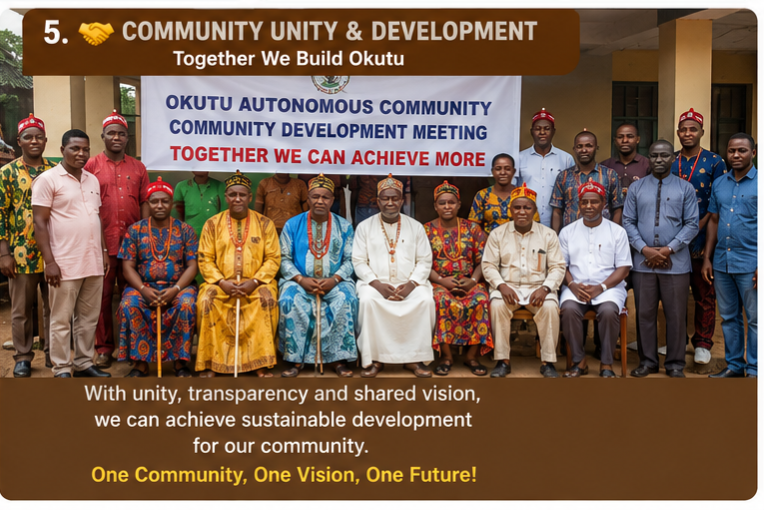 0 Comments 0 Shares 911 Views 0 Reviews
-
Supporting Local Markets & Entrepreneurship
🛒 THE ECONOMY OF OKUTU IS DRIVEN BY ITS PEOPLE
From hardworking farmers and traders to artisans, transport operators, and small business owners, the people of Okutu contribute daily to local economic growth.
Agriculture remains the backbone of the community, while entrepreneurship continues to create new opportunities for youth and families.
Supporting local businesses means supporting community development, job creation, and sustainable prosperity.
🌱 Buy Local. Invest Local. Grow Together.
#OkutuBusiness #Agriculture #CommunityEconomy #Entrepreneurship #NsukkaEconomySupporting Local Markets & Entrepreneurship 🛒 THE ECONOMY OF OKUTU IS DRIVEN BY ITS PEOPLE From hardworking farmers and traders to artisans, transport operators, and small business owners, the people of Okutu contribute daily to local economic growth. Agriculture remains the backbone of the community, while entrepreneurship continues to create new opportunities for youth and families. Supporting local businesses means supporting community development, job creation, and sustainable prosperity. 🌱 Buy Local. Invest Local. Grow Together. #OkutuBusiness #Agriculture #CommunityEconomy #Entrepreneurship #NsukkaEconomy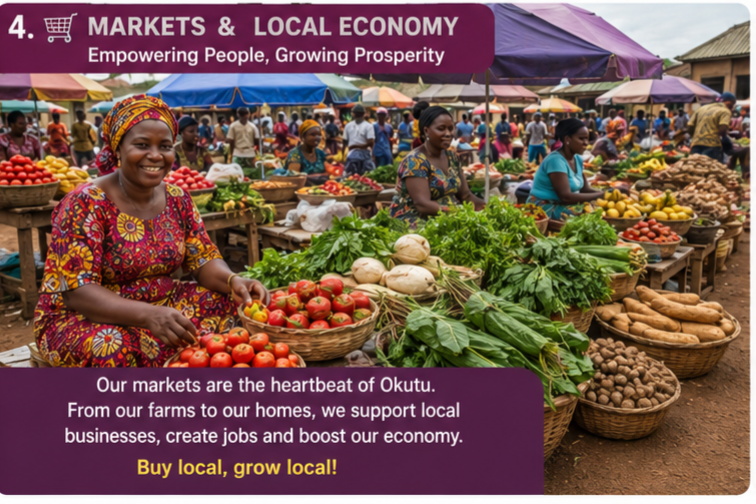 0 Comments 0 Shares 934 Views 0 Reviews
-
Healthier Communities, Stronger Communities
🏥 HEALTH IS WEALTH IN OKUTU
A thriving community begins with healthy families.
Healthcare workers, community volunteers, and faith-based organizations play vital roles in promoting wellness, maternal health, child healthcare, disease prevention, and public health awareness.
We welcome partnerships that strengthen healthcare access, improve facilities, and support healthier lives for every resident of Okutu.
❤️ Strong Communities Start with Healthy People.
#CommunityHealth #OkutuDevelopment #HealthcareForAll #HealthyCommunities #NsukkaHealthier Communities, Stronger Communities 🏥 HEALTH IS WEALTH IN OKUTU A thriving community begins with healthy families. Healthcare workers, community volunteers, and faith-based organizations play vital roles in promoting wellness, maternal health, child healthcare, disease prevention, and public health awareness. We welcome partnerships that strengthen healthcare access, improve facilities, and support healthier lives for every resident of Okutu. ❤️ Strong Communities Start with Healthy People. #CommunityHealth #OkutuDevelopment #HealthcareForAll #HealthyCommunities #Nsukka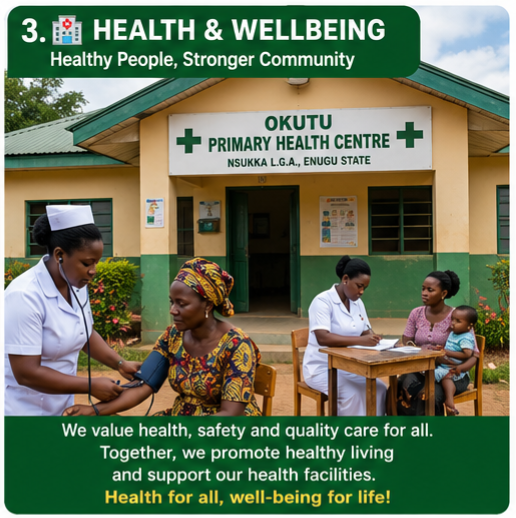 0 Comments 0 Shares 949 Views 0 Reviews
-
Investing in Education, Building the Future
🎓 THE FUTURE OF OKUTU BEGINS IN OUR CLASSROOMS
Education remains one of the strongest pillars of development in Okutu. Every child empowered through learning becomes a future leader, entrepreneur, teacher, healthcare worker, or innovator.
We celebrate our students, teachers, and community members who continue to support education and skills development.
Together, we can build modern learning environments that prepare our youth for opportunities in Nigeria and across the world.
#EducationFirst #OkutuYouth #FutureLeaders #NsukkaLGA #CommunityDevelopmentInvesting in Education, Building the Future 🎓 THE FUTURE OF OKUTU BEGINS IN OUR CLASSROOMS Education remains one of the strongest pillars of development in Okutu. Every child empowered through learning becomes a future leader, entrepreneur, teacher, healthcare worker, or innovator. We celebrate our students, teachers, and community members who continue to support education and skills development. Together, we can build modern learning environments that prepare our youth for opportunities in Nigeria and across the world. #EducationFirst #OkutuYouth #FutureLeaders #NsukkaLGA #CommunityDevelopment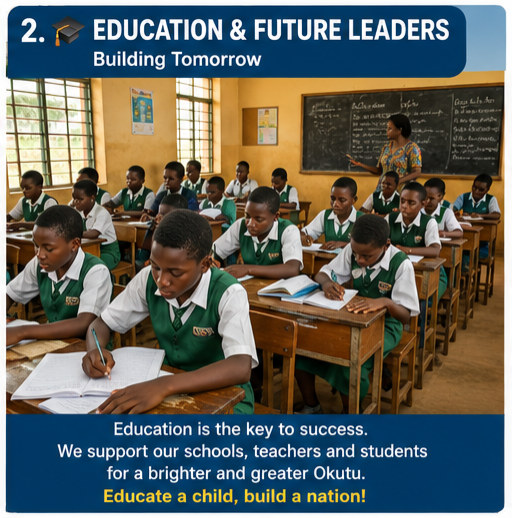 0 Comments 0 Shares 950 Views 0 Reviews
-
Celebrating the Rich Cultural Heritage of Okutu
🌾 CULTURE IS THE SOUL OF OKUTU
From colorful New Yam celebrations to traditional dances, masquerade displays, and ancestral storytelling, Okutu Autonomous Community proudly preserves the cultural heritage that has united generations.
Our traditions are more than ceremonies—they are living expressions of identity, unity, and pride. As we celebrate our past, we also inspire future generations to remain connected to their roots and values.
📍 Okutu Autonomous Community, Nsukka LGA, Enugu State
#Okutu #NsukkaCulture #IgboHeritage #NewYamFestival #CulturalPride #EnuguStateCelebrating the Rich Cultural Heritage of Okutu 🌾 CULTURE IS THE SOUL OF OKUTU From colorful New Yam celebrations to traditional dances, masquerade displays, and ancestral storytelling, Okutu Autonomous Community proudly preserves the cultural heritage that has united generations. Our traditions are more than ceremonies—they are living expressions of identity, unity, and pride. As we celebrate our past, we also inspire future generations to remain connected to their roots and values. 📍 Okutu Autonomous Community, Nsukka LGA, Enugu State #Okutu #NsukkaCulture #IgboHeritage #NewYamFestival #CulturalPride #EnuguState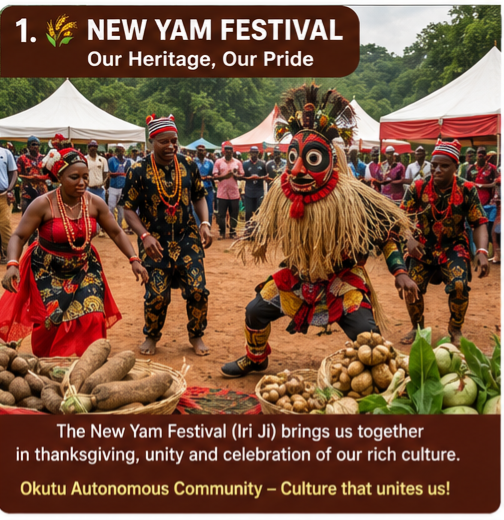 0 Comments 0 Shares 875 Views 0 Reviews
More Stories

Autonomous Communities
https://autonomouscommunities.com