


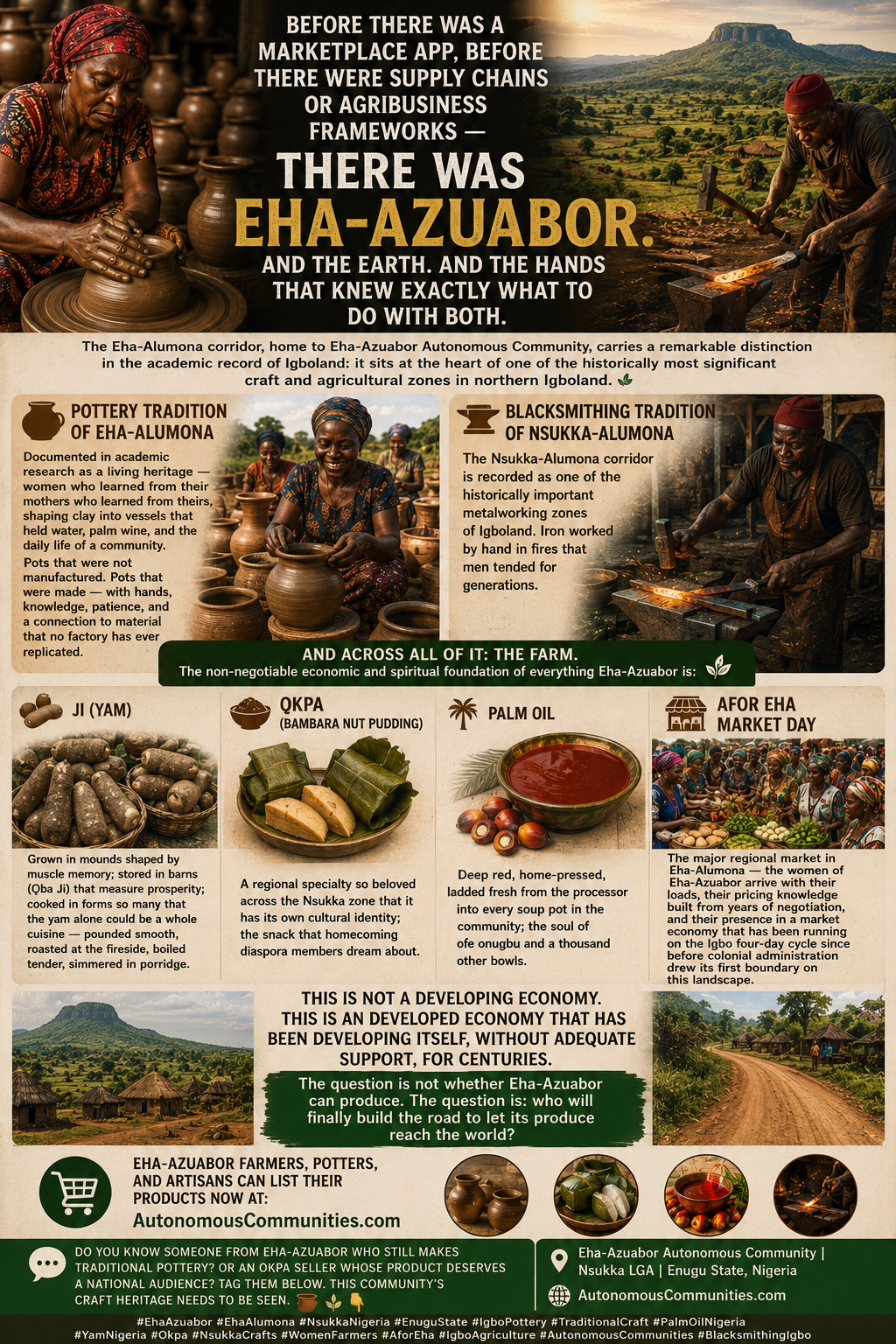
🏺 BEFORE THERE WAS A MARKETPLACE APP, BEFORE THERE WERE SUPPLY CHAINS OR AGRIBUSINESS FRAMEWORKS — THERE WAS EHA-AZUABOR. AND THE EARTH. AND THE HANDS THAT KNEW EXACTLY WHAT TO DO WITH BOTH.
The Eha-Alumona corridor, home to Eha-Azuabor Autonomous Community, carries a remarkable distinction in the academic record of Igboland: it sits at the heart of one of the historically most significant craft and agricultural zones in northern Igboland. 🌿
The pottery tradition of Eha-Alumona is documented in academic research as a living heritage — women who learned from their mothers who learned from theirs, shaping clay into vessels that held water, palm wine, and the daily life of a community. Pots that were not manufactured. Pots that were made — with hands, knowledge, patience, and a connection to material that no factory has ever replicated. 🏺
The blacksmithing tradition — the Nsukka-Alumona corridor is recorded as one of the historically important metalworking zones of Igboland. Iron worked by hand in fires that men tended for generations.
And across all of it: the farm. The non-negotiable economic and spiritual foundation of everything Eha-Azuabor is:
🍠 Ji (Yam) — grown in mounds shaped by muscle memory; stored in barns (Ọba Ji) that measure prosperity; cooked in forms so many that the yam alone could be a whole cuisine — pounded smooth, roasted at the fireside, boiled tender, simmered in porridge
🌿 Ọkpa (bambara nut pudding) — a regional specialty so beloved across the Nsukka zone that it has its own cultural identity; the snack that homecoming diaspora members dream about
🌴 Palm oil — deep red, home-pressed, ladled fresh from the processor into every soup pot in the community; the soul of ofe onugbu and a thousand other bowls
🛒 And on Afor Eha market day — the major regional market in Eha-Alumona — the women of Eha-Azuabor arrive with their loads, their pricing knowledge built from years of negotiation, and their presence in a market economy that has been running on the Igbo four-day cycle since before colonial administration drew its first boundary on this landscape.
This is not a developing economy. This is an developed economy that has been developing itself, without adequate support, for centuries. The question is not whether Eha-Azuabor can produce. The question is: who will finally build the road to let its produce reach the world?
🛒 Eha-Azuabor farmers, potters, and artisans can list their products now at: AutonomousCommunities.com
━━━━━━━━━━━━━━━━━━━━━━━━━━━━━━━━━━
💬 Do you know someone from Eha-Azuabor who still makes traditional pottery? Or an okpa seller whose product deserves a national audience? Tag them below. This community's craft heritage needs to be seen. 🏺🌾👇
━━━━━━━━━━━━━━━━━━━━━━━━━━━━━━━━━━
#EhaAzuabor #EhaAlumona #NsukkaNigeria #EnuguState #IgboPottery #TraditionalCraft #PalmOilNigeria #YamNigeria #Okpa #NsukkaCrafts #WomenFarmers #AforEha #IgboAgriculture #AutonomousCommunities #BlacksmithingIgbo
🏺 BEFORE THERE WAS A MARKETPLACE APP, BEFORE THERE WERE SUPPLY CHAINS OR AGRIBUSINESS FRAMEWORKS — THERE WAS EHA-AZUABOR. AND THE EARTH. AND THE HANDS THAT KNEW EXACTLY WHAT TO DO WITH BOTH.
The Eha-Alumona corridor, home to Eha-Azuabor Autonomous Community, carries a remarkable distinction in the academic record of Igboland: it sits at the heart of one of the historically most significant craft and agricultural zones in northern Igboland. 🌿
The pottery tradition of Eha-Alumona is documented in academic research as a living heritage — women who learned from their mothers who learned from theirs, shaping clay into vessels that held water, palm wine, and the daily life of a community. Pots that were not manufactured. Pots that were made — with hands, knowledge, patience, and a connection to material that no factory has ever replicated. 🏺
The blacksmithing tradition — the Nsukka-Alumona corridor is recorded as one of the historically important metalworking zones of Igboland. Iron worked by hand in fires that men tended for generations.
And across all of it: the farm. The non-negotiable economic and spiritual foundation of everything Eha-Azuabor is:
🍠 Ji (Yam) — grown in mounds shaped by muscle memory; stored in barns (Ọba Ji) that measure prosperity; cooked in forms so many that the yam alone could be a whole cuisine — pounded smooth, roasted at the fireside, boiled tender, simmered in porridge
🌿 Ọkpa (bambara nut pudding) — a regional specialty so beloved across the Nsukka zone that it has its own cultural identity; the snack that homecoming diaspora members dream about
🌴 Palm oil — deep red, home-pressed, ladled fresh from the processor into every soup pot in the community; the soul of ofe onugbu and a thousand other bowls
🛒 And on Afor Eha market day — the major regional market in Eha-Alumona — the women of Eha-Azuabor arrive with their loads, their pricing knowledge built from years of negotiation, and their presence in a market economy that has been running on the Igbo four-day cycle since before colonial administration drew its first boundary on this landscape.
This is not a developing economy. This is an developed economy that has been developing itself, without adequate support, for centuries. The question is not whether Eha-Azuabor can produce. The question is: who will finally build the road to let its produce reach the world?
🛒 Eha-Azuabor farmers, potters, and artisans can list their products now at: AutonomousCommunities.com
━━━━━━━━━━━━━━━━━━━━━━━━━━━━━━━━━━
💬 Do you know someone from Eha-Azuabor who still makes traditional pottery? Or an okpa seller whose product deserves a national audience? Tag them below. This community's craft heritage needs to be seen. 🏺🌾👇
━━━━━━━━━━━━━━━━━━━━━━━━━━━━━━━━━━
#EhaAzuabor #EhaAlumona #NsukkaNigeria #EnuguState #IgboPottery #TraditionalCraft #PalmOilNigeria #YamNigeria #Okpa #NsukkaCrafts #WomenFarmers #AforEha #IgboAgriculture #AutonomousCommunities #BlacksmithingIgbo

 Arabic
 French
 Spanish
 Portuguese
 Deutsch
 Turkish
 Dutch
 Italiano
 Russian
 Romaian
 Portuguese (Brazil)
 Greek
