


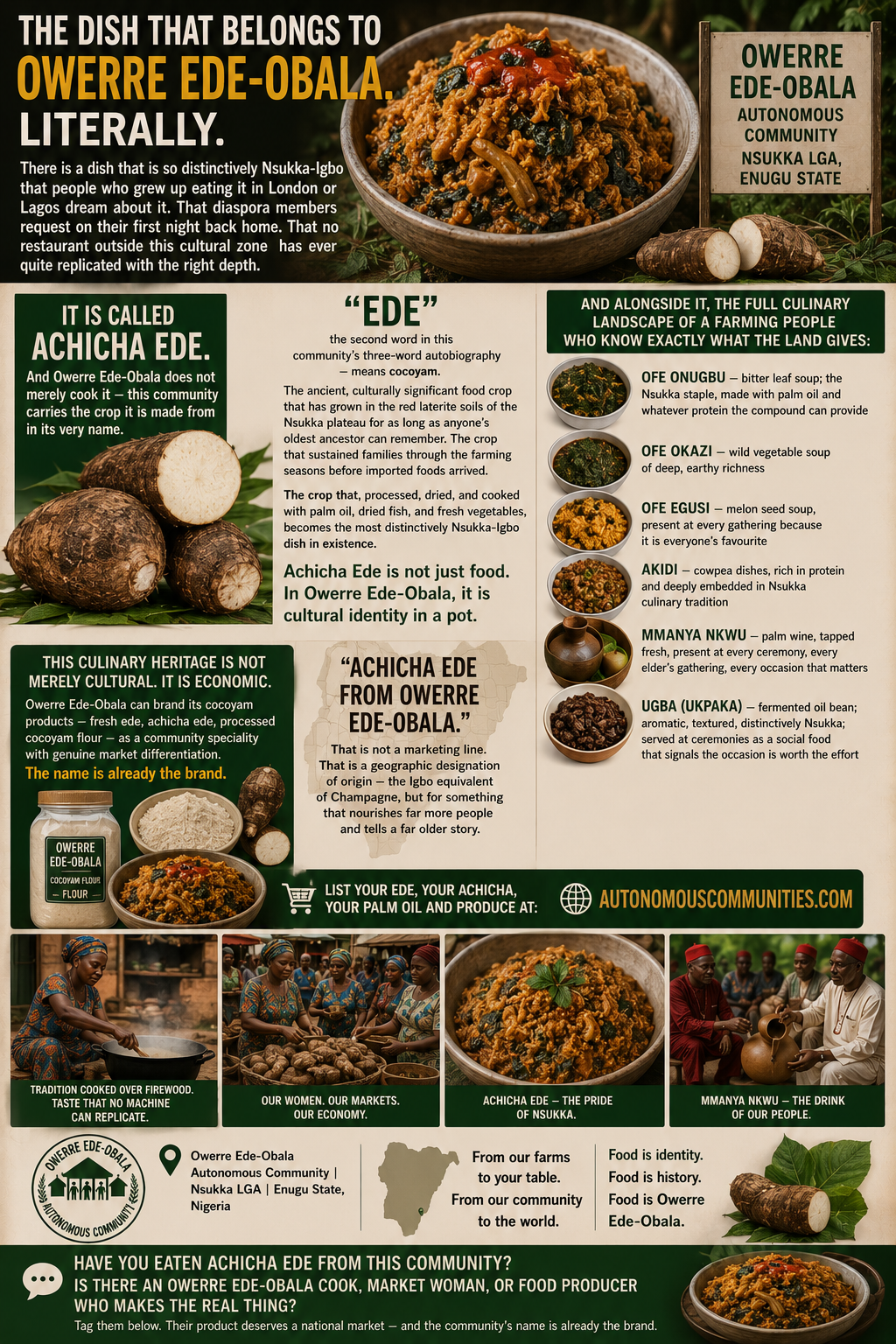
🥘 THERE IS A DISH THAT IS SO DISTINCTIVELY NSUKKA-IGBO THAT PEOPLE WHO GREW UP EATING IT IN LONDON OR LAGOS DREAM ABOUT IT. THAT DIASPORA MEMBERS REQUEST ON THEIR FIRST NIGHT BACK HOME. THAT NO RESTAURANT OUTSIDE THIS CULTURAL ZONE HAS EVER QUITE REPLICATED WITH THE RIGHT DEPTH.
'The Dish That Belongs to Owerre Ede-Obala. Literally'.
It is called Achicha Ede. And Owerre Ede-Obala does not merely cook it — this community carries the crop it is made from in its very name. 🍠🌿
"Ede" — the second word in this community's three-word autobiography — means cocoyam. The ancient, culturally significant food crop that has grown in the red laterite soils of the Nsukka plateau for as long as anyone's oldest ancestor can remember. The crop that sustained families through the farming seasons before imported foods arrived. The crop that, processed, dried, and cooked with palm oil, dried fish, and fresh vegetables, becomes the most distinctively Nsukka-Igbo dish in existence.
Achicha Ede is not just food. In Owerre Ede-Obala, it is cultural identity in a pot.
And alongside it, the full culinary landscape of a farming people who know exactly what the land gives:
🥘 Ofe Onugbu — bitter leaf soup; the Nsukka staple, made with palm oil and whatever protein the compound can provide
🥬 Ofe Okazi — wild vegetable soup of deep, earthy richness
🥜 Ofe Egusi — melon seed soup, present at every gathering because it is everyone's favourite
🌽 Akidi — cowpea dishes, rich in protein and deeply embedded in Nsukka culinary tradition
🌴 Mmanya Nkwu — palm wine, tapped fresh, present at every ceremony, every elder's gathering, every occasion that matters
🍖 Ugba (Ukpaka) — fermented oil bean; aromatic, textured, distinctively Nsukka; served at ceremonies as a social food that signals the occasion is worth the effort
This culinary heritage is not merely cultural. It is economic. Owerre Ede-Obala can brand its cocoyam products — fresh ede, achicha ede, processed cocoyam flour — as a community speciality with genuine market differentiation. The name is already the brand.
"Achicha Ede from Owerre Ede-Obala." That is not a marketing line. That is a geographic designation of origin — the Igbo equivalent of Champagne, but for something that nourishes far more people and tells a far older story.
🛒 List your Ede, your Achicha, your palm oil and produce at:
🌐 AutonomousCommunities.com
━━━━━━━━━━━━━━━━━━━━━━━━━━━━━━━━━━
💬 Have you eaten Achicha Ede from this community? Is there an Owerre Ede-Obala cook, market woman, or food producer who makes the real thing? Tag them below. Their product deserves a national market — and the community's name is already the brand. 🥘👇
━━━━━━━━━━━━━━━━━━━━━━━━━━━━━━━━━━
#OwerreEdeObala #AchichaEde #NsukkaCuisine #CocoyamNigeria #IgboFood #NsukkaFood #EdeNigeria #NsukkaNigeria #EnuguState #FoodHeritage #IgboCuisine #AutonomousCommunities #BuyLocalNigeria #CommunityFoodBrand #NorthernIgbo
🥘 THERE IS A DISH THAT IS SO DISTINCTIVELY NSUKKA-IGBO THAT PEOPLE WHO GREW UP EATING IT IN LONDON OR LAGOS DREAM ABOUT IT. THAT DIASPORA MEMBERS REQUEST ON THEIR FIRST NIGHT BACK HOME. THAT NO RESTAURANT OUTSIDE THIS CULTURAL ZONE HAS EVER QUITE REPLICATED WITH THE RIGHT DEPTH.
'The Dish That Belongs to Owerre Ede-Obala. Literally'.
It is called Achicha Ede. And Owerre Ede-Obala does not merely cook it — this community carries the crop it is made from in its very name. 🍠🌿
"Ede" — the second word in this community's three-word autobiography — means cocoyam. The ancient, culturally significant food crop that has grown in the red laterite soils of the Nsukka plateau for as long as anyone's oldest ancestor can remember. The crop that sustained families through the farming seasons before imported foods arrived. The crop that, processed, dried, and cooked with palm oil, dried fish, and fresh vegetables, becomes the most distinctively Nsukka-Igbo dish in existence.
Achicha Ede is not just food. In Owerre Ede-Obala, it is cultural identity in a pot.
And alongside it, the full culinary landscape of a farming people who know exactly what the land gives:
🥘 Ofe Onugbu — bitter leaf soup; the Nsukka staple, made with palm oil and whatever protein the compound can provide
🥬 Ofe Okazi — wild vegetable soup of deep, earthy richness
🥜 Ofe Egusi — melon seed soup, present at every gathering because it is everyone's favourite
🌽 Akidi — cowpea dishes, rich in protein and deeply embedded in Nsukka culinary tradition
🌴 Mmanya Nkwu — palm wine, tapped fresh, present at every ceremony, every elder's gathering, every occasion that matters
🍖 Ugba (Ukpaka) — fermented oil bean; aromatic, textured, distinctively Nsukka; served at ceremonies as a social food that signals the occasion is worth the effort
This culinary heritage is not merely cultural. It is economic. Owerre Ede-Obala can brand its cocoyam products — fresh ede, achicha ede, processed cocoyam flour — as a community speciality with genuine market differentiation. The name is already the brand.
"Achicha Ede from Owerre Ede-Obala." That is not a marketing line. That is a geographic designation of origin — the Igbo equivalent of Champagne, but for something that nourishes far more people and tells a far older story.
🛒 List your Ede, your Achicha, your palm oil and produce at:
🌐 AutonomousCommunities.com
━━━━━━━━━━━━━━━━━━━━━━━━━━━━━━━━━━
💬 Have you eaten Achicha Ede from this community? Is there an Owerre Ede-Obala cook, market woman, or food producer who makes the real thing? Tag them below. Their product deserves a national market — and the community's name is already the brand. 🥘👇
━━━━━━━━━━━━━━━━━━━━━━━━━━━━━━━━━━
#OwerreEdeObala #AchichaEde #NsukkaCuisine #CocoyamNigeria #IgboFood #NsukkaFood #EdeNigeria #NsukkaNigeria #EnuguState #FoodHeritage #IgboCuisine #AutonomousCommunities #BuyLocalNigeria #CommunityFoodBrand #NorthernIgbo

 Arabic
 French
 Spanish
 Portuguese
 Deutsch
 Turkish
 Dutch
 Italiano
 Russian
 Romaian
 Portuguese (Brazil)
 Greek
