



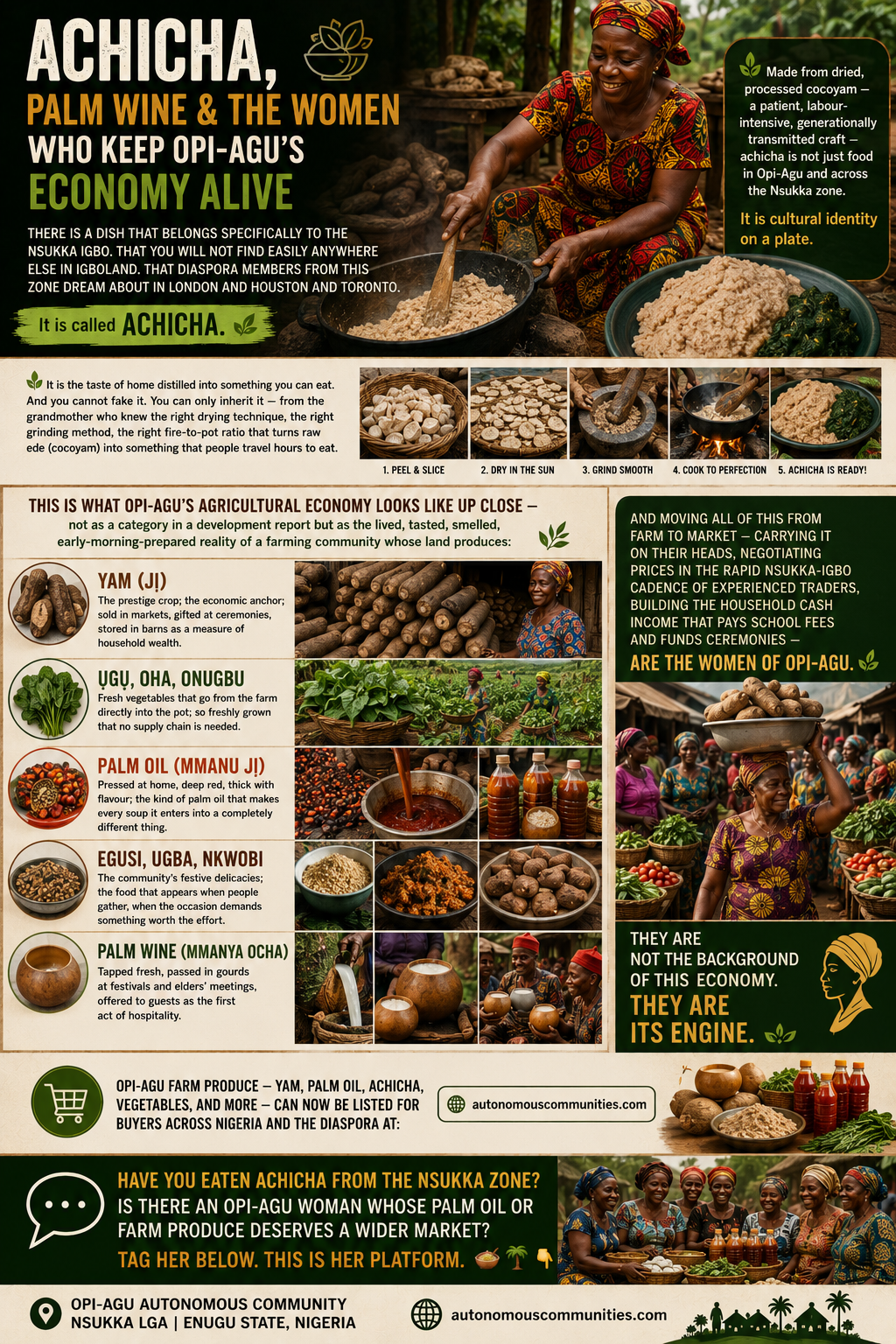
🥣 THERE IS A DISH THAT BELONGS SPECIFICALLY TO THE NSUKKA IGBO. THAT YOU WILL NOT FIND EASILY ANYWHERE ELSE IN IGBOLAND. THAT DIASPORA MEMBERS FROM THIS ZONE DREAM ABOUT IN LONDON AND HOUSTON AND TORONTO.
'Achicha, Palm Wine & the Women Who Keep Opi-Agu's Economy Alive'
It is called Achicha. 🌿
Made from dried, processed cocoyam — a patient, labour-intensive, generationally transmitted craft — achicha is not just food in Opi-Agu and across the Nsukka zone. It is cultural identity on a plate. It is the taste of home distilled into something you can eat. And you cannot fake it. You can only inherit it — from the grandmother who knew the right drying technique, the right grinding method, the right fire-to-pot ratio that turns raw ede (cocoyam) into something that people travel hours to eat.
This is what Opi-Agu's agricultural economy looks like up close — not as a category in a development report but as the lived, tasted, smelled, early-morning-prepared reality of a farming community whose land produces:
🍠 Yam (Jị) — the prestige crop; the economic anchor; sold in markets, gifted at ceremonies, stored in barns as a measure of household wealth
🌿 Ụgụ, Oha, Onugbu — fresh vegetables that go from the farm directly into the pot; so freshly grown that no supply chain is needed
🌴 Palm oil (Mmanu Jị) — pressed at home, deep red, thick with flavour; the kind of palm oil that makes every soup it enters into a completely different thing
🥜 Egusi, Ugba, Nkwobi — the community's festive delicacies; the food that appears when people gather, when the occasion demands something worth the effort
🍶 Palm wine (Mmanya Ocha) — tapped fresh, passed in gourds at festivals and elders' meetings, offered to guests as the first act of hospitality
And moving all of this from farm to market — carrying it on their heads, negotiating prices in the rapid Nsukka-Igbo cadence of experienced traders, building the household cash income that pays school fees and funds ceremonies — are the women of Opi-Agu. 👩
They are not the background of this economy. They are its engine.
🛒 Opi-Agu farm produce — yam, palm oil, achicha, vegetables, and more — can now be listed for buyers across Nigeria and the diaspora at:
🌐 autonomouscommunities.com
━━━━━━━━━━━━━━━━━━━━━━━━━━━━━━━━━━
💬 Have you eaten Achicha from the Nsukka zone? Is there an Opi-Agu woman whose palm oil or farm produce deserves a wider market? Tag her below. This is her platform. 🥣🌴👇
━━━━━━━━━━━━━━━━━━━━━━━━━━━━━━━━━━
#OpiAgu #Achicha #NsukkaCuisine #PalmOilNigeria #IgboFood #NsukkaWomen #WomenFarmers #NsukkaNigeria #EnuguState #IgboAgriculture #AutonomousCommunities #BuyLocalNigeria #FarmToTable #MarketDayNigeria #IgboCuisine
🥣 THERE IS A DISH THAT BELONGS SPECIFICALLY TO THE NSUKKA IGBO. THAT YOU WILL NOT FIND EASILY ANYWHERE ELSE IN IGBOLAND. THAT DIASPORA MEMBERS FROM THIS ZONE DREAM ABOUT IN LONDON AND HOUSTON AND TORONTO.
'Achicha, Palm Wine & the Women Who Keep Opi-Agu's Economy Alive'
It is called Achicha. 🌿
Made from dried, processed cocoyam — a patient, labour-intensive, generationally transmitted craft — achicha is not just food in Opi-Agu and across the Nsukka zone. It is cultural identity on a plate. It is the taste of home distilled into something you can eat. And you cannot fake it. You can only inherit it — from the grandmother who knew the right drying technique, the right grinding method, the right fire-to-pot ratio that turns raw ede (cocoyam) into something that people travel hours to eat.
This is what Opi-Agu's agricultural economy looks like up close — not as a category in a development report but as the lived, tasted, smelled, early-morning-prepared reality of a farming community whose land produces:
🍠 Yam (Jị) — the prestige crop; the economic anchor; sold in markets, gifted at ceremonies, stored in barns as a measure of household wealth
🌿 Ụgụ, Oha, Onugbu — fresh vegetables that go from the farm directly into the pot; so freshly grown that no supply chain is needed
🌴 Palm oil (Mmanu Jị) — pressed at home, deep red, thick with flavour; the kind of palm oil that makes every soup it enters into a completely different thing
🥜 Egusi, Ugba, Nkwobi — the community's festive delicacies; the food that appears when people gather, when the occasion demands something worth the effort
🍶 Palm wine (Mmanya Ocha) — tapped fresh, passed in gourds at festivals and elders' meetings, offered to guests as the first act of hospitality
And moving all of this from farm to market — carrying it on their heads, negotiating prices in the rapid Nsukka-Igbo cadence of experienced traders, building the household cash income that pays school fees and funds ceremonies — are the women of Opi-Agu. 👩
They are not the background of this economy. They are its engine.
🛒 Opi-Agu farm produce — yam, palm oil, achicha, vegetables, and more — can now be listed for buyers across Nigeria and the diaspora at:
🌐 autonomouscommunities.com
━━━━━━━━━━━━━━━━━━━━━━━━━━━━━━━━━━
💬 Have you eaten Achicha from the Nsukka zone? Is there an Opi-Agu woman whose palm oil or farm produce deserves a wider market? Tag her below. This is her platform. 🥣🌴👇
━━━━━━━━━━━━━━━━━━━━━━━━━━━━━━━━━━
#OpiAgu #Achicha #NsukkaCuisine #PalmOilNigeria #IgboFood #NsukkaWomen #WomenFarmers #NsukkaNigeria #EnuguState #IgboAgriculture #AutonomousCommunities #BuyLocalNigeria #FarmToTable #MarketDayNigeria #IgboCuisine

 Arabic
 French
 Spanish
 Portuguese
 Deutsch
 Turkish
 Dutch
 Italiano
 Russian
 Romaian
 Portuguese (Brazil)
 Greek
