



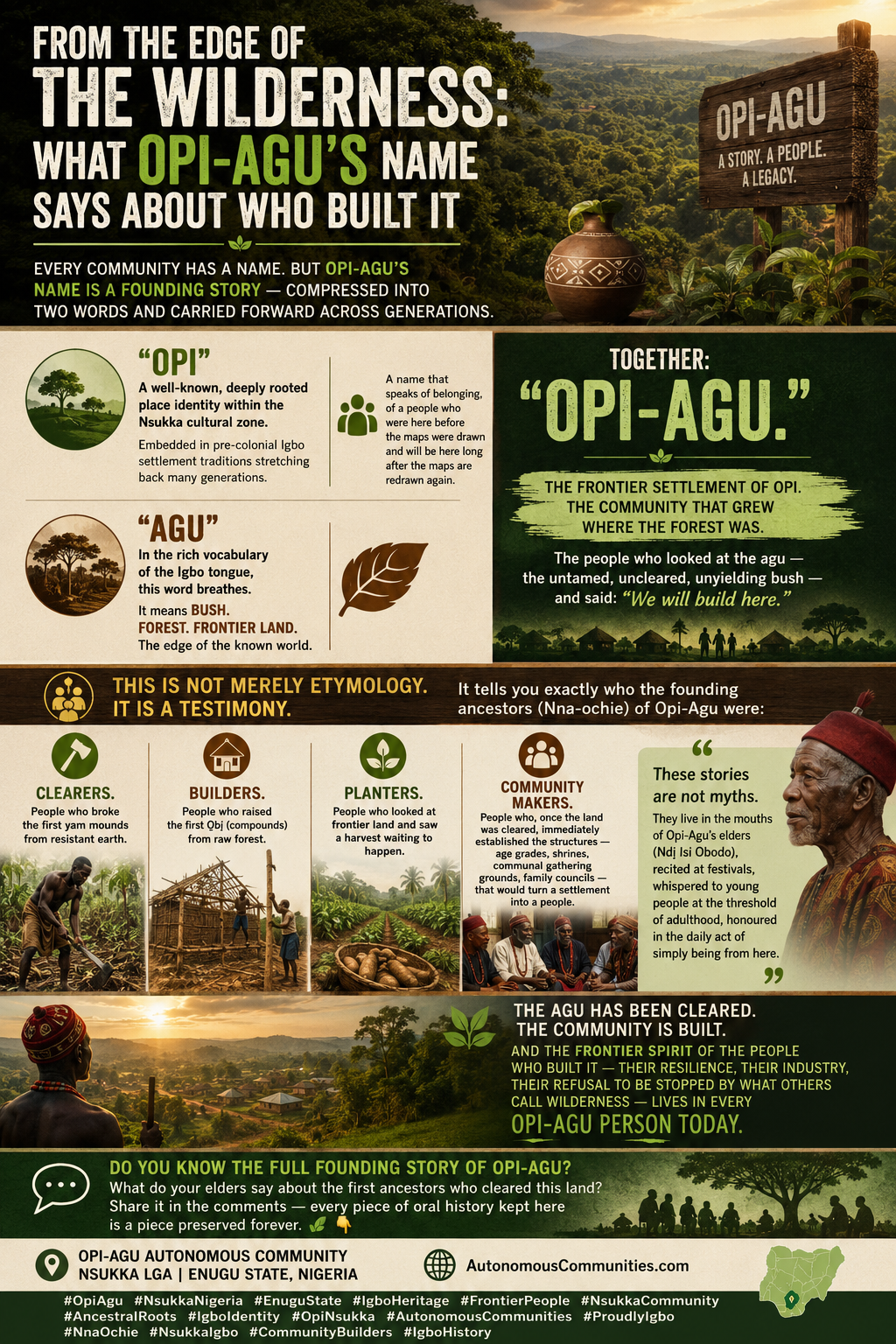
🌿 EVERY COMMUNITY HAS A NAME. BUT OPI-AGU'S NAME IS A FOUNDING STORY — COMPRESSED INTO TWO WORDS AND CARRIED FORWARD ACROSS GENERATIONS.
'From the Edge of the Wilderness: What Opi-Agu's Name Says About Who Built It'
Break it apart slowly:
"Opi" — a well-known, deeply rooted place identity within the Nsukka cultural zone. Embedded in pre-colonial Igbo settlement traditions stretching back many generations. A name that speaks of belonging, of a people who were here before the maps were drawn and will be here long after the maps are redrawn again.
"Agu" — in the rich vocabulary of the Igbo tongue, this word breathes. It means bush. Forest. Frontier land. The edge of the known world. The place where the cleared field ends and the wild begins.
Together: "Opi-Agu." 🌿
The frontier settlement of Opi. The community that grew where the forest was. The people who looked at the agu — the untamed, uncleared, unyielding bush — and said: "We will build here."
This is not merely etymology. It is a testimony. It tells you exactly who the founding ancestors (Nna-ochie) of Opi-Agu were:
🪓 Clearers. People who broke the first yam mounds from resistant earth.
🏗️ Builders. People who raised the first Ọbị (compounds) from raw forest.
🌾 Planters. People who looked at frontier land and saw a harvest waiting to happen.
🤝 Community makers. People who, once the land was cleared, immediately established the structures — age grades, shrines, communal gathering grounds, family councils — that would turn a settlement into a people.
These stories are not myths. They live in the mouths of Opi-Agu's elders (Ndị Isi Obodo), recited at festivals, whispered to young people at the threshold of adulthood, honoured in the daily act of simply being from here.
The agu has been cleared. The community is built. And the frontier spirit of the people who built it — their resilience, their industry, their refusal to be stopped by what others call wilderness — lives in every Opi-Agu person today.
📍 Opi-Agu Autonomous Community | Nsukka LGA | Enugu State, Nigeria
🌐 AutonomousCommunities.com
━━━━━━━━━━━━━━━━━━━━━━━━━━━━━━━━━━
💬 Do you know the full founding story of Opi-Agu? What do your elders say about the first ancestors who cleared this land? Share it in the comments — every piece of oral history kept here is a piece preserved forever. 🌿👇
━━━━━━━━━━━━━━━━━━━━━━━━━━━━━━━━━━
#OpiAgu #NsukkaNigeria #EnuguState #IgboHeritage #FrontierPeople #NsukkaCommunity #AncestralRoots #IgboIdentity #OpiNsukka #AutonomousCommunities #ProudlyIgbo #NnaOchie #NsukkaIgbo #CommunityBuilders #IgboHistory

 English
 Arabic
 French
 Spanish
 Portuguese
 Deutsch
 Turkish
 Dutch
 Italiano
 Russian
 Romaian
 Greek
