


ODO FESTIVAL IN LEJJA AUTONOMOUS COMMUNITY:
Cultural Significance
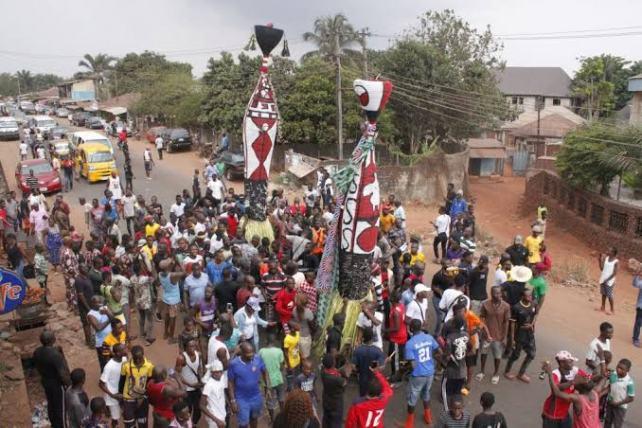
The Odo Festival is arguably the most iconic of all Nsukka festivals. Celebrated in communities such as Ede-Oballa, Obollo-Afor, Lejja, and Okpuje, this masquerade festival is held in honor of the ancestral spirits known as Odo. The Odo are believed to be ancestral beings who return from the spiritual realm to commune with the living.
This festival is not merely symbolic—it is a sacred ritual. It reinforces traditional beliefs, social norms, and moral conduct. The presence of the Odo serves as both a blessing and a reminder of ancestral surveillance.
Timing and Duration
The Odo Festival is biennial, occurring every two years, typically between February and April. It lasts for several weeks, involving multiple phases: the arrival of the Odo, their interactions with the community, and their eventual send-off back to the spiritual world.
Main Activities
Masquerade Processions: Odo masquerades, adorned in intricately designed costumes and wooden masks, move around villages, visiting homes and performing rituals.
Chants and Drumming: Traditional drummers accompany the Odo with sacred rhythms, while chanters invoke ancestral names and stories.
Community Cleansing: Villagers perform rituals to cleanse their homes and community spaces of evil or misfortune.
Community Impact
The Odo Festival strengthens intergenerational bonds as older members pass down history and rituals to the youth. It also draws attention from cultural tourists and researchers, offering economic and academic opportunities.
ODO FESTIVAL IN LEJJA AUTONOMOUS COMMUNITY:
Cultural Significance
The Odo Festival is arguably the most iconic of all Nsukka festivals. Celebrated in communities such as Ede-Oballa, Obollo-Afor, Lejja, and Okpuje, this masquerade festival is held in honor of the ancestral spirits known as Odo. The Odo are believed to be ancestral beings who return from the spiritual realm to commune with the living.
This festival is not merely symbolic—it is a sacred ritual. It reinforces traditional beliefs, social norms, and moral conduct. The presence of the Odo serves as both a blessing and a reminder of ancestral surveillance.
Timing and Duration
The Odo Festival is biennial, occurring every two years, typically between February and April. It lasts for several weeks, involving multiple phases: the arrival of the Odo, their interactions with the community, and their eventual send-off back to the spiritual world.
Main Activities
Masquerade Processions: Odo masquerades, adorned in intricately designed costumes and wooden masks, move around villages, visiting homes and performing rituals.
Chants and Drumming: Traditional drummers accompany the Odo with sacred rhythms, while chanters invoke ancestral names and stories.
Community Cleansing: Villagers perform rituals to cleanse their homes and community spaces of evil or misfortune.
Community Impact
The Odo Festival strengthens intergenerational bonds as older members pass down history and rituals to the youth. It also draws attention from cultural tourists and researchers, offering economic and academic opportunities.

 English
 Arabic
 French
 Spanish
 Portuguese
 Deutsch
 Dutch
 Italiano
 Russian
 Romaian
 Portuguese (Brazil)
 Greek
