



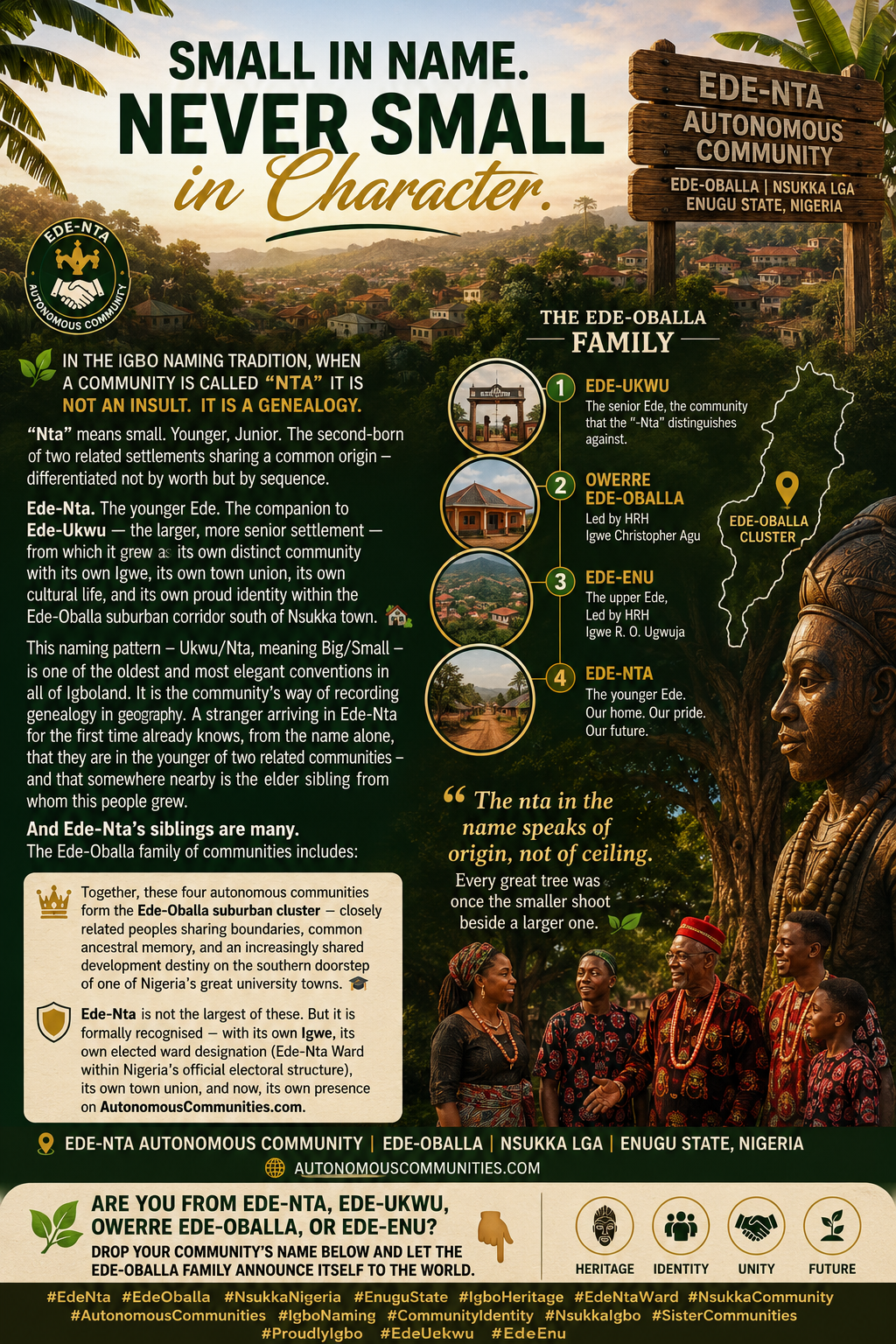
🌿 IN THE IGBO NAMING TRADITION, WHEN A COMMUNITY IS CALLED "NTA" IT IS NOT AN INSULT. IT IS A GENEALOGY.
'Small in Name. Never Small in Character'.
"Nta" means small. Younger. Junior. The second-born of two related settlements sharing a common origin — differentiated not by worth but by sequence.
Ede-Nta. The younger Ede. The companion to Ede-Ukwu — the larger, more senior settlement — from which it grew as its own distinct community with its own Igwe, its own town union, its own cultural life, and its own proud identity within the Ede-Oballa suburban corridor south of Nsukka town. 🏘️
This naming pattern — Ukwu/Nta, meaning Big/Small — is one of the oldest and most elegant conventions in all of Igboland. It is the community's way of recording genealogy in geography. A stranger arriving in Ede-Nta for the first time already knows, from the name alone, that they are in the younger of two related communities — and that somewhere nearby is the elder sibling from whom this people grew.
And Ede-Nta's siblings are many. The Ede-Oballa family of communities includes:
🏘️ Ede-Ukwu — the senior Ede, the community that the "-Nta" distinguishes against
🏘️ Owerre Ede-Oballa — led by HRH Igwe Christopher Agu
🏘️ Ede-Enu — the upper Ede; led by HRH Igwe R. O. Ugwuja
Together, these four autonomous communities form the Ede-Oballa suburban cluster — closely related peoples sharing boundaries, common ancestral memory, and an increasingly shared development destiny on the southern doorstep of one of Nigeria's great university towns.
Ede-Nta is not the largest of these. But it is formally recognised — with its own Igwe, its own elected ward designation (Ede-Nta Ward within Nigeria's official electoral structure), its own town union, and now, its own presence on AutonomousCommunities.com.
The nta in the name speaks of origin, not of ceiling. Every great tree was once the smaller shoot beside a larger one.
📍 Ede-Nta Autonomous Community | Ede-Oballa | Nsukka LGA | Enugu State, Nigeria
🌐 AutonomousCommunities.com
━━━━━━━━━━━━━━━━━━━━━━━━━━━━━━━━━━
💬 Are you from Ede-Nta, Ede-Ukwu, Owerre Ede-Oballa, or Ede-Enu? Drop your community's name below and let the Ede-Oballa family announce itself to the world. 🌿👇
━━━━━━━━━━━━━━━━━━━━━━━━━━━━━━━━━━
#EdeNta #EdeOballa #NsukkaNigeria #EnuguState #IgboHeritage #EdeNtaWard #NsukkaCommunity #AutonomousCommunities #IgboNaming #CommunityIdentity #NsukkaIgbo #SisterCommunities #ProudlyIgbo #EdeUkwu #EdeEnu
🌿 IN THE IGBO NAMING TRADITION, WHEN A COMMUNITY IS CALLED "NTA" IT IS NOT AN INSULT. IT IS A GENEALOGY.
'Small in Name. Never Small in Character'.
"Nta" means small. Younger. Junior. The second-born of two related settlements sharing a common origin — differentiated not by worth but by sequence.
Ede-Nta. The younger Ede. The companion to Ede-Ukwu — the larger, more senior settlement — from which it grew as its own distinct community with its own Igwe, its own town union, its own cultural life, and its own proud identity within the Ede-Oballa suburban corridor south of Nsukka town. 🏘️
This naming pattern — Ukwu/Nta, meaning Big/Small — is one of the oldest and most elegant conventions in all of Igboland. It is the community's way of recording genealogy in geography. A stranger arriving in Ede-Nta for the first time already knows, from the name alone, that they are in the younger of two related communities — and that somewhere nearby is the elder sibling from whom this people grew.
And Ede-Nta's siblings are many. The Ede-Oballa family of communities includes:
🏘️ Ede-Ukwu — the senior Ede, the community that the "-Nta" distinguishes against
🏘️ Owerre Ede-Oballa — led by HRH Igwe Christopher Agu
🏘️ Ede-Enu — the upper Ede; led by HRH Igwe R. O. Ugwuja
Together, these four autonomous communities form the Ede-Oballa suburban cluster — closely related peoples sharing boundaries, common ancestral memory, and an increasingly shared development destiny on the southern doorstep of one of Nigeria's great university towns.
Ede-Nta is not the largest of these. But it is formally recognised — with its own Igwe, its own elected ward designation (Ede-Nta Ward within Nigeria's official electoral structure), its own town union, and now, its own presence on AutonomousCommunities.com.
The nta in the name speaks of origin, not of ceiling. Every great tree was once the smaller shoot beside a larger one.
📍 Ede-Nta Autonomous Community | Ede-Oballa | Nsukka LGA | Enugu State, Nigeria
🌐 AutonomousCommunities.com
━━━━━━━━━━━━━━━━━━━━━━━━━━━━━━━━━━
💬 Are you from Ede-Nta, Ede-Ukwu, Owerre Ede-Oballa, or Ede-Enu? Drop your community's name below and let the Ede-Oballa family announce itself to the world. 🌿👇
━━━━━━━━━━━━━━━━━━━━━━━━━━━━━━━━━━
#EdeNta #EdeOballa #NsukkaNigeria #EnuguState #IgboHeritage #EdeNtaWard #NsukkaCommunity #AutonomousCommunities #IgboNaming #CommunityIdentity #NsukkaIgbo #SisterCommunities #ProudlyIgbo #EdeUkwu #EdeEnu


 Arabic
 French
 Spanish
 Portuguese
 Deutsch
 Turkish
 Dutch
 Italiano
 Russian
 Romaian
 Portuguese (Brazil)
 Greek
