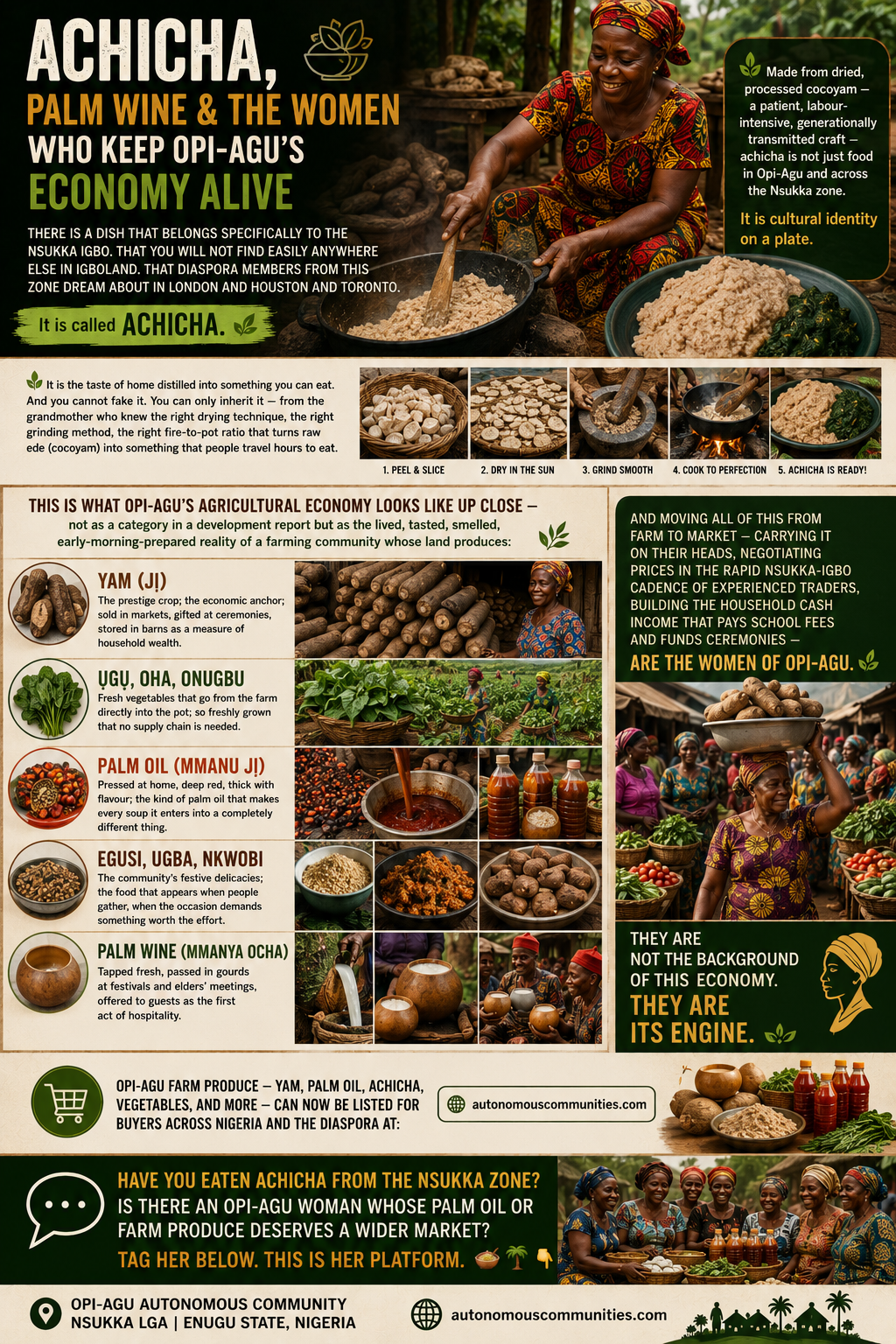
• πŸ₯£ THERE IS A DISH THAT BELONGS SPECIFICALLY TO THE NSUKKA IGBO. THAT YOU WILL NOT FIND EASILY ANYWHERE ELSE IN IGBOLAND. THAT DIASPORA MEMBERS FROM THIS ZONE DREAM ABOUT IN LONDON AND HOUSTON AND TORONTO.

    'Achicha, Palm Wine & the Women Who Keep Opi-Agu's Economy Alive'

    It is called Achicha. 🌿
    Made from dried, processed cocoyam — a patient, labour-intensive, generationally transmitted craft — achicha is not just food in Opi-Agu and across the Nsukka zone. It is cultural identity on a plate. It is the taste of home distilled into something you can eat. And you cannot fake it. You can only inherit it — from the grandmother who knew the right drying technique, the right grinding method, the right fire-to-pot ratio that turns raw ede (cocoyam) into something that people travel hours to eat.

    This is what Opi-Agu's agricultural economy looks like up close — not as a category in a development report but as the lived, tasted, smelled, early-morning-prepared reality of a farming community whose land produces:
    🍠 Yam (Jα»‹) — the prestige crop; the economic anchor; sold in markets, gifted at ceremonies, stored in barns as a measure of household wealth
    🌿 Ềgα»₯, Oha, Onugbu — fresh vegetables that go from the farm directly into the pot; so freshly grown that no supply chain is needed
    🌴 Palm oil (Mmanu Jα»‹) — pressed at home, deep red, thick with flavour; the kind of palm oil that makes every soup it enters into a completely different thing
    πŸ₯œ Egusi, Ugba, Nkwobi — the community's festive delicacies; the food that appears when people gather, when the occasion demands something worth the effort
    🍢 Palm wine (Mmanya Ocha) — tapped fresh, passed in gourds at festivals and elders' meetings, offered to guests as the first act of hospitality
    And moving all of this from farm to market — carrying it on their heads, negotiating prices in the rapid Nsukka-Igbo cadence of experienced traders, building the household cash income that pays school fees and funds ceremonies — are the women of Opi-Agu. πŸ‘©
    They are not the background of this economy. They are its engine.

    πŸ›’ Opi-Agu farm produce — yam, palm oil, achicha, vegetables, and more — can now be listed for buyers across Nigeria and the diaspora at:
    🌐 autonomouscommunities.com

    ━━━━━━━━━━━━━━━━━━━━━━━━━━━━━━━━━━
    πŸ’¬ Have you eaten Achicha from the Nsukka zone? Is there an Opi-Agu woman whose palm oil or farm produce deserves a wider market? Tag her below. This is her platform. πŸ₯£πŸŒ΄πŸ‘‡
    ━━━━━━━━━━━━━━━━━━━━━━━━━━━━━━━━━━

    #OpiAgu #Achicha #NsukkaCuisine #PalmOilNigeria #IgboFood #NsukkaWomen #WomenFarmers #NsukkaNigeria #EnuguState #IgboAgriculture #AutonomousCommunities #BuyLocalNigeria #FarmToTable #MarketDayNigeria #IgboCuisine
    πŸ₯£ THERE IS A DISH THAT BELONGS SPECIFICALLY TO THE NSUKKA IGBO. THAT YOU WILL NOT FIND EASILY ANYWHERE ELSE IN IGBOLAND. THAT DIASPORA MEMBERS FROM THIS ZONE DREAM ABOUT IN LONDON AND HOUSTON AND TORONTO. 'Achicha, Palm Wine & the Women Who Keep Opi-Agu's Economy Alive' It is called Achicha. 🌿 Made from dried, processed cocoyam — a patient, labour-intensive, generationally transmitted craft — achicha is not just food in Opi-Agu and across the Nsukka zone. It is cultural identity on a plate. It is the taste of home distilled into something you can eat. And you cannot fake it. You can only inherit it — from the grandmother who knew the right drying technique, the right grinding method, the right fire-to-pot ratio that turns raw ede (cocoyam) into something that people travel hours to eat. This is what Opi-Agu's agricultural economy looks like up close — not as a category in a development report but as the lived, tasted, smelled, early-morning-prepared reality of a farming community whose land produces: 🍠 Yam (Jα»‹) — the prestige crop; the economic anchor; sold in markets, gifted at ceremonies, stored in barns as a measure of household wealth 🌿 Ềgα»₯, Oha, Onugbu — fresh vegetables that go from the farm directly into the pot; so freshly grown that no supply chain is needed 🌴 Palm oil (Mmanu Jα»‹) — pressed at home, deep red, thick with flavour; the kind of palm oil that makes every soup it enters into a completely different thing πŸ₯œ Egusi, Ugba, Nkwobi — the community's festive delicacies; the food that appears when people gather, when the occasion demands something worth the effort 🍢 Palm wine (Mmanya Ocha) — tapped fresh, passed in gourds at festivals and elders' meetings, offered to guests as the first act of hospitality And moving all of this from farm to market — carrying it on their heads, negotiating prices in the rapid Nsukka-Igbo cadence of experienced traders, building the household cash income that pays school fees and funds ceremonies — are the women of Opi-Agu. πŸ‘© They are not the background of this economy. They are its engine. πŸ›’ Opi-Agu farm produce — yam, palm oil, achicha, vegetables, and more — can now be listed for buyers across Nigeria and the diaspora at: 🌐 autonomouscommunities.com ━━━━━━━━━━━━━━━━━━━━━━━━━━━━━━━━━━ πŸ’¬ Have you eaten Achicha from the Nsukka zone? Is there an Opi-Agu woman whose palm oil or farm produce deserves a wider market? Tag her below. This is her platform. πŸ₯£πŸŒ΄πŸ‘‡ ━━━━━━━━━━━━━━━━━━━━━━━━━━━━━━━━━━ #OpiAgu #Achicha #NsukkaCuisine #PalmOilNigeria #IgboFood #NsukkaWomen #WomenFarmers #NsukkaNigeria #EnuguState #IgboAgriculture #AutonomousCommunities #BuyLocalNigeria #FarmToTable #MarketDayNigeria #IgboCuisine
    0 Commenti 0 condivisioni 19K Views 0 Anteprima
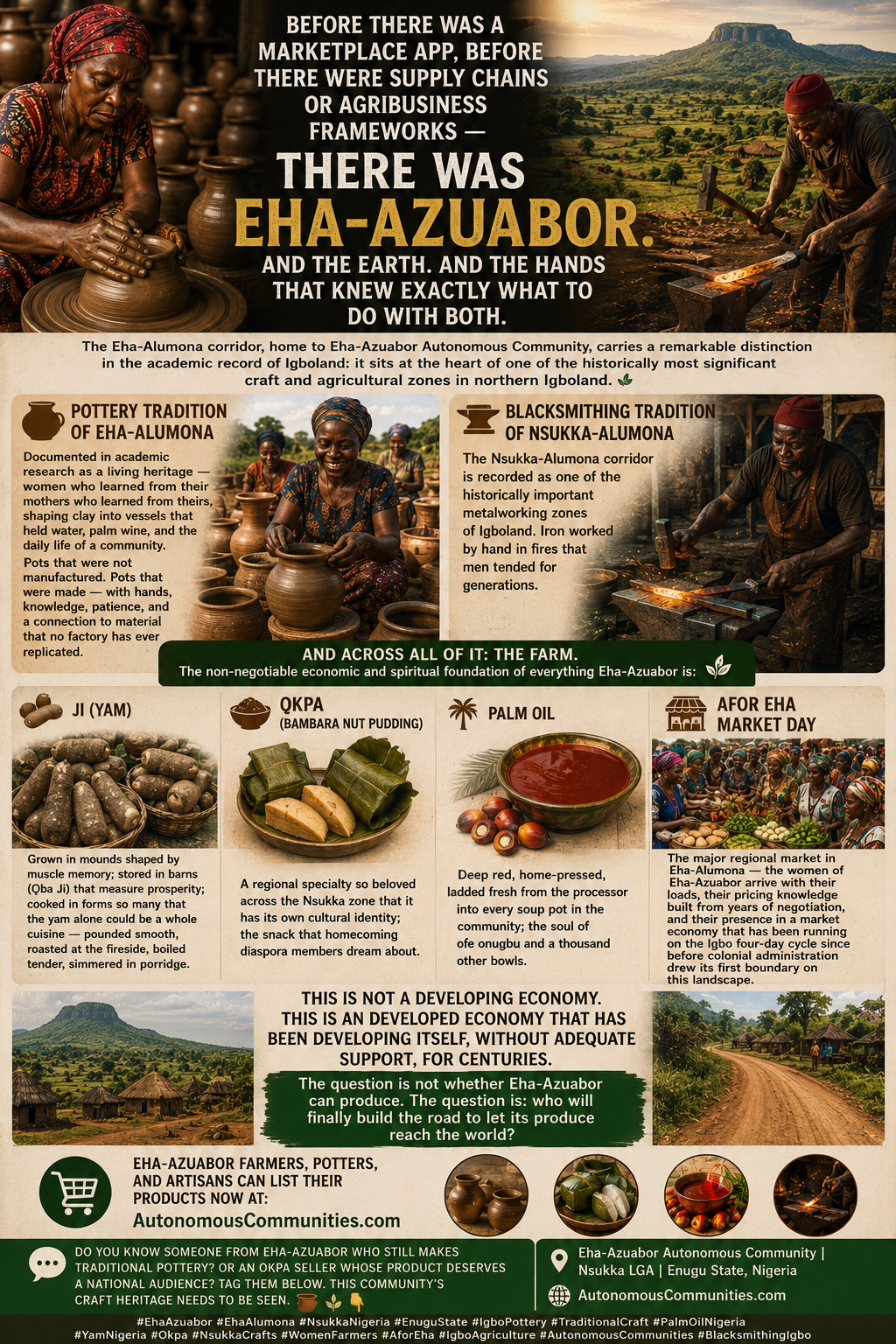
  • 🏺 BEFORE THERE WAS A MARKETPLACE APP, BEFORE THERE WERE SUPPLY CHAINS OR AGRIBUSINESS FRAMEWORKS — THERE WAS EHA-AZUABOR. AND THE EARTH. AND THE HANDS THAT KNEW EXACTLY WHAT TO DO WITH BOTH.

    The Eha-Alumona corridor, home to Eha-Azuabor Autonomous Community, carries a remarkable distinction in the academic record of Igboland: it sits at the heart of one of the historically most significant craft and agricultural zones in northern Igboland. 🌿
    The pottery tradition of Eha-Alumona is documented in academic research as a living heritage — women who learned from their mothers who learned from theirs, shaping clay into vessels that held water, palm wine, and the daily life of a community. Pots that were not manufactured. Pots that were made — with hands, knowledge, patience, and a connection to material that no factory has ever replicated. 🏺
    The blacksmithing tradition — the Nsukka-Alumona corridor is recorded as one of the historically important metalworking zones of Igboland. Iron worked by hand in fires that men tended for generations.
    And across all of it: the farm. The non-negotiable economic and spiritual foundation of everything Eha-Azuabor is:
    🍠 Ji (Yam) — grown in mounds shaped by muscle memory; stored in barns (Ọba Ji) that measure prosperity; cooked in forms so many that the yam alone could be a whole cuisine — pounded smooth, roasted at the fireside, boiled tender, simmered in porridge
    🌿 Ọkpa (bambara nut pudding) — a regional specialty so beloved across the Nsukka zone that it has its own cultural identity; the snack that homecoming diaspora members dream about
    🌴 Palm oil — deep red, home-pressed, ladled fresh from the processor into every soup pot in the community; the soul of ofe onugbu and a thousand other bowls
    πŸ›’ And on Afor Eha market day — the major regional market in Eha-Alumona — the women of Eha-Azuabor arrive with their loads, their pricing knowledge built from years of negotiation, and their presence in a market economy that has been running on the Igbo four-day cycle since before colonial administration drew its first boundary on this landscape.
    This is not a developing economy. This is an developed economy that has been developing itself, without adequate support, for centuries. The question is not whether Eha-Azuabor can produce. The question is: who will finally build the road to let its produce reach the world?

    πŸ›’ Eha-Azuabor farmers, potters, and artisans can list their products now at: AutonomousCommunities.com

    ━━━━━━━━━━━━━━━━━━━━━━━━━━━━━━━━━━
    πŸ’¬ Do you know someone from Eha-Azuabor who still makes traditional pottery? Or an okpa seller whose product deserves a national audience? Tag them below. This community's craft heritage needs to be seen. πŸΊπŸŒΎπŸ‘‡
    ━━━━━━━━━━━━━━━━━━━━━━━━━━━━━━━━━━

    #EhaAzuabor #EhaAlumona #NsukkaNigeria #EnuguState #IgboPottery #TraditionalCraft #PalmOilNigeria #YamNigeria #Okpa #NsukkaCrafts #WomenFarmers #AforEha #IgboAgriculture #AutonomousCommunities #BlacksmithingIgbo
    🏺 BEFORE THERE WAS A MARKETPLACE APP, BEFORE THERE WERE SUPPLY CHAINS OR AGRIBUSINESS FRAMEWORKS — THERE WAS EHA-AZUABOR. AND THE EARTH. AND THE HANDS THAT KNEW EXACTLY WHAT TO DO WITH BOTH. The Eha-Alumona corridor, home to Eha-Azuabor Autonomous Community, carries a remarkable distinction in the academic record of Igboland: it sits at the heart of one of the historically most significant craft and agricultural zones in northern Igboland. 🌿 The pottery tradition of Eha-Alumona is documented in academic research as a living heritage — women who learned from their mothers who learned from theirs, shaping clay into vessels that held water, palm wine, and the daily life of a community. Pots that were not manufactured. Pots that were made — with hands, knowledge, patience, and a connection to material that no factory has ever replicated. 🏺 The blacksmithing tradition — the Nsukka-Alumona corridor is recorded as one of the historically important metalworking zones of Igboland. Iron worked by hand in fires that men tended for generations. And across all of it: the farm. The non-negotiable economic and spiritual foundation of everything Eha-Azuabor is: 🍠 Ji (Yam) — grown in mounds shaped by muscle memory; stored in barns (Ọba Ji) that measure prosperity; cooked in forms so many that the yam alone could be a whole cuisine — pounded smooth, roasted at the fireside, boiled tender, simmered in porridge 🌿 Ọkpa (bambara nut pudding) — a regional specialty so beloved across the Nsukka zone that it has its own cultural identity; the snack that homecoming diaspora members dream about 🌴 Palm oil — deep red, home-pressed, ladled fresh from the processor into every soup pot in the community; the soul of ofe onugbu and a thousand other bowls πŸ›’ And on Afor Eha market day — the major regional market in Eha-Alumona — the women of Eha-Azuabor arrive with their loads, their pricing knowledge built from years of negotiation, and their presence in a market economy that has been running on the Igbo four-day cycle since before colonial administration drew its first boundary on this landscape. This is not a developing economy. This is an developed economy that has been developing itself, without adequate support, for centuries. The question is not whether Eha-Azuabor can produce. The question is: who will finally build the road to let its produce reach the world? πŸ›’ Eha-Azuabor farmers, potters, and artisans can list their products now at: AutonomousCommunities.com ━━━━━━━━━━━━━━━━━━━━━━━━━━━━━━━━━━ πŸ’¬ Do you know someone from Eha-Azuabor who still makes traditional pottery? Or an okpa seller whose product deserves a national audience? Tag them below. This community's craft heritage needs to be seen. πŸΊπŸŒΎπŸ‘‡ ━━━━━━━━━━━━━━━━━━━━━━━━━━━━━━━━━━ #EhaAzuabor #EhaAlumona #NsukkaNigeria #EnuguState #IgboPottery #TraditionalCraft #PalmOilNigeria #YamNigeria #Okpa #NsukkaCrafts #WomenFarmers #AforEha #IgboAgriculture #AutonomousCommunities #BlacksmithingIgbo
    0 Commenti 0 condivisioni 13K Views 0 Anteprima
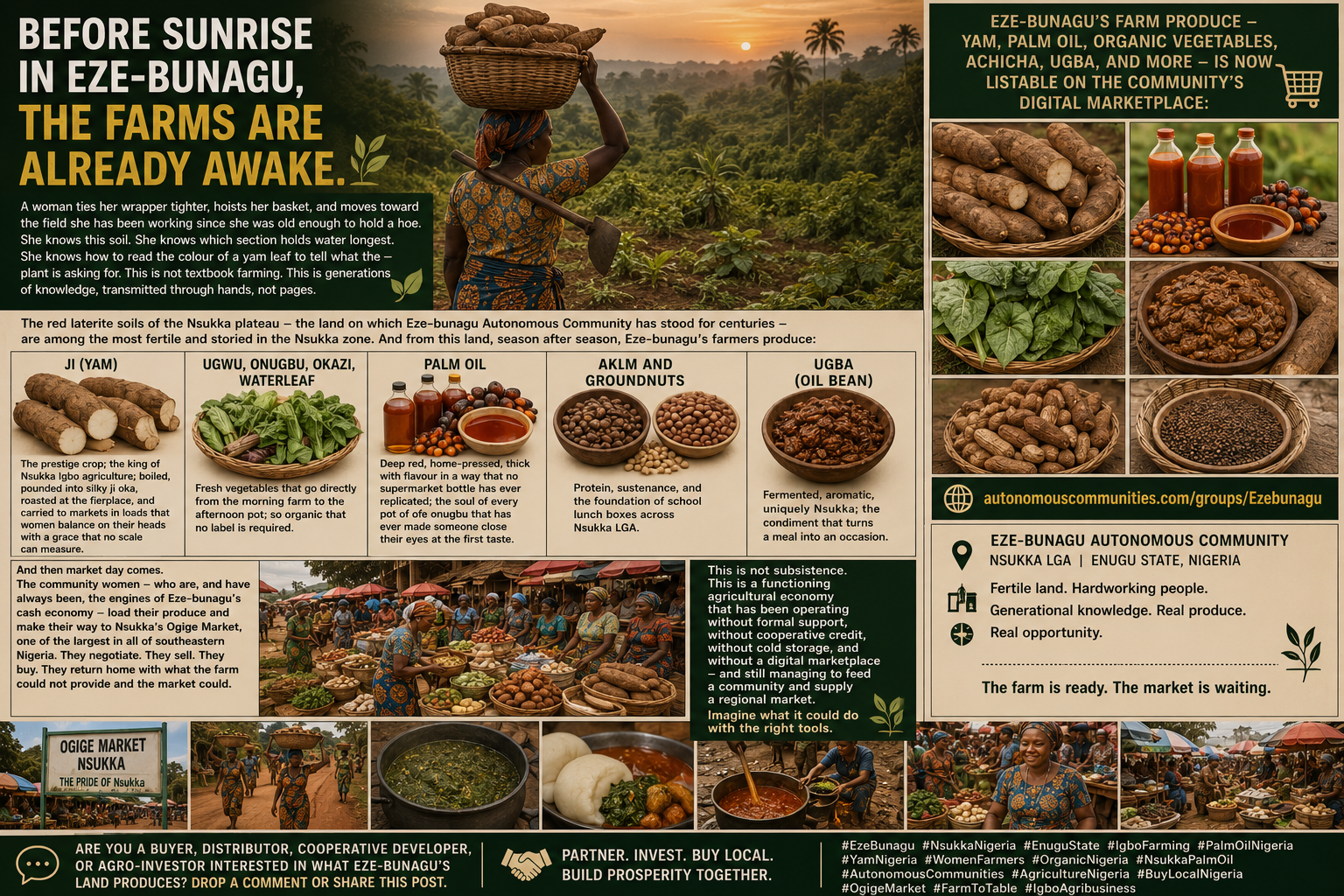
  • 🌾 BEFORE SUNRISE IN EZE-BUNAGU, THE FARMS ARE ALREADY AWAKE.

    A woman ties her wrapper tighter, hoists her basket, and moves toward the field she has been working since she was old enough to hold a hoe. She knows this soil. She knows which section holds water longest. She knows how to read the colour of a yam leaf to tell what the plant is asking for. This is not textbook farming. This is generations of knowledge, transmitted through hands, not pages. 🌿
    The red laterite soils of the Nsukka plateau — the land on which Eze-bunagu Autonomous Community has stood for centuries — are among the most fertile and storied in the Nsukka zone. And from this land, season after season, Eze-bunagu's farmers produce:
    🍠 Ji (Yam) — the prestige crop; the king of Nsukka Igbo agriculture; boiled, pounded into silky ji oka, roasted at the fireplace, and carried to markets in loads that women balance on their heads with a grace that no scale can measure
    🌿 Ugwu, Onugbu, Okazi, Waterleaf — fresh vegetables that go directly from the morning farm to the afternoon pot; so organic that no label is required
    🌴 Palm Oil — deep red, home-pressed, thick with flavour in a way that no supermarket bottle has ever replicated; the soul of every pot of ofe onugbu that has ever made someone close their eyes at the first taste
    🫘 Akidi and Groundnuts — protein, sustenance, and the foundation of school lunch boxes across Nsukka LGA
    πŸ₯œ Ugba (Oil bean) — fermented, aromatic, uniquely Nsukka; the condiment that turns a meal into an occasion
    And then market day comes. The community women — who are, and have always been, the engines of Eze-bunagu's cash economy — load their produce and make their way to Nsukka's Ogige Market, one of the largest in all of southeastern Nigeria. They negotiate. They sell. They buy. They return home with what the farm could not provide and the market could.
    This is not subsistence. This is a functioning agricultural economy that has been operating without formal support, without cooperative credit, without cold storage, and without a digital marketplace — and still managing to feed a community and supply a regional market.
    Imagine what it could do with the right tools.
    πŸ›’ Eze-bunagu's farm produce — yam, palm oil, organic vegetables, achicha, ugba, and more — is now listable on the community's digital marketplace:
    🌐 autonomouscommunities.com/groups/Ezebunagu

    ━━━━━━━━━━━━━━━━━━━━━━━━━━━━━━━━━━
    πŸ’¬ Are you a buyer, distributor, cooperative developer, or agro-investor interested in what Eze-bunagu's land produces? Drop a comment or share this post. The farm is ready. The market is waiting. πŸŒΎπŸ‘‡
    ━━━━━━━━━━━━━━━━━━━━━━━━━━━━━━━━━━

    #EzeBunagu #NsukkaNigeria #EnuguState #IgboFarming #PalmOilNigeria #YamNigeria #WomenFarmers #OrganicNigeria #NsukkaPalmOil #AutonomousCommunities #AgricultureNigeria #BuyLocalNigeria #OgigeMarket #FarmToTable #IgboAgribusiness
    🌾 BEFORE SUNRISE IN EZE-BUNAGU, THE FARMS ARE ALREADY AWAKE. A woman ties her wrapper tighter, hoists her basket, and moves toward the field she has been working since she was old enough to hold a hoe. She knows this soil. She knows which section holds water longest. She knows how to read the colour of a yam leaf to tell what the plant is asking for. This is not textbook farming. This is generations of knowledge, transmitted through hands, not pages. 🌿 The red laterite soils of the Nsukka plateau — the land on which Eze-bunagu Autonomous Community has stood for centuries — are among the most fertile and storied in the Nsukka zone. And from this land, season after season, Eze-bunagu's farmers produce: 🍠 Ji (Yam) — the prestige crop; the king of Nsukka Igbo agriculture; boiled, pounded into silky ji oka, roasted at the fireplace, and carried to markets in loads that women balance on their heads with a grace that no scale can measure 🌿 Ugwu, Onugbu, Okazi, Waterleaf — fresh vegetables that go directly from the morning farm to the afternoon pot; so organic that no label is required 🌴 Palm Oil — deep red, home-pressed, thick with flavour in a way that no supermarket bottle has ever replicated; the soul of every pot of ofe onugbu that has ever made someone close their eyes at the first taste 🫘 Akidi and Groundnuts — protein, sustenance, and the foundation of school lunch boxes across Nsukka LGA πŸ₯œ Ugba (Oil bean) — fermented, aromatic, uniquely Nsukka; the condiment that turns a meal into an occasion And then market day comes. The community women — who are, and have always been, the engines of Eze-bunagu's cash economy — load their produce and make their way to Nsukka's Ogige Market, one of the largest in all of southeastern Nigeria. They negotiate. They sell. They buy. They return home with what the farm could not provide and the market could. This is not subsistence. This is a functioning agricultural economy that has been operating without formal support, without cooperative credit, without cold storage, and without a digital marketplace — and still managing to feed a community and supply a regional market. Imagine what it could do with the right tools. πŸ›’ Eze-bunagu's farm produce — yam, palm oil, organic vegetables, achicha, ugba, and more — is now listable on the community's digital marketplace: 🌐 autonomouscommunities.com/groups/Ezebunagu ━━━━━━━━━━━━━━━━━━━━━━━━━━━━━━━━━━ πŸ’¬ Are you a buyer, distributor, cooperative developer, or agro-investor interested in what Eze-bunagu's land produces? Drop a comment or share this post. The farm is ready. The market is waiting. πŸŒΎπŸ‘‡ ━━━━━━━━━━━━━━━━━━━━━━━━━━━━━━━━━━ #EzeBunagu #NsukkaNigeria #EnuguState #IgboFarming #PalmOilNigeria #YamNigeria #WomenFarmers #OrganicNigeria #NsukkaPalmOil #AutonomousCommunities #AgricultureNigeria #BuyLocalNigeria #OgigeMarket #FarmToTable #IgboAgribusiness
    0 Commenti 0 condivisioni 13K Views 0 Anteprima
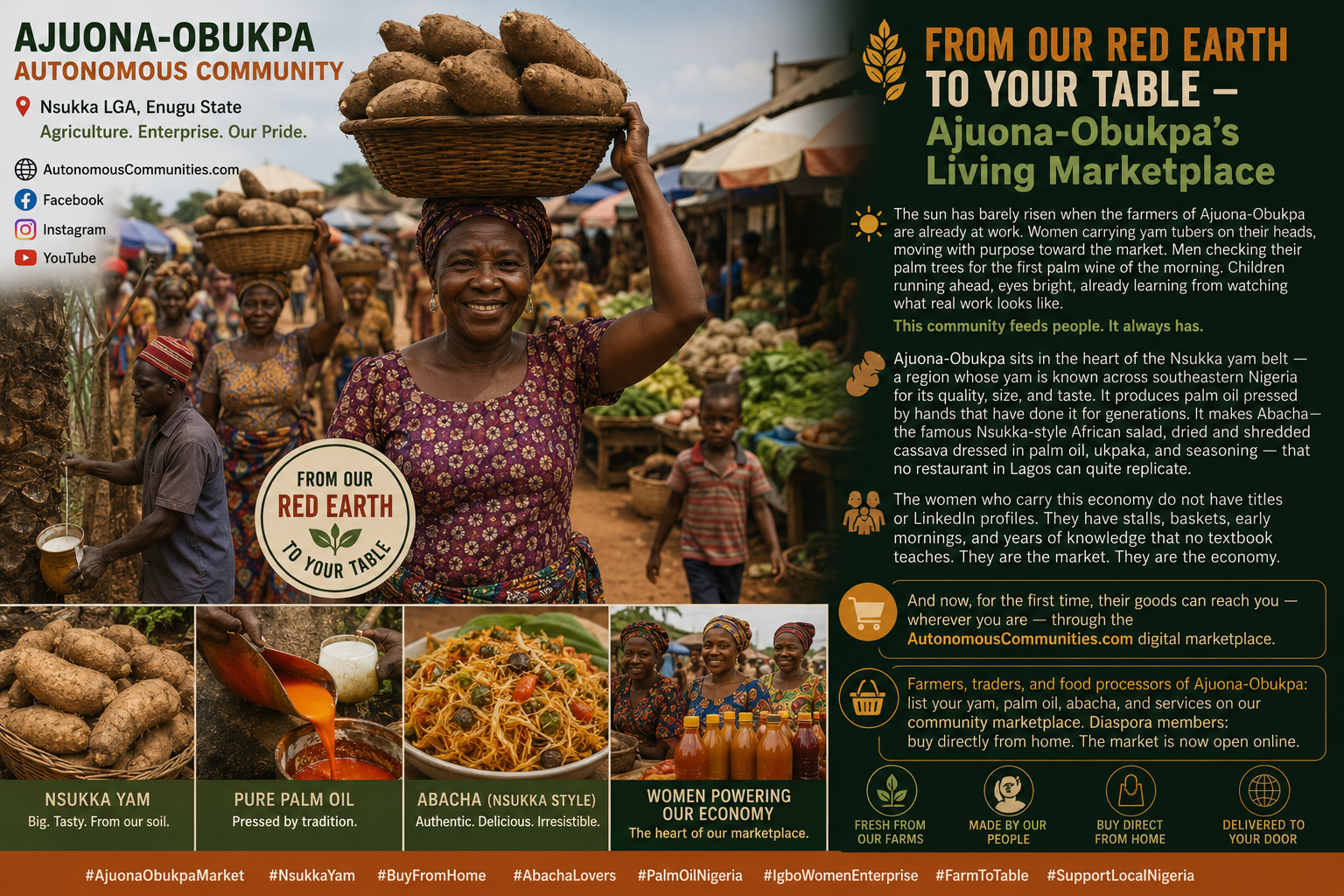
  • 🌾 FROM OUR RED EARTH TO YOUR TABLE — AJUONA-OBUKPA'S LIVING MARKET PLACE

    The sun has barely risen when the farmers of Ajuona-Obukpa are already at work. Women carrying yam tubers on their heads, moving with purpose toward the market. Men checking their palm trees for the first palm wine of the morning. Children running ahead, eyes bright, already learning from watching what real work looks like.

    'This community feeds people. It always has'.

    Ajuona-Obukpa sits in the heart of the Nsukka yam belt — a region whose yam is known across southeastern Nigeria for its quality, size, and taste. It produces palm oil pressed by hands that have done it for generations. It makes Abacha — the famous Nsukka-style African salad, dried and shredded cassava dressed in palm oil, ukpaka, and seasoning — that no restaurant in Lagos can quite replicate.

    The women who carry this economy do not have titles or LinkedIn profiles. They have stalls, baskets, early mornings, and years of knowledge that no textbook teaches. They are the market. They are the economy.

    πŸ›’ And now, for the first time, their goods can reach you — wherever you are — through the AutonomousCommunities.com digital marketplace.

    🧺 Farmers, traders, and food processors of Ajuona-Obukpa: list your yam, palm oil, abacha, and services on our community marketplace. Diaspora members: buy directly from home. The market is now open online.

    #AjuonaObukpaMarket #NsukkaYam #BuyFromHome #AbachaLovers #PalmOilNigeria #IgboWomenEnterprise #FarmToTable #SupportLocalNigeria #AutonomousCommunities
    🌾 FROM OUR RED EARTH TO YOUR TABLE — AJUONA-OBUKPA'S LIVING MARKET PLACE The sun has barely risen when the farmers of Ajuona-Obukpa are already at work. Women carrying yam tubers on their heads, moving with purpose toward the market. Men checking their palm trees for the first palm wine of the morning. Children running ahead, eyes bright, already learning from watching what real work looks like. 'This community feeds people. It always has'. Ajuona-Obukpa sits in the heart of the Nsukka yam belt — a region whose yam is known across southeastern Nigeria for its quality, size, and taste. It produces palm oil pressed by hands that have done it for generations. It makes Abacha — the famous Nsukka-style African salad, dried and shredded cassava dressed in palm oil, ukpaka, and seasoning — that no restaurant in Lagos can quite replicate. The women who carry this economy do not have titles or LinkedIn profiles. They have stalls, baskets, early mornings, and years of knowledge that no textbook teaches. They are the market. They are the economy. πŸ›’ And now, for the first time, their goods can reach you — wherever you are — through the AutonomousCommunities.com digital marketplace. 🧺 Farmers, traders, and food processors of Ajuona-Obukpa: list your yam, palm oil, abacha, and services on our community marketplace. Diaspora members: buy directly from home. The market is now open online. #AjuonaObukpaMarket #NsukkaYam #BuyFromHome #AbachaLovers #PalmOilNigeria #IgboWomenEnterprise #FarmToTable #SupportLocalNigeria #AutonomousCommunities
    Love
    1
    0 Commenti 0 condivisioni 10K Views 0 Anteprima
Autonomous Communities https://autonomouscommunities.com